Get Full Government Meeting Transcripts, Videos, & Alerts Forever!
Get email alerts on the Accessibility Parking topic
No spam. Unsubscribe anytime.
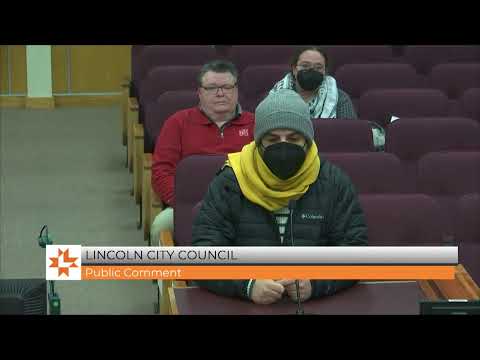
Council hears public testimony on proposed free metered parking for vehicles with handicap placards
Summary
Councilman Bowers introduced an amendment to allow vehicles displaying valid handicap placards or handicap plates to park at metered on-street spaces without paying the meter fee (time limits still apply); multiple disability and aging organizations testified in favor during a public hearing.
Councilman Bowers introduced a proposed amendment to Lincoln Municipal Code Chapter 10.32 on Feb. 10 to allow vehicles displaying a valid handicap placard or handicap-designated license plate to park at on-street metered spaces without payment while observing posted time limits.
Bowers framed the proposal as a step toward equitable access for residents with mobility limitations and cited similar policies in Omaha, Denver and Chicago. He said the change would help residents who find designated handicap spaces full or inaccessible and noted meter placement or physical barriers can make using meters difficult.
The council opened a public hearing and received multiple supportive comments. Randy Jones, director of Aging Partners, said handicap placards are used by people with wheelchairs, crutches, walkers, prosthetics and respiratory conditions and that free use of street parking would support access to services and commerce. He cited an “age-friendly” survey in which downtown parking emerged as a major concern.
Roger Lemke, president of the Seniors Foundation, described the need for wider accessible stalls for people who use wheelchairs; he said allowing placard holders to use metered spaces could leave the wider, non-metered accessible stalls available for users who require extra width to exit vehicles.
Brad Murans, public policy director at Disability Rights Nebraska, called the proposal “reasonable and responsible,” saying it would expand access for people with both visible and invisible disabilities who cannot walk long distances. Edison McDonald, executive director of The Arc of Nebraska, supported the change and raised additional operational concerns for future consideration, including snow incidents that prevent people from reaching their cars and special events that close or block accessible spaces.
Bowers closed by thanking speakers and characterizing the measure as an incremental step toward broader accessibility goals. The transcript records substantial public support but does not show a council vote on the ordinance at this meeting.
No speakers opposing the amendment were recorded in the minutes; council members asked no substantive follow-up questions during the hearing.