
Two New Berlin residents ask West Allis-West Milwaukee board to detach properties to New Berlin district
Get AI-powered insights, summaries, and transcripts
Sign Up Free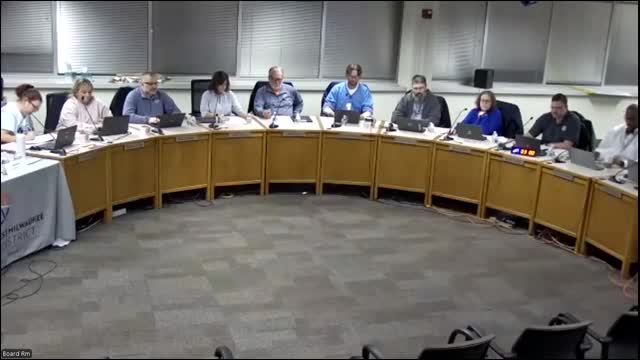
Summary
Two residents asked the West Allis-West Milwaukee School Board to transfer their properties into the New Berlin School District, citing community ties, perceived academic advantages and property-tax differences; board members questioned fiscal impact and noted statutory criteria and open-enrollment alternatives.
Two New Berlin residents asked the West Allis-West Milwaukee School Board on an evening meeting to transfer their properties from the West Allis-West Milwaukee School District into the New Berlin School District.
The requests came during a public-petition item. One petitioner, identified in the record as Mr. Lohman, said he grew up at the property and “I always felt disconnected” living in New Berlin while assigned to West Allis-West Milwaukee schools. He asked the board to grant a boundary change so his property would be attached to the New Berlin district, saying New Berlin offers higher academic performance, smaller class sizes, broader extracurricular programs and more modern facilities.
Why it matters: granting a parcel transfer would change which district receives local property-tax revenue for that property and, by statute, board members said the petitions must meet specific legal criteria before approval. Board members repeatedly asked petitioners for fiscal and demographic data required under the statutory petition standard and suggested open enrollment as an alternative for families wanting their children to attend a neighboring district.
Board questions and petitioner responses Board members pressed for the required analysis. “Can you speak to the estimated fiscal effect of the proposed reorganization of the affected school district?” asked board member Miss Kaiser, referencing one of the statutory criteria the board must consider. Mr. Lohman said he did not have those fiscal numbers at the meeting.
Board member Mr. Becker cited groups and policy context underlying the petitions and asked broadly about funding disparities between districts. Petitioners raised property-tax differences as part of their rationale; one petitioner noted he believed being in the New Berlin district would make his property easier to sell. The record also shows the board referenced previous small-territory transfers and related community impacts: during discussion board members said parcels removed from the district in an earlier round had created lasting budget consequences for the district and disrupted some families’ choices.
Second petition and historical context A second petitioner, John Mulling, told the board his address is within the New Berlin municipal boundary and asked why portions of New Berlin remain assigned to the West Allis-West Milwaukee School District. Mulling referenced historical arrangements and a local history publication to explain his view that the district alignment is outdated. He addressed the board: “After 86 years, I deserve to have you make the right decision,” he said in the meeting record.
Board response and next steps Board members reminded petitioners that the state’s small-territory transfer process is intended to address student access and attendance issues and not to serve primarily as a property-tax relief or real-estate market tool. Multiple board members explained that the board must weigh the petitions against the nine statutory criteria used for such requests and that fiscal analyses (estimated revenue and pupil composition impacts) are necessary for the board to reach a decision. The board also noted that open enrollment exists as an option for families seeking attendance in a neighboring district without a boundary change.
The board did not vote on either petition during the meeting; officials told the petitioners they would provide an answer later this month.
Ending: The board record shows no formal action on the petitions at this meeting. Petitioners and board members were directed to supply or obtain the fiscal and demographic analyses the district’s review process requires before the board takes a final vote.