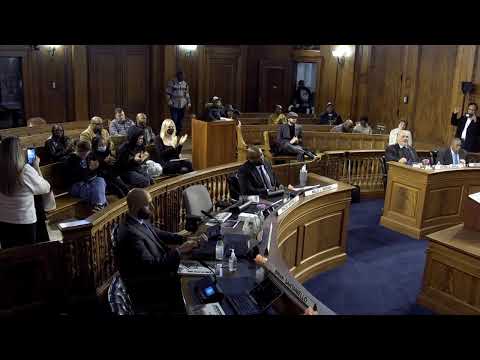
Springfield council approves $7.2 million police camera, Taser technology package; bonds and PayGo authorized
Loading...
Summary
The Springfield City Council voted to authorize bonding and free-cash paygo and approved a five-year contract with Axon to replace body-worn cameras, upgrade Tasers and buy integrated software — a $7.2 million package the police say will improve compliance with a DOJ settlement and reduce liability.
The Springfield City Council on Monday approved a multi-part funding package and a five-year contract to replace the city's body-worn cameras, upgrade Tasers and buy integrated software and storage, a project police and councilors said is intended to modernize the department and help comply with the department’s Justice Department settlement agreement.
Superintendent Akers told the council the department worked with finance staff and subject-matter experts over eight months to assemble what he called a consolidated technology package. "We're trying to come together, and we're bringing everything together in one package," Superintendent Akers said, describing the work to end years of siloed systems and piecemeal purchases.
The package totals about $7.2 million over five years, as presented to the council. To fund the first phase the council authorized $2.5 million in bonds, approved a $1.5 million transfer from free cash for pay-as-you-go costs, and voted to approve the five-year contract for cameras, Tasers, software and services. Council votes on the bond authorization, free-cash transfer and contract were all approved during the meeting.
Why it matters
Police officials told the council the current contracts and equipment have become unreliable and that stitching separate vendors and software together would cost the city more over time. The police recommended a single vendor bundle from Axon that combines Tasers, body cameras and integrated evidence and records management software; the department said Axon's package was the only one that met their needs to integrate evidence, professional standards reporting and settlement-agreement compliance.
"Axon put together the package. We like the package," Superintendent Akers said, adding the bundled approach reduces long-term cost and avoids building another set of incompatible systems.
Key details and council discussion
- Total package: presented as $7.2 million over five years for hardware, software, storage and services. - Funding approved at the meeting: $2.5 million in bond authorization (item 29) and $1.5 million from free cash as paygo (item 31). Additional funding and the remaining multi-year costs were described as part of the overall financing plan but were not fully detailed at the meeting. - Contract: council approved a five-year contract (item 32) described by police as a bundled procurement for cameras, Tasers and integrated software and services; the police said Axon was the recommended vendor. - Equipment changes described: an increase in the number of body-worn cameras (from roughly 511 to about 550) and an increase in Tasers (from roughly 100 to about 350). Police also said the newer Taser model extends deployment range (cited as an increase from about 25 feet to about 45 feet) and will trigger automatic recording when activated, tying that footage into the body-worn camera system.
Councilors who spoke in support said the package advances transparency, streamlines evidence management, and could reduce litigation costs tied to police encounters. Councilor Delgado called the bundled technology and improved software a potential insurance against future settlements; Councilor Davila said it could reduce the city's liability costs and improve DOJ compliance. Councilor Brown and Councilor Whitfield also voiced support.
Implementation and timeline
Police officials said the department's current vendor contracts expire in April and the department expects to transition to the new system with training and equipment roll-out over roughly a month after the contract is signed, aiming to avoid any lapse in coverage. Superintendent Akers said the department has scheduled vendor and staff training and expects the vendor to support the transition and training schedule.
Dissent, questions and safeguards
Several councilors pressed for implementation details and cost breakdowns. Councilor Whitfield asked about the transition and training timeline; officials replied they expect a roughly month-long transition and vendor-led training so officers are equipped and trained before the current contracts expire. Councilors also asked about procurement choices; Akers and staff said vendors solicited included Axon and Motorola and that Axon’s bundled offering met the department’s integration and compliance needs. Police described Getac (spelled in the transcript as Gtech/Getek) as the department’s existing camera supplier, which they said had performance and support issues.
Official actions
- Bond authorization (Agenda item 29): approve bond authorization for body-worn cameras and Tasers, $2,500,000 — outcome: approved. - Free-cash transfer / PAYGO (Agenda item 31): approve $1,500,000 from free cash for the camera/Taser project — outcome: approved. - Contract approval (Agenda item 32): approve five-year contract for body-worn cameras, Tasers, software and services (department recommended vendor: Axon) — outcome: approved.
What the city says next
Police said the new system will better integrate evidence, professional standards reporting and other records to assist compliance with the DOJ settlement agreement. Officials said they will return with additional budget and implementation detail as procurement and financing milestones are reached.
A fuller breakdown of the five-year cost, ongoing storage and subscription fees, and the remaining financing plan was described in committee meetings; police staff and finance officials said they will provide more detailed cost and implementation schedules to council committees and to the public as contracts are finalized.