Get Full Government Meeting Transcripts, Videos, & Alerts Forever!
Get email alerts on the Traffic Safety topic
No spam. Unsubscribe anytime.
Finance committee approves grant-funded pilot to curb illegal passing of stopped school buses
Summary
The Springfield Finance Committee approved a $22,554 grant to fund a high-visibility enforcement pilot targeting drivers who illegally pass stopped school buses; the pilot will run in selected locations from January through June and issue $250 fines for violations.
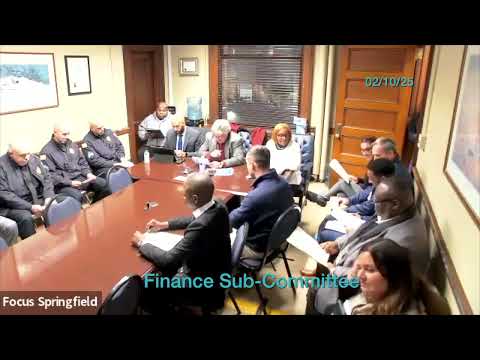
The Springfield City Council Finance Committee on Feb. 10 approved a grant to fund a high-visibility school-bus enforcement pilot aimed at stopping drivers from illegally passing stopped school buses.
The pilot, presented to the committee by Lieutenant Derek Cook, commander of the Springfield Police traffic unit, will pay for deployments focused on eight locations the department identified as having the most complaints. Cook said the grant will support enforcement from January through June and that officers will issue citations to drivers who fail to stop for school buses. “The objective is to eliminate the illegal passing of stop school buses,” Cook said during the meeting.
Cook told the committee the grant is administered locally by Toptal LLC and traces to federal highway-safety funds; he described the work as targeted deployments at complaint hot spots. The committee was told the fine for passing a stopped school bus is $250 and that the offense is a moving violation that can affect insurance premiums. Councilor Katie Walsh asked about the fine; Cook replied, “the fine is $250,” and noted the moving-violation consequences.
A committee member asked how ticket revenue would be used. Committee members were told that, under state law, ticket revenue is recorded as general-fund revenue rather than earmarked automatically for the enforcement program.
Committee members voiced support for the pilot and noted the timing of a separate council resolution to allow cameras on buses. Several members said the pilot and the camera resolution together could improve enforcement and safety for students.
The committee approved forwarding the grant to the full City Council with a recommendation.
Why it matters: The pilot focuses enforcement on public-safety complaints about drivers passing stopped school buses in locations with concentrated complaints; the combination of enforcement and potential camera deployment could change how the city detects and documents violations.