Get Full Government Meeting Transcripts, Videos, & Alerts Forever!
Get email alerts on the Tobacco Regulation topic
No spam. Unsubscribe anytime.
DDA recommends strict limits on standalone tobacco and vape shops downtown
Summary
Delray Beach DDA voted to back an amendment to the city's land-development rules to limit standalone tobacco and nicotine product dealers downtown, recommending a moratorium or ban for core retail streets and new spacing limits citywide.
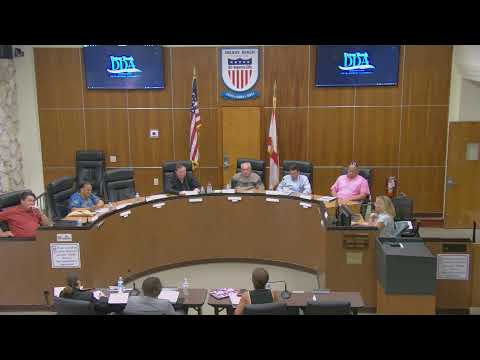
The Delray Beach Downtown Development Authority on Feb. 10 recommended that the city limit standalone retail tobacco and nicotine-product dealers downtown, including a proposal to prohibit the businesses on core retail frontages such as Atlantic Avenue and Second Avenue in the DDA district.
Development Services planner Rebecca Dossery told the board the draft amendment would prohibit window displays of tobacco products, set a 750-foot separation between standalone shops and an additional 300-foot buffer from residential zoning, schools, parks, day cares and places of worship. "We have more retail tobacco providers than a downtown actually needs," Dossery said, adding the amendment seeks to limit concentration that is changing the retail mix in the central business district.
Why it matters: Board members said vape and smoke shops have proliferated, sometimes occupying storefronts that once contributed to a traditional downtown retail mix. Several members said the businesses can bring signage, late-night hours and nuisance activity that they view as damaging to downtown's walkable character and to merchants.
Discussion and suggested refinements focused on enforcement and technical definitions. Board members asked whether the ordinance should specify a percentage threshold (for example, 51%) to determine when a store is primarily a tobacco retailer, and whether locking or restricting sale hours for tobacco items in mixed-use stores would be enforceable. Dossery indicated staff can pursue a measurable primary-use threshold and noted the draft tried to mirror existing CBD-oil spacing rules and to start conservatively.
Several board members urged a stronger local policy. One member asked staff to reuse the existing tattoo-parlor language the city previously adopted to speed adoption of a prohibition for specified downtown frontages; Development Services said it could carry that recommendation forward for review by the commission. The DDA also asked staff to propose language for: (a) a moratorium or prohibition on new standalone tobacco retailers in the DDA district and (b) distance and use rules that would apply consistently to mixed-use blocks.
Action: The board made and seconded a motion to forward a recommendation to city staff and the commission that the proposed amendment implement downtown plans and that the DDA prefer a restriction on future standalone tobacco dealers in the DDA district, specifically on Atlantic and Second Avenues and Pineapple Grove. A roll call vote recorded unanimous support from members present; one member was absent. The board asked staff to draft a follow-up letter containing suggested wording and additional details.
What remains: The item is a DDA recommendation; changes to the Land Development Regulations must be processed by city review and the City Commission. Dossery said an outright prohibition citywide would be a separate, more extensive policy discussion the commission would need to take on. The DDA directed staff to return with draft language and to consider enforcement measures (percentage-of-sales, locking displays after hours, conditional-use language and repeat-offender remedies) to reduce loopholes.
Looking ahead: Staff will incorporate the board's direction into the referral packet to the City Commission and include options ranging from a spacing requirement to a prohibition on the primary standalone use on core downtown frontages.