Get Full Government Meeting Transcripts, Videos, & Alerts Forever!
Get email alerts on the Strategic Plan topic
No spam. Unsubscribe anytime.
District updates literacy grant, curriculum mapping and gifted-education work in strategic-plan briefing
Summary
District leaders updated the school board on work under Strategic Plan Focus Area 1, including year‑three progress on a K–3 literacy grant, a districtwide curriculum-mapping initiative, multi-tiered systems of support (MTSS) and efforts to expand equitable identification and programming for gifted learners.
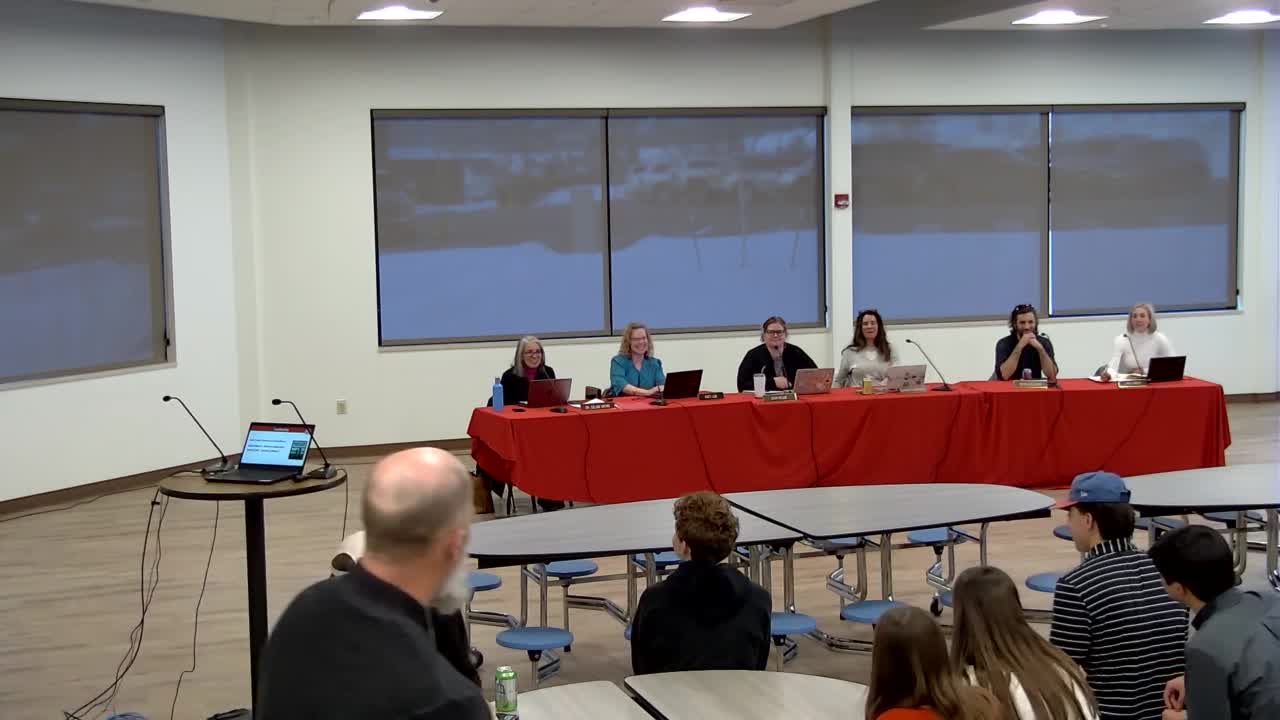
District administrators told the Steamboat Springs School Board on Feb. 10 that work under Strategic Plan Focus Area 1 — which centers on students reaching academic potential — is emphasizing early literacy, districtwide curriculum mapping, data-driven PLCs and a stronger structure for special-education and gifted services.
Dr. Tim Ritter and principals described program enhancements driven by a K–3 literacy grant in its third year and an expanded set of professional-development activities for teachers. Erin Halbert, who described the literacy work, said the grant “gave us so much” and noted the district now has in‑person grade-level consultant meetings and profiles for small-group literacy instruction.
Administrators described regular assessment and PLC protocols across K–12, a review of math resources and a “building thinking classrooms” effort in elementary math. The district reported districtwide curriculum‑mapping work intended to create yearly “consensus maps” for courses that will make vertical and horizontal alignment more visible during future curriculum adoptions.
Special-education leaders said hiring a special-education coordinator and adding a board-certified behavior analyst have increased support and collaboration. Superintendent Dr. Celine Wicks and administrators also highlighted an early-literacy progress measure at one elementary in which DIBELS benchmark rates moved from about 39% at the start of the year to roughly 80% at midyear.
Gifted education drew particular attention. Kristen Atwood, speaking about the Gifted Education Advisory Council, said the district is seeking more diverse identification and richer programming for gifted students and plans more professional development. Tim Ritter relayed I‑Ready growth figures reported by staff for K–5: “our gifted eligible students' annual typical growth was at a 75% median … no gifted eligibility was at 90%,” and staff also cited higher “stretch‑growth” figures for identified gifted students in some measures.
Board members asked for follow-up data and asked administrators to document program evaluations and surveys. Trustees and staff discussed how district-level professional development and school-driven teacher choice can be balanced: administrators said they are seeding ed-camp sessions to target district priorities and are planning a district differentiated‑PD day March 24.
A home-visit pilot also drew attention. Administrators said the district has completed more than 260 home visits since starting the pilot; teachers and students described visits as helpful for building relationships.
Board members asked staff to provide the GIAC (Gifted and Identified Advisory Council) survey results once the response rate increases and requested a future report on how literacy approaches used in K–3 can be sustained into upper grades and content areas.
The update was presented during Reports and Communications and preceded public comment and action items on the same agenda.