Get Full Government Meeting Transcripts, Videos, & Alerts Forever!
Get email alerts on the Wetlands topic
No spam. Unsubscribe anytime.
Pasco County officials say wetlands ease flooding, guide land-acquisition and conservation efforts
Summary
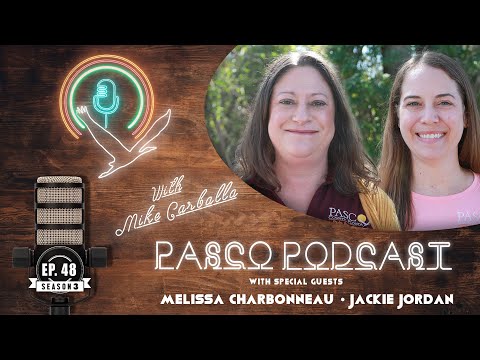
Pasco County natural-resources staff told listeners on the Pasco podcast on Feb. 2 that wetlands slow floodwaters, support wildlife and are central to county land-acquisition and conservation efforts.
Pasco County natural-resources staff told listeners on the Pasco podcast on Feb. 2 that wetlands slow floodwaters, support wildlife and are central to county land-acquisition and conservation efforts.
Melissa Charbonneau, senior biologist with Pasco County Natural Resources, said the county uses a three-tier system to classify wetlands and gives the strongest protection to the largest, regionally significant systems. “We categorize wetlands as 1, twos, and threes, and category ones are most regionally significant wetlands tied to, like, river systems or spring systems,” Charbonneau said.
The distinction matters for flood response and land use, officials said. Jackie Jordan, a Pasco County natural-resources team member, described how wetlands can hold stormwater and slow its release into rivers, creating a time lag that gives residents and emergency services more time to respond. “The wetlands have a capacity to store some of that water,” Jordan said, “so instead of it maybe, you know, discharging directly into the river systems, it allowed a little bit more time lag.”
Why it matters: Pasco County leaders tied wetlands protection to several county programs. The county’s Environmental Lands Acquisition and Management Program (ELAMP) manages roughly 6,500 acres of conservation land, officials said, and last week about 600 acres were put before the Board of County Commissioners for acquisition. County staff said 20 percent of the county’s local sales-tax penny (Penny for Pasco) supports land acquisition; speakers also noted that roughly half of that penny currently goes to conservation while the other half goes to schools.
Speakers described local conservation tools and examples. Charbonneau noted a local project that converted uplands to constructed wetlands using reclaimed water to restore habitat and improve aquifer recharge. Staff also described a gopher-tortoise recipient site set aside for county projects that staff said reduced costs: the county received about $400,000 to manage the site and officials said it saved other county departments about $400,000 on project compliance and mitigation costs.
Speakers emphasized connectivity and long-range planning. Charbonneau described seven ecological corridors ELAMP protects, linking riverine systems, wetlands and uplands across the county and connecting tracts such as Starkey Wilderness Park and Cypress Creek well fields. She said Pasco is among the few Florida counties with an ordinance aimed at protecting such corridors.
Coordination and public engagement: staff said they respond to 25–30 inquiries a week through a county mailbox and work with state agencies on permitting and listed-species requirements. Jordan encouraged residents to learn local wetland protections, support school environmental-education programs and contact the county with questions about property near wetlands. Charbonneau urged continued voter support for Penny for Pasco to sustain acquisition funding.
The discussion combined technical detail about wetland classification and storage with programmatic context about how Pasco acquires, manages and uses conserved lands. No formal policy vote was recorded during the podcast; the episode was informational and intended to mark World Wetlands Day and explain county programs and stewardship options to residents.
Pasco County officials directed listeners to the county website for more information about ELAMP, land-acquisition processes and how to reach the Natural Resources team.