Get Full Government Meeting Transcripts, Videos, & Alerts Forever!
Get email alerts on the School Budget topic
No spam. Unsubscribe anytime.
Roaring Fork leaders outline plan to close $7.8 million gap after self‑insurance losses; board approved supplemental budget
Summary
District finance leaders described a $7.8 million shortfall tied to a failed self‑insurance rollout and other budget omissions, said the board approved a supplemental budget to address 2024–25 issues and proposed measures to cover recurring 2025–26 gaps without immediate systemwide staff cuts.
Roaring Fork School District No. Re‑1 finance leaders told staff and union representatives on Jan. 30 that a series of errors around a 2023 move to self‑insurance, combined with missed budget items and lower revenue, created a $7,788,000 shortfall for the 2024–25 budget and contributed to recurring projected deficits for 2025–26.
The district’s chief financial officer, Christie Shaquoyne, said the self‑insurance fund collected about $8.3 million in premiums for 2023–24 while paying roughly $11.5 million in claims and administrative costs, producing “a 2 and a half million dollar shortfall.” She told the IBB (interest‑based bargaining) summit the district covered part of the 2023–24 shortfall with one‑time Meadowood project savings and general‑fund balance, and that the Board approved a supplemental budget the night before to address this year’s issues.
Why it matters: The shortfall followed a 2023 shift to a self‑insurance plan that the district later reversed. Leaders called out process and reconciliation failures that delayed detection of rising claims costs and left the district exposed; they also warned that even after the switch back to a managed plan, health‑care inflation could push premiums significantly higher in coming years.
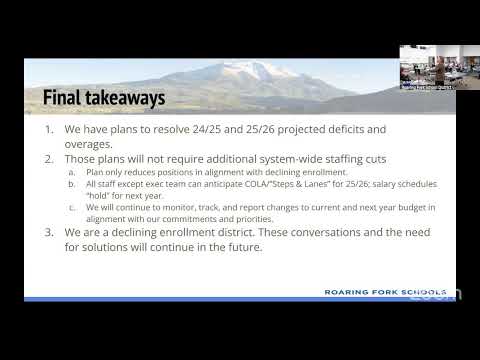
What the district says it will do: Shaquoyne and presenting administrators outlined a package of one‑time and recurring measures to close the current gap and a forecasted plan for 2025–26. Measures implemented or proposed include using Meadowood savings and limited fund‑balance draws, reassigning one existing position to add a budget analyst, tighter contract‑execution norms, increased finance team reconciliation and reporting cadence, and district‑office discretionary reductions. The presentation estimated that after those steps the district could avoid additional systemwide staffing cuts and preserve the current salary schedules for 2025–26 while using a salary contingency to cover gaps.
On accountability and systems fixes, the acting district leader acknowledged responsibility for earlier decisions. “I take this very seriously and that I understand this very seriously because I can tell you I know a lot more now than I did in April,” the presenter said, adding that new checks—such as not executing contracts above a threshold without review, new weekly risk checklists and a formal audit response letter—are already in place.
Numbers and omitted items highlighted in the presentation include a 2023–24 self‑insurance shortfall of about $2.5 million, and a 2024–25 inventory of omitted or underbudgeted items that, together with health insurance overages and reduced enrollment revenue, produced the $7,788,000 figure. Specific line items cited as omitted from the 2024–25 budget included a $443,000 discretionary stipend omission, $100,000 for Summer Advantage, $212,000 for school fee reimbursements and roughly $747,000 in other misses; the presentation also flagged about $3.3 million in unbudgeted salary and benefits obligations. Shaquoyne described the health‑insurance excess as an estimated overage that will be confirmed by final claims after June 30.
Enrollment and 2025–26 outlook: The district presented a demographer’s forecast showing declining enrollment over the next decade and ran those projections through the district’s staffing formulas. Staff and leaders said that, conservatively, enrollment‑related staffing adjustments would yield about $1.5 million in savings for 2025–26 (roughly 15 FTE when the formulas are applied), and that other recurring pressure points—lower interest earnings tied to reduced cash balances, specific‑ownership tax declines and projected health‑insurance increases—raise the total recurring challenge for 2025–26 to roughly $8.1 million before identified savings.
On health benefits, the presentation noted that returning to a managed‑care option (CEBT) removes district financial risk but does not remove the district from market‑wide premium increases. Presenters referenced neighboring districts seeing 10–25 percent increases and warned staff that the district faces the same market pressures.
Votes and formal board action: Presenters said the Board of Education approved a supplemental budget at its Jan. 29 meeting to implement the immediate fixes for 2024–25. The transcript records the board’s adoption of a previous October recommendation to shift back to CEBT, but vote counts and individual roll‑call details were not specified in the summit transcript.
Outlook for staff compensation: The presenters proposed preserving salary schedules for 2025–26 and using the district’s usual budget contingency (the contingency that historically enabled certified salary step increases when budgets allowed) to cover a portion of the identified gap rather than enacting new midyear salary changes. They said all staff except the executive team and superintendent should expect a cost‑of‑living and step/lane adjustment next year under the proposed plan; exact amounts and any midyear changes depend on ongoing monitoring and final board approval.
What staff asked: IBB members pressed for transparency on the demographer’s school‑level projections, the exact composition of the attrition savings estimate, and which district‑office teams will be “right‑sized.” Presenters pledged to share the demographer’s report and more detailed spreadsheets and to move school budgets to leaders in mid‑ to late‑February so schools can begin planning with the updated forecasts.
Next steps: District leaders said the supplemental budget is the immediate remedy for 2024–25, they will continue to monitor self‑insurance claims through June 30, and they will present a 2025–26 budget proposal to the Board for adoption in June. The presenters urged IBB teams to continue reviewing the district resource allocation frameworks and the school service and staffing formulas as part of longer‑term planning.
The district repeatedly framed the work as iterative: staff and leaders were asked to use the presentation as the basis for follow‑up in IBB salary groups and for questions to be compiled and returned in writing or via sticky notes during the summit.