Get Full Government Meeting Transcripts, Videos, & Alerts Forever!
Get email alerts on the Health Insurance topic
No spam. Unsubscribe anytime.
District working group rejects HDHP as primary option, favors PPO 8 if funding found
Summary
A Roaring Fork School District employee working group urged the district not to adopt a high-deductible health plan as its primary option, said staff could not absorb the out-of-pocket costs, and recommended pursuing PPO 8 as the preferred district-paid baseline if roughly $600,000 can be found.
A district employee working group convened Jan. 28 recommended against adopting a high-deductible health plan as the district’s primary health plan, saying many staff could not afford the out-of-pocket costs. The group said it would prefer the district fund a PPO 8 plan for all employees if the board can identify about $600,000 in additional recurring funding; members said preserving jobs and avoiding salary cuts should be the district’s top priorities if extra dollars become available.
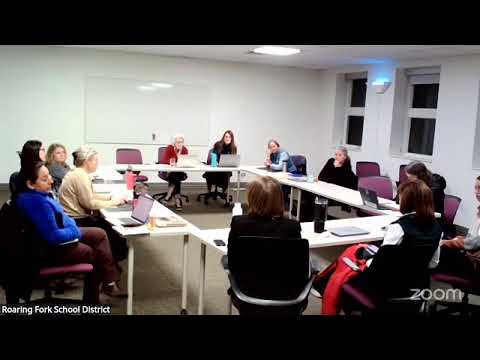
The working group gathered classroom teachers, classified staff representatives, principals, custodial leadership, the superintendent and a school board member to review benefit options and to bring staff concerns back to district leadership. Anne Holt, superintendent, said the group’s role is to center “the lived experiences of the staff that we serve” when considering benefit changes.
Members described repeated staff feedback that a high-deductible health plan (HDHP) was “not feasible” for many employees, especially those with ongoing prescription or chronic-care expenses. Multiple speakers said the HDHP’s cash-flow demands — including a $5,000 individual deductible and roughly $10,000 family deductible as discussed in the meeting — would make routine care unaffordable for lower-paid staff and force some employees to consider leaving the district.
The group discussed cost comparisons presented by district staff. Participants said the difference between the HDHP and a PPO 8 plan for a single-employee premium was relatively small on a monthly basis (about $100 as presented during the meeting), but that family premiums and high prescription costs remained the primary driver of staff concern. Staff and leaders said many classified employees earn roughly $30,000 a year and that a large out-of-pocket medical bill could be economically destabilizing.
Members coalesced around several programmatic priorities rather than finalizing a single plan. The group recorded three working priorities for recommendation to the board: (1) do not adopt the HDHP as the district-paid baseline; (2) aim to secure funding so the district can offer PPO 8 as the district-paid baseline for all employees (staff estimated that would require roughly $600,000 in additional annual funding); and (3) if additional funding beyond that becomes available, use it to preserve jobs and support the salary schedule rather than to subsidize family premiums alone.
Group members also asked the district to produce clearer, simple materials to help employees run personal scenarios (for example: a single employee anticipating a large one-time surgery vs. a family with chronic prescription needs) and said the committee would prioritize education and individualized examples when the board presents any change. The group discussed continuing regional coordination with neighboring districts (Aspen, Parachute, Summit) and raising shared concerns with the regional insurer referenced in the meeting as CBT/Blue Cross Blue Shield to seek plan design options that steer care to lower-cost providers.
District staff told the group the board would consider a supplemental budget for fiscal year 2024–25 at a board meeting the following day; committee members agreed to reconvene after that meeting with updated, finalized revenue and expense figures. Staff framed a target: roughly $1.5 million of additional ongoing health-insurance-related costs under some scenarios, with the PPO 8 option specifically increasing the district’s recurring cost by about $600,000 compared with the HDHP baseline in the materials shown to the group. Committee members emphasized they did not want one-time budget fixes to be used to cover recurring health insurance costs.
No formal vote was taken by this working group; members requested that the school board and central finance staff incorporate the group’s preferences and the supplemental-budget numbers into the board’s deliberations.
Next steps: district finance staff will finalize the supplemental budget figures and return to this working group; the group recommended producing plain-language comparison materials for employees and continuing regional conversations with neighboring superintendents and the insurer noted in the meeting.