Get Full Government Meeting Transcripts, Videos, & Alerts Forever!
Get email alerts on the Compensation Benefits topic
No spam. Unsubscribe anytime.
Subcommittee members press district for $600,000 to change base health plan, seek 0.9% added to salary base
Summary
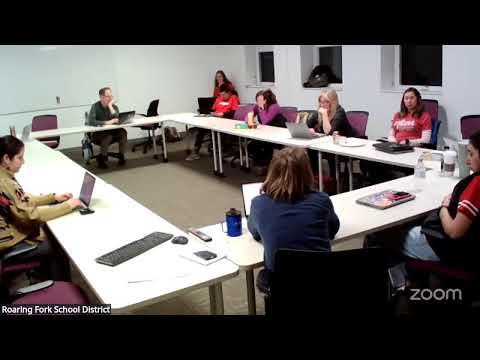
At a district budget subcommittee meeting, participants representing staff and teachers reiterated two main asks: make PPO 8 the default health plan by finding roughly $600,000 and add about 0.9 percentage points to the salary base to better match inflation, while acknowledging district budget constraints.
Members of the Roaring Fork School District No. Re-1 budget subcommittee outlined two specific compensation requests during a meeting focused on next year’s budget: find about $600,000 to make PPO 8 the district’s base health-insurance option and identify funding to add roughly 0.9 percentage points to the salary schedule base on top of planned step increases.
The requests came during a discussion about bargaining priorities and budget trade-offs. “One of our priorities moving forward is finding an extra $600,000 for that PPO payment to make that other base plan,” said Speaker 2 (committee member). Speaker 2 also asked the group to investigate how much money a 0.9% base increase would cost and to explore options for funding it.
The request for PPO 8 was framed as a change to the district’s default health plan that would raise employer costs; the group identified an estimated price tag of about $600,000 but did not present a final, line-item budget to show where that money would come from. Committee members suggested options to find the money, including rightsizing the district office, reviewing the learning-acceleration budget and positions, examining school calendars and non-student-facing positions, selling surplus properties, and pursuing one-time revenue sources instead of dipping further into reserves.
Subcommittee participants discussed cost-of-living metrics used to calculate state school finance adjustments. Speaker 2 said the district’s inflation assumption derives from the state’s school finance calculation and cited numbers in the 2.3–2.7% range; participants said they would confirm the exact figure used in state calculations.
Speakers also described how proposed compensation changes would interact with the district’s current salary- schedule changes and step increases. The subcommittee acknowledged that the district has budget constraints, declining enrollment and a set of unknowns in the governor’s budget proposals that could create as much as a $600,000 swing in state funding options. One finance staff member described the district’s effort to balance preserving staff and benefits while avoiding unsustainable spending.
The group agreed to continue the subcommittee’s work, use a salary “sandbox” spreadsheet to model changes, and gather comparable salary information from peer districts. Speaker 1 (committee member) volunteered to compile district-comparison data and Speaker 2 offered to add detailed proposals to the shared notes. No formal motion or vote on the PPO or base increase was recorded at the meeting.
The discussion left key numbers unspecified: committee members repeatedly requested a precise dollar total for the 0.9% base increase and an explicit list of potential budget offsets. District finance staff said they were stretched by current workload and could produce school budgets and sandbox updates in the coming weeks.
Ending: The subcommittee closed the session by assigning homework: update the salary-sandbox tool, compile peer-district comparisons, and return with specific funding scenarios. The group did not adopt any changes to plans or benefits during the meeting; formal bargaining or board-level decisions would be required to change the district’s base health plan or salary schedule.