
Somerville to accept $2.4M HUD earmark for Clarendon Phase 2 infrastructure and open space
Get AI-powered insights, summaries, and transcripts
Subscribe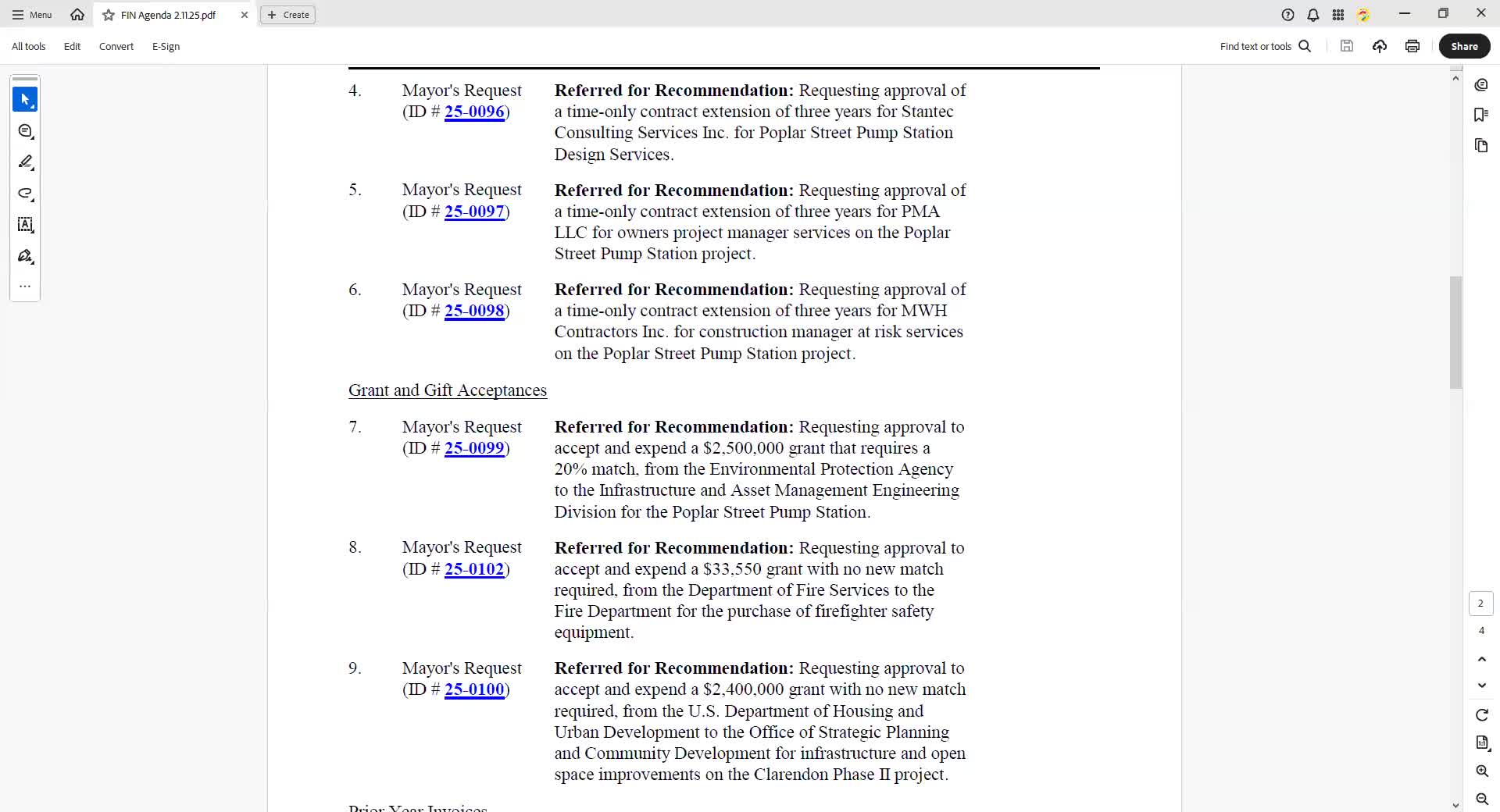
Summary
The finance committee recommended approval to accept a $2,400,000 congressionally directed HUD grant to support internal street grid and open-space improvements for the Clarendon phase 2 development; staff warned the grant carries a period-of-performance that could invite clawback if not expended by Aug. 31, 2031.
The Somerville Finance Committee recommended approval on Feb. 11 of a $2.4 million grant from the U.S. Department of Housing and Urban Development to fund infrastructure and open-space work for Clarendon phase 2.
Director Ignacio of the Office of Strategic Planning and Community Development described the award as a congressionally directed (community project funding) grant to support “improvements of the internal street grid network and part of the open space requirement” for the Clarendon phase 2 development. Staff said the funds would be part of a larger funding package the developer needs to move the phase forward.
Committee members asked whether recent federal grant administration issues might jeopardize the award. Ignacio said staff are coordinating closely with HUD and that the city has a previously allocated bond commitment for the project. Ignacio added that HUD’s award carries a period-of-performance/budget-period end date of Aug. 31, 2031; “if we hadn’t had all of our funds committed and expended, actually, I believe expended, then HUD would have full rights to claw back any unexpended balance in the grants,” he said.
Ignacio told the committee phase 2 is delayed relative to original expectations; staff are working with the developer on a funding package and hope to advance a buildable plan by late summer or early fall. He emphasized that moving the HUD funds into the overall package would make the financing “stickier” for the developer and reduce pressure on city bonds.
The committee placed the item on the table to recommend approval.