Get Full Government Meeting Transcripts, Videos, & Alerts Forever!
Get email alerts on the Economic Development topic
No spam. Unsubscribe anytime.
Columbia Economic Team presents countywide
Summary
Columbia Economic Team presented findings from the Business Community Connection project, reporting 75 one‑hour interviews across Columbia County and identifying workforce, commercial space and financing as top business challenges; Scappoose business owners rated the local business climate above the county average.
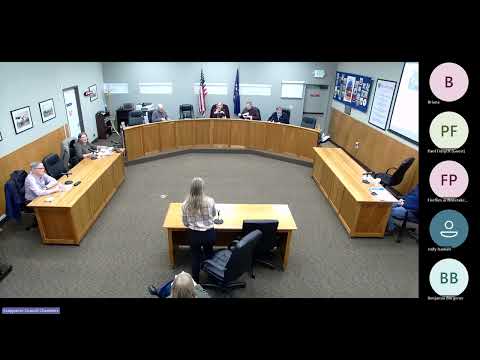
Sierra, small business specialist with the Columbia Economic Team, presented the Business Community Connection project and said the team "completed 75 business interviews, each at least an hour long," giving what she called a broad snapshot of business conditions across Columbia County including Scappoose.
The project is modeled on work from the University of Minnesota and included 25 partners and more than 55 volunteers. Sierra said the goal was to "support, retain and grow local businesses," strengthen partnerships and produce a countywide strategic plan to be refreshed every three to five years.
She said the project found Columbia County had about 1,587 establishments and that most (about 80%) of interviewed businesses had started in the county. The presenter reported an overall countywide score of "3.31" on a 1–5 scale for "what it is like to do business here," which she described as "it's okay" and noted that Scappoose scored higher than many other places in the county (Scappoose averaged about 3.6 in the presentation).
Key problems identified across the county were: difficulty finding skilled employees; limited availability and high cost of commercial land and buildings; limited access to capital and startup loans; and broadband gaps. In Scappoose specifically, interviewees ranked regulatory obstacles and the availability of land/buildings as the top challenges; finding employees was a top three concern but ranked lower than countywide.
Sierra summarized local requests from businesses, led by respondents' top priorities: expand CTE (career and technical education) programming in high schools; revitalize downtown areas; restore and develop commercial buildings; provide more employee training/certifications; and create more shovel‑ready land. She said those priorities will feed a countywide strategic plan CT will publish following internal and partner review.
Committee members asked about selection and representativeness; Sierra said selection was partly randomized and partly purposive to ensure representation of manufacturers, farmers and other sectors. She said CT produced multiple reports (county summary, city breakdowns, demographics and an overall summary) and offered to share them via staff.
The presentation prompted questions and brief discussion about how the findings would be used by CT and local governments. Sierra and CT staff said the data will inform CT's internal strategic priorities and referral networks (for example, to direct businesses seeking commercial space to available listings).