Get Full Government Meeting Transcripts, Videos, & Alerts Forever!
Get email alerts on the Labor Contracts topic
No spam. Unsubscribe anytime.
School board accepts Grand Forks Education Association petition recognizing negotiating unit after public comment
Summary
After public comments from educators, the Grand Forks School Board voted to accept a petition from the Grand Forks Education Association to recognize an appropriate negotiating unit; the motion passed on a roll-call vote.
The Grand Forks School Board voted to accept a petition from the Grand Forks Education Association (GFEA) seeking recognition of an appropriate negotiating unit, following public comment from several educators and a closed executive-session review of legal advice. The motion to accept the proposed negotiating unit, moved by Mr. Cleven and seconded by Mr. Manley, passed on a roll-call vote with eight board members voting yes and one voting no.
Members of the GFEA and district educators urged the board to accept the petition as written during the public-comment period. Kayla Christiansen, identified in the meeting as a GFEA negotiator and membership chair, told the board the GFEA petition used the same definition of “teacher” that appears in the district’s negotiated agreement and argued that changes to that definition should be negotiated at the bargaining table. Melissa Buka, government relations chair for GFEA and a district negotiator, said the group feared unilateral removal of long-standing language would make upcoming negotiations adversarial and urged the board to accept the petition to begin negotiations on good terms.
Board discussion emphasized the desire to bring the petition to the bargaining table rather than to make immediate language changes. Several board members said they intended to support the petition so the district and GFEA could address language and compensation concerns through negotiation. Dr. Hodak said she remained concerned about representation for employees who said they were not represented by either party and that she was not certain how she would vote until those voices were heard; Dr. Lund and others said they would support accepting the petition and working at the table.
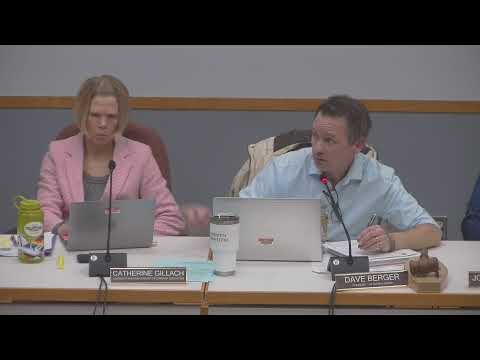
The board had met in executive session earlier under North Dakota Century Code provisions for attorney consultation to receive legal advice on risks and options before taking the public vote. The formal motion recorded in the minutes was “accept the proposed negotiating unit described in the petition,” moved by Mr. Cleven and seconded by Mr. Manley. The roll-call vote recorded the following votes: Larson — yes; Palmasino — yes; Cleven — yes; Lund — yes; Manley — yes; Anderson — yes; Hodak — no; Flynn — yes; Berger — yes. The board chair announced the motion passed.
Nut graf: The board’s acceptance does not change contract language; it recognizes the petition so the district’s negotiating team and GFEA can meet at the bargaining table to address membership definitions, protections and compensation as part of the next negotiation cycle.
Board members and GFEA negotiators discussed procedural points raised by speakers: GFEA cited Article 12 of the negotiated agreement (the current agreement term and automatic renewal procedure) and said established processes require mutual consent to alter negotiated language. Speakers also referenced a recent court ruling in Fargo as part of the background for other districts’ choices; GFEA negotiators told the board that the Fargo opinion did not force local removal of positions from bargaining units. The board did not change contract language at the meeting and directed that the petition be processed so bargaining may proceed.
Ending: The board’s acceptance of recognition begins the formal bargaining timeline; board members and negotiators said they expected to meet at the table before any contract language is altered.