Get Full Government Meeting Transcripts, Videos, & Alerts Forever!
Fall River council adopts five-year capital plan after debate over ARPA limits, fire apparatus funding
Summary
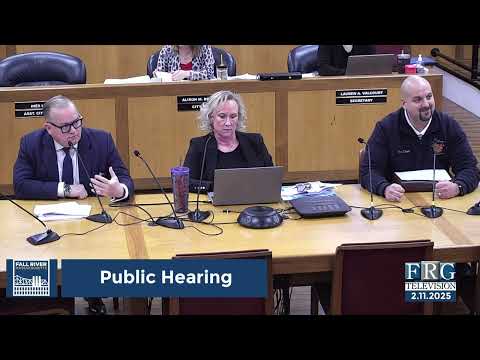
Fall River City Council on Feb. 11 adopted a five‑year Capital Improvement Plan after a public hearing and extended discussion about ARPA limits, the timing of fire‑engine replacements and how EMS enterprise revenue is used.
Fall River City Council on Feb. 11 adopted a five‑year Capital Improvement Plan after a public hearing and extended discussion about how federal American Rescue Plan Act restrictions, ARPA spending deadlines and existing funding choices shaped project timing and priorities.
The hearing and subsequent Committee on Finance review featured extended exchanges among city officials, school leaders, public safety chiefs and councilors on whether prior ARPA allocations should have paid for fire apparatus and on how EMS enterprise revenues should contribute to facilities and apparatus needs.
Bridget Allman, director of financial services, and Seth Aiken, city administrator, opened the public hearing and framed the CIP as a five‑year forecast that balances limited resources, multiple funding sources and project timing. Aiken said the capital budget is “derived from the capital improvement plan” and noted projects often span multiple years.
The central dispute at the hearing concerned ARPA rules and engine procurement. City Administrator Seth Aiken told the council that “one of the limitations on ARPA funding precluded us from buying fire engines,” and that the city had instead used other sources when ARPA funds could not be applied.
Fall River’s fire chief (identified in the hearing) told councilors the useful frontline life of a fire engine is roughly two decades and said the department plans to space replacements to avoid a single large purchase cycle: “Traditionally, we've gotten about 20 to 25 years out of a fire engine frontline,” the chief said. The chief and other public safety leaders explained long manufacturer lead times and a national backlog make immediate bulk purchases impractical.
Councilors pressed the administration on choices made during the ARPA spending process: one councilor said the city used ARPA on discretionary items and left what he characterized as more urgent capital needs — including multiple engine replacements and large window projects at the Globe fire station — to later funding. Financial staff and the chief described both categorical limits in ARPA guidance and practical problems…
Already have an account? Log in
Subscribe to keep reading
Unlock the rest of this article — and every article on Citizen Portal.
- Unlimited articles
- AI-powered breakdowns of topics, speakers, decisions, and budgets
- Instant alerts when your location has a new meeting
- Follow topics and more locations
- 1,000 AI Insights / month, plus AI Chat