Get Full Government Meeting Transcripts, Videos, & Alerts Forever!
Get email alerts on the Hydrogen Blending topic
No spam. Unsubscribe anytime.
Senate energy committee hears safety, transparency arguments over hydrogen blending notice bill
Summary
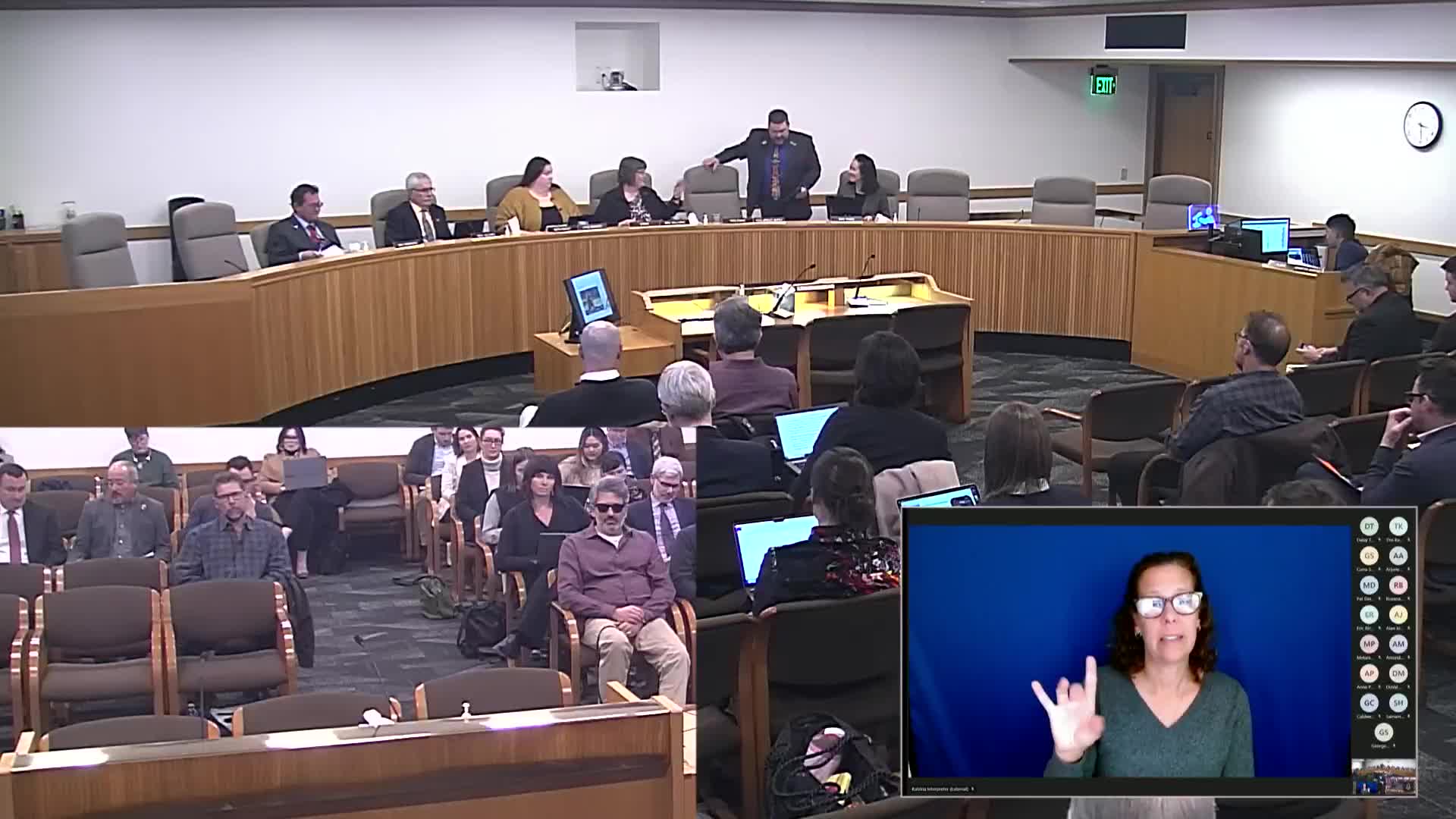
The Oregon Senate Committee on Energy and Environment on Feb. 10 heard hours of testimony on Senate Bill 685, which would require utilities to notify the Public Utility Commission, customers and local emergency officials before blending hydrogen into natural gas distribution systems.
Portland — The Oregon Senate Committee on Energy and Environment on Feb. 10 heard hours of testimony for Senate Bill 685, a measure requiring utilities to provide notice before blending hydrogen into natural gas distribution systems.
Senator Khan Pham, sponsor of SB 685, told the committee the bill (as amended in the -1) requires utilities to notify the Oregon Public Utility Commission, customers and local fire and health departments ahead of hydrogen blending and to provide information about blend ratios, safety and local impacts. "Every gas pipeline has risks," Pham said, arguing that notice would build public trust while allowing the state to continue permitting innovation.
The bill grew out of local opposition to a Northwest Natural pilot in Southeast Portland that mixed hydrogen into residential lines without widespread notice. Environmental-justice and public-health groups urged lawmakers to adopt the -1 amendment or stronger requirements to ensure oversight and community input. "This was done without public notice and no consideration to the impacts," said Arjorie Arbery Baraboe of Beyond Toxics, describing West Eugene residents who learned about a separate Northwest Natural pilot after the project began.
Pipeline Safety Trust attorney Amanda McKay described technical risks she said are unique to hydrogen and not fully covered today. "Hydrogen is not the same as methane," McKay said. "Hydrogen is much more likely to explode than methane...many pipeline materials are not suitable for transporting hydrogen, which can lead to embrittlement and cracking issues." McKay and other public-safety witnesses urged mandatory notice so regulators and emergency responders can prepare and the public can be informed.
Medical and environmental witnesses said hydrogen blends can increase health risks if not carefully managed. Samantha Hernandez of Oregon Physicians for Social Responsibility cited studies showing potential for increased nitrogen-oxide emissions and noted concerns about appliance and pipeline compatibility at higher blend rates.
Environmental and consumer-advocacy witnesses were joined by legal and policy organizations calling for transparency. Cara Saylor of the Green Energy Institute said the -1 amendment is a "no-regrets, common-sense" step that mirrors Washington state notice requirements and would not block projects while easing community concerns.
Industry witnesses including Mary Morlans, director of environmental policy at Northwest Natural, and Chris Kreker, the company's decarbonization director, urged caution about imposing new obligations. Northwest Natural stressed it is already regulated and has operated hydrogen pilots elsewhere. "Gas utilities are already regulated by federal and state regulations that inherently include hydrogen," Morlans said, citing PHMSA and state tariff limits. Kreker told the committee the company has tested blends up to 20% in limited settings and argued blends at 20% or lower have not required system retrofits and can reduce greenhouse-gas emissions while enabling scale-up of hydrogen production.
Labor witnesses split: plumbing and pipeline union Local 290 representative Brad Archuleta and Office and Professional Employees International Union Local 11 business manager Howard Bell said workers are trained and urged against adding new barriers. Archuleta said his members have handled hydrogen in industrial and high-tech settings for decades and called small blends safe when installed by qualified workers.
Multiple witnesses asked the committee for additional technical analysis. Several panelists noted PHMSA (federal Pipeline and Hazardous Materials Safety Administration) has active research projects on hydrogen blending and that appliance and materials standards (for example CSA standards referenced by industry) are evolving.
Committee chair and members closed the record for the day and carried SB 685 over to the committee's next scheduled meeting on Wednesday to allow additional testimony and written materials to be filed.
The debate made clear the central policy choice the committee faces: require formal public notice and reporting to the PUC to increase local transparency and emergency-preparedness, or rely on existing federal and state pipeline safety regulation and utility outreach practices while avoiding potential project delays and added costs.