Get Full Government Meeting Transcripts, Videos, & Alerts Forever!
Get email alerts on the Private Security Regulation topic
No spam. Unsubscribe anytime.
Committee considers technical fix to private-security licensing law to exempt in-house employers
Summary
Senate Bill 300 and a dash-2 amendment would narrow the definition of "private security entity" to exclude employers with in-house security staff and focus licensing on contractors; sponsors, industry groups and unions said the amendment is a negotiated fix, while local governments sought a small additional exemption for political subdivisions
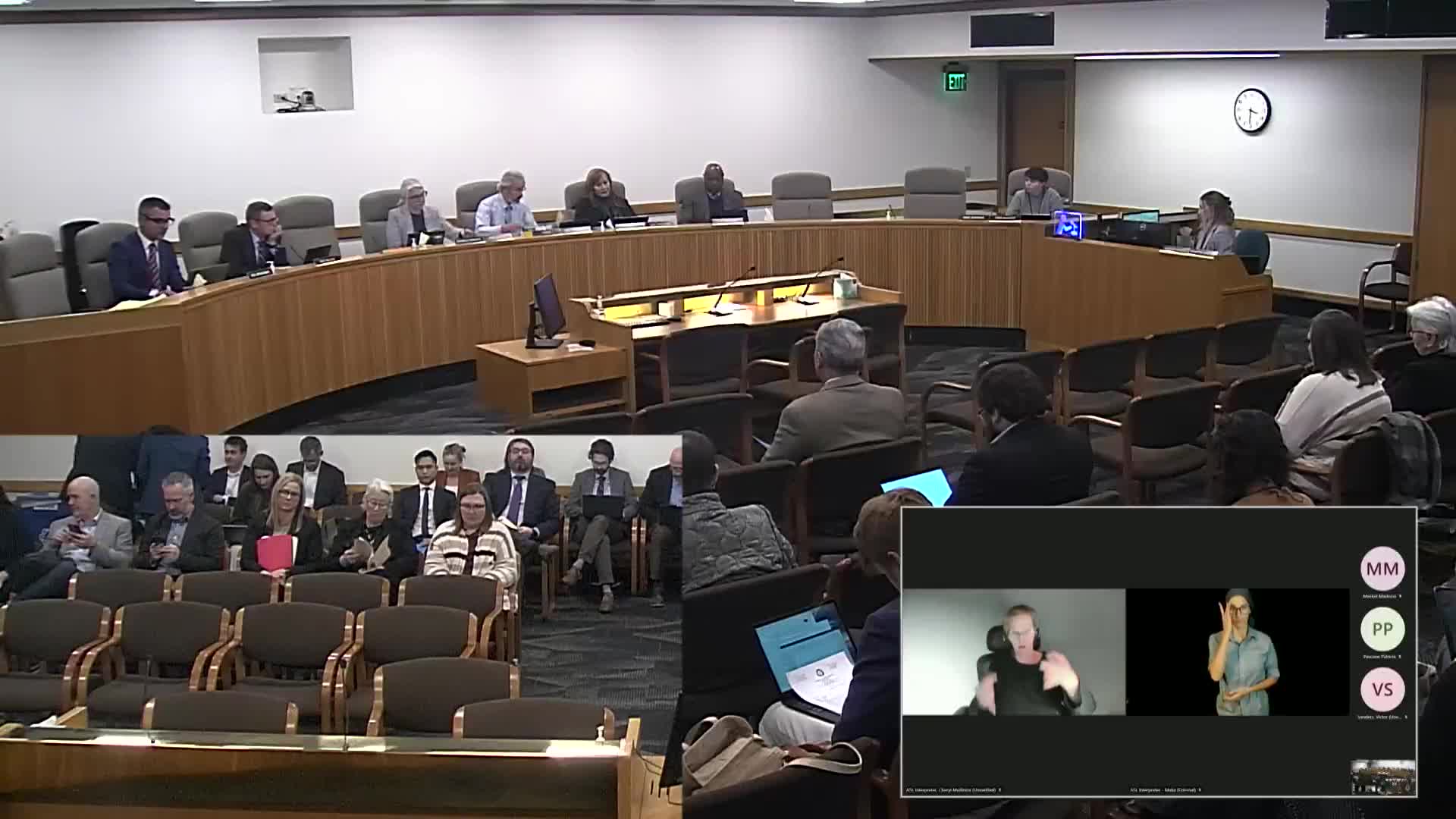
Senate Bill 300, a technical fix to Oregon's private-security licensing regime, drew largely supportive testimony on Feb. 10 as sponsors and industry groups said the bill restores the original legislative intent and excludes many employers that should not be treated as private-security contractors.
The committee staff summary said the bill "refines the definition of a private security entity to be a person engaged in the business of providing private security professionals for contracted private security services and it removes persons who simply employ private security providers from the definition." A dash-2 amendment further clarifies recruitment and subcontracting language and adds an emergency clause to make the change effective on passage.
Senator Mark Meek (State Senator, Senate District 20), sponsor of the corrective bill, said the earlier statute was "overly broad and unintentionally captures businesses who already have in house security professionals including grocers, retailers, restaurants, schools, hospitals, and more." He said SB 300 restores the original intent to regulate third-party private-security firms rather than employers who staff internal security departments.
Representatives of industry and employers said the dash-2 amendment is the result of negotiation. Amanda Dalton of the Northwest Grocery Retailers Association told the committee the amendment "does absolutely nothing to change individual certification for our individual in house loss prevention and security officers. All it does is take away that kind of top license" for entities, which removes an administrative burden for retailers.
Derek Singston, policy director and counsel for Oregon Business and Industry, backed the change and said many employers already comply with training and employment laws. Victor Sanders, representing the city of Portland, said municipal code-enforcement and safety staff have faced administrative burdens under the original definition and offered a request for an additional clarification or carve-out for political subdivisions that only use certified staff for code enforcement duties.
School districts and unions also supported the dash-2 amendment. Adrienne Anderson of the Oregon School Boards Association said the original law would have required school districts to obtain entity licensure for even front-desk staff who check identifications; SEIU Local 49's Yasmin Ibarra described the amendment as "a reasonable compromise" that narrows licensure to contracted firms while preserving training and workplace protections for private-security workers.
The committee heard no opposition from parties who argued the amendment undermines training requirements; proponents repeatedly said individual certification requirements for security personnel remain in place. The hearing on SB 300 closed with no committee vote; proponents and affected employers asked the committee to adopt the dash-2 amendment as a technical clarification and to add a carve-out for political subdivisions in future drafting.
Next steps were not scheduled during the Feb. 10 hearing.