Get Full Government Meeting Transcripts, Videos, & Alerts Forever!
Get email alerts on the Education Accelerated Learning topic
No spam. Unsubscribe anytime.
Oregon subcommittee reviews college-credit-in-high-school programs, cites access and capacity barriers
Summary
At an Education Subcommittee informational meeting, Oregon Department of Education staff described International Baccalaureate, Advanced Placement and dual-credit partnerships and urged targeted funding and capacity supports to expand access, especially in rural and historically underserved communities.
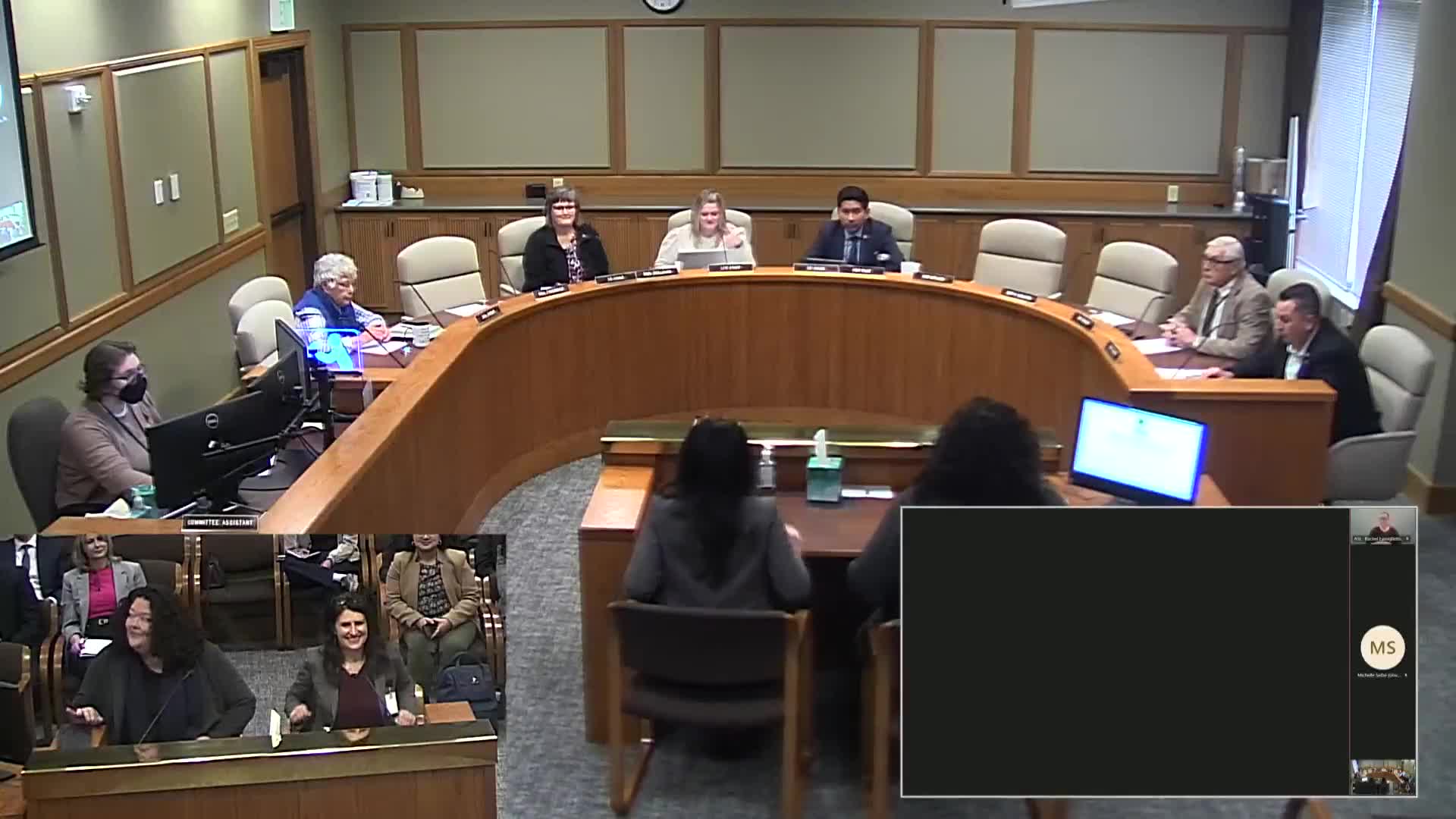
Alexa Pearson, Assistant Superintendent in the Office of Teaching and Learning at the Oregon Department of Education, told the Education Subcommittee on Feb. 10 that Oregon offers multiple pathways for high school students to earn college credit and that expanding access is a statutory requirement and a priority for the agency.
College-credit-in-high-school programs — described by ODE staff as International Baccalaureate (IB), Advanced Placement (AP) and accelerated college-credit partnerships (often called dual credit) — “smooth the transition from high school into college and career,” Pearson said, and the state law directing districts to provide such opportunities includes grant funding targeted to students experiencing poverty and groups historically underserved.
ODE officials presented enrollment and outcome data showing that 29% of Oregon high school students in 2021–22 participated in one or more college-credit opportunities and that participants were, on average, more likely to graduate and persist in college than nonparticipants. The department said IB programs are the smallest option in Oregon — 18 high schools offer the IB diploma program and five offer the IB career-related program — while AP and local college partnerships are larger statewide offerings. ODE staff noted cost barriers: for example, the presentation said individual IB exams cost $119 and AP exams cost $98 in 2024; state funds reduced each exam by $20 and covered the full fee for students experiencing poverty.
Panel members asked how the state can expand access to rural areas. Krista Dawn McGregor, identified in the presentation as an ODE education specialist for accelerated learning, told the committee that no Southern Oregon school currently hosts an IB program because no local school has started one and startup costs and teacher training requirements are a barrier. “Startup costs for these programs can be expensive,” McGregor said; she and other ODE staff described grant support and Office of the State Board rulemaking (cited in the presentation as HB 4,137 directing the State Board to set rules) as tools to increase access.
Committee members also pressed ODE on workforce capacity. ODE staff described Oregon’s Sponsored Dual Credit model — a partnership arrangement in which a community-college instructor and a locally licensed high-school instructor co-teach — as one approach that has expanded access where hiring qualified instructors is difficult. The department said it is partnering with Education Northwest on a study of that model and may return with recommendations.
Speakers repeatedly highlighted career technical education (CTE) as part of the college-credit ecosystem; ODE said all accelerated-credit models include CTE offerings and that CTE courses can lead to industry-recognized credentials as well as college credit. Representatives and senators on the panel gave personal examples of students who saved time and money through credit-earning in high school and encouraged the agency to prioritize multilingual learners and rural students in future grants and rulemaking.
The committee did not take formal action at the informational meeting. ODE staff said they would follow up with requested data, including district participation lists and IB-specific credit-transfer rates.
Ending: ODE briefers closed by asking the committee to consider targeted grant supports and capacity-building measures to expand IB, AP and dual-credit offerings in communities that currently lack them; staff promised to provide follow-up data to the committee.