Get Full Government Meeting Transcripts, Videos, & Alerts Forever!
Get email alerts on the Rural Density Rezone topic
No spam. Unsubscribe anytime.
Bill to let counties rezone rural residential lots to 1-acre minimum draws sharp debate
Summary
House Bill 2422 would let counties rezone certain lands for rural uses and lower minimum parcel sizes in some rural residential zones to one acre; witnesses split between builders and property owners who support the change and conservation, farming and planning groups who oppose it.
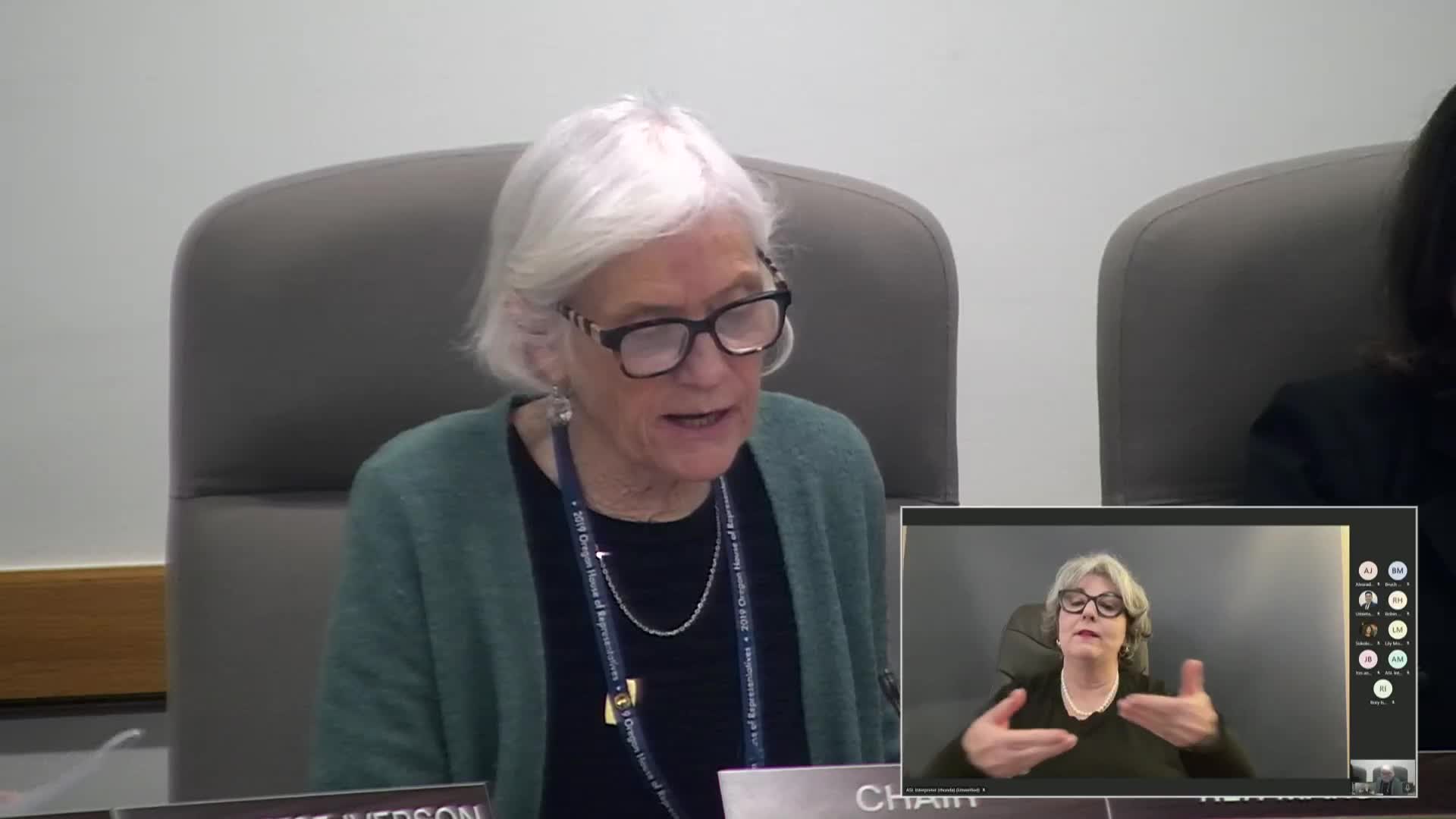
The House Committee on Housing and Homelessness held a public hearing on House Bill 2422 on Feb. 10. The measure would allow counties to rezone certain lands for rural uses and, in some cases, treat lands zoned rural residential so they could be developed at densities as small as one home per acre.
Proponents said HB 2422 would unlock housing on existing developed lots outside urban growth boundaries that are already served by roads and basic services. Rep. Kim Wallen, who helped sponsor the bill, and former Rep. Lily Morgan described rural residential areas with many pre‑existing small lots and argued that permitting one‑acre minimums in some of those places would create housing opportunities without intruding on farmland or forest land protected under state planning goals.
The Oregon Home Builders Association and Oregon Property Owners spoke in favor, saying rural residential zones often include small, older lots that cannot be built on under current statewide rules and that permitting counties to plan for increased density in those zones is a modest way to increase housing supply.
Opponents argued the bill would invite suburban-style sprawl into rural Oregon and weaken the statewide land-use system. Robert Liberty and Rory Isbell of Central Oregon Land Watch said the proposal would undermine statewide Goal 14, which concentrates population inside urban growth boundaries, and that rezoning tens of thousands of rural parcels to smaller lot sizes would increase sprawl, water demand, septic loads and wildfire risk. Jim Johnson of 1000 Friends of Oregon and farm advocates said the measure bypasses a careful planning and exception process designed to assess impacts on adjacent farmland and forestry operations.
Speakers urged the committee to consider infrastructure constraints, replacement septic capacity, and the possibility that small-lot development would raise land values and reduce access for working farms. Testimony also noted that recent legislative changes already enabled some rural accessory dwelling units (ADUs) under conditions intended to limit impacts; opponents urged the committee not to disturb those carefully negotiated conditions.
The hearing closed with committee members accepting the bill for further consideration; no vote was taken on Feb. 10.