Get Full Government Meeting Transcripts, Videos, & Alerts Forever!
Get email alerts on the Tribal Housing topic
No spam. Unsubscribe anytime.
Committee hears bill to create Tribal Housing Grant Fund with $12.8 million appropriation
Summary
House Committee on Housing and Homelessness heard testimony on House Bill 2139 (dash 2), which would establish a Tribal Housing Grant Fund administered by Oregon Housing and Community Services to make direct grants to Oregon’s nine federally recognized tribes; the dash-2 amendment appropriates $12,767,376 general fund.
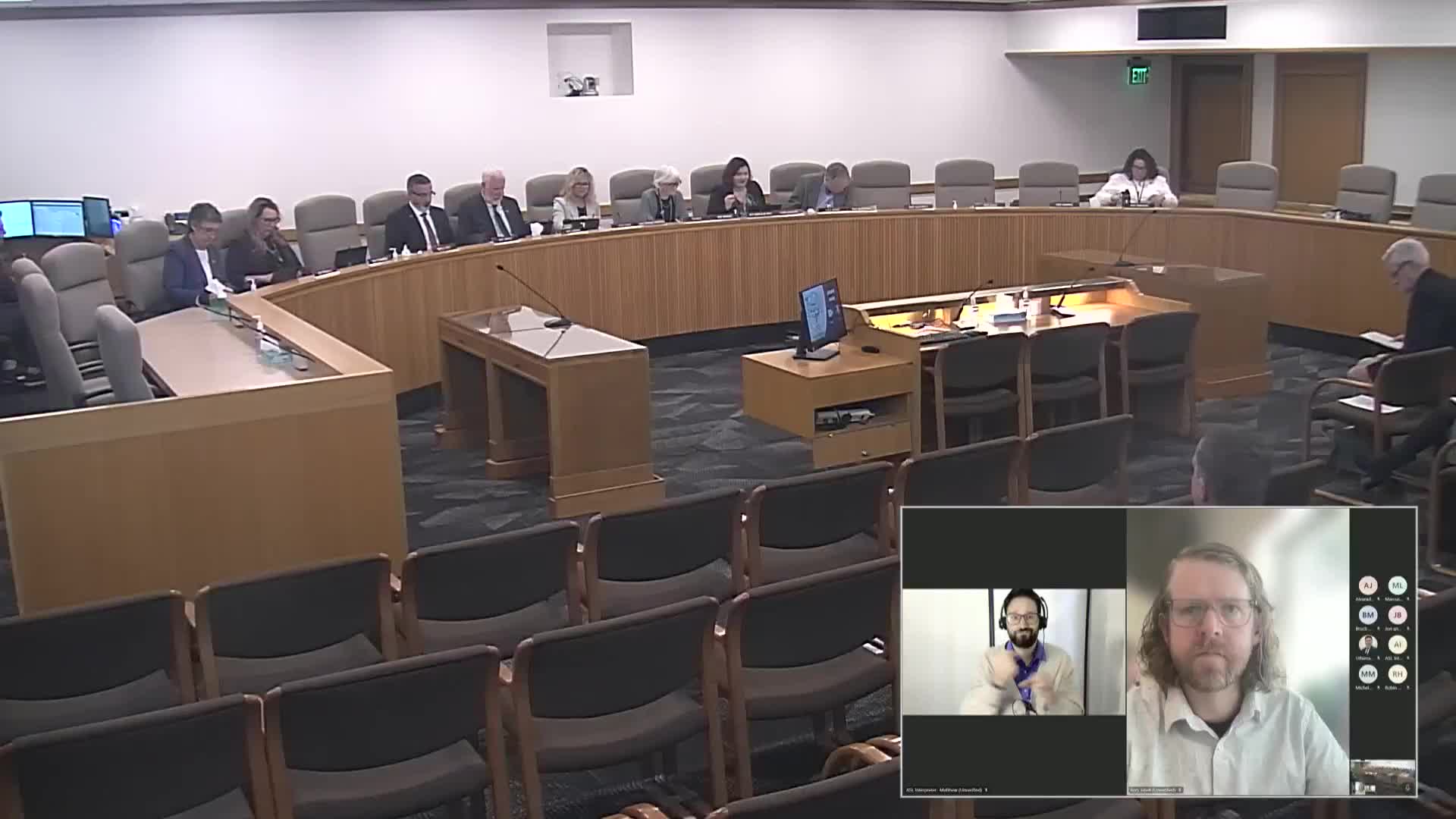
Chair Marsh convened the House Committee on Housing and Homelessness on Feb. 10 to open a public hearing on House Bill 2139, the Tribal Housing Grant Fund, and the committee heard testimony from the governor’s office, the Oregon Housing and Community Services agency and representatives of several tribal governments.
The bill’s dash-2 amendment would create a Tribal Housing Grant Fund and appropriate $12,767,376 from the general fund to make grants to Oregon’s nine federally recognized tribes for affordable housing activities including rental assistance, down-payment or homeownership assistance, emergency housing, shelter, and tribal-led housing development projects. The amendment was summarized on the record by committee staff and read into the record.
The governor’s office and Oregon Housing and Community Services (OHCS) framed the measure as responding to requests from tribal leaders for more flexible, non-competitive funding that respects tribal sovereignty. Swetha Ambati, senior housing adviser in the governor’s office, said tribal leaders consistently told state officials that “Tribal governments are sovereign and self governing nations who each have their own governance systems and structures,” and that tribes need flexible, direct funding to address unique housing and homelessness challenges.
Andrea Bell, executive director of OHCS, told the committee the proposed fund builds on prior work with tribes, including a 2022 cross-tribal initiative and subsequent state investments that allowed tribes to blend resources for housing development. Bell said the bill expands eligibility and allowable uses so tribes can pursue both housing-stability services (eviction prevention, rapid rehousing) and getting more permanent units built on tribal lands.
Tribal representatives told the committee the proposal reflects a collaborative process and that OHCS’s ongoing Tribal liaison and the by-and-for initiative have improved state–tribal partnerships. Michelle Moore, social services officer for the Cow Creek Band of Umpqua Tribe of Indians, described results from earlier tribal-funded programs: “Moved 34 tribal members into our transitional housing, which consists of 7 units, transitioned 14 of those to permanent housing, provided other housing assistance to prevent homelessness for 81 members and their families, and we've also been able to relocate 15 homeless tribal members back to their homelands.” Moore urged the committee to keep OHCS as the grant manager.
Marcus Luke, housing director for the Umatilla Tribes, and other tribal witnesses described rural development challenges—limited contractor availability, higher costs, and infrastructure barriers—and said flexible, dedicated funding would help tribes address homelessness and build housing in places that fit tribal priorities. Tracy Kennedy noted that some tribes, including the Umatilla Tribes, have their own planning codes and processes for siting housing on tribal lands.
Committee members asked whether grants would be limited to tribal lands; OHCS representatives said the grants would be awarded directly to tribes for use on tribal lands and that distribution would be determined through consultation with each tribe rather than a strict per-tribe equal split.
The committee closed the public hearing on HB 2139 with no formal action taken at the Feb. 10 session.
This hearing is part of an ongoing, multi-year state effort to expand housing supports for tribal communities and to formalize government-to-government funding pathways between Oregon and its federally recognized tribes.