Get Full Government Meeting Transcripts, Videos, & Alerts Forever!
Get email alerts on the Water Reuse topic
No spam. Unsubscribe anytime.
Panel and utilities urge lawmakers to fund statewide water‑reuse team in HB 21‑69
Summary
Testimony from utilities, environmental groups and state agencies told the House committee that House Bill 21‑69 should be funded to create an interagency team at DEQ and OWRD to coordinate, provide guidance, and expand beneficial reuse of treated wastewater across Oregon.
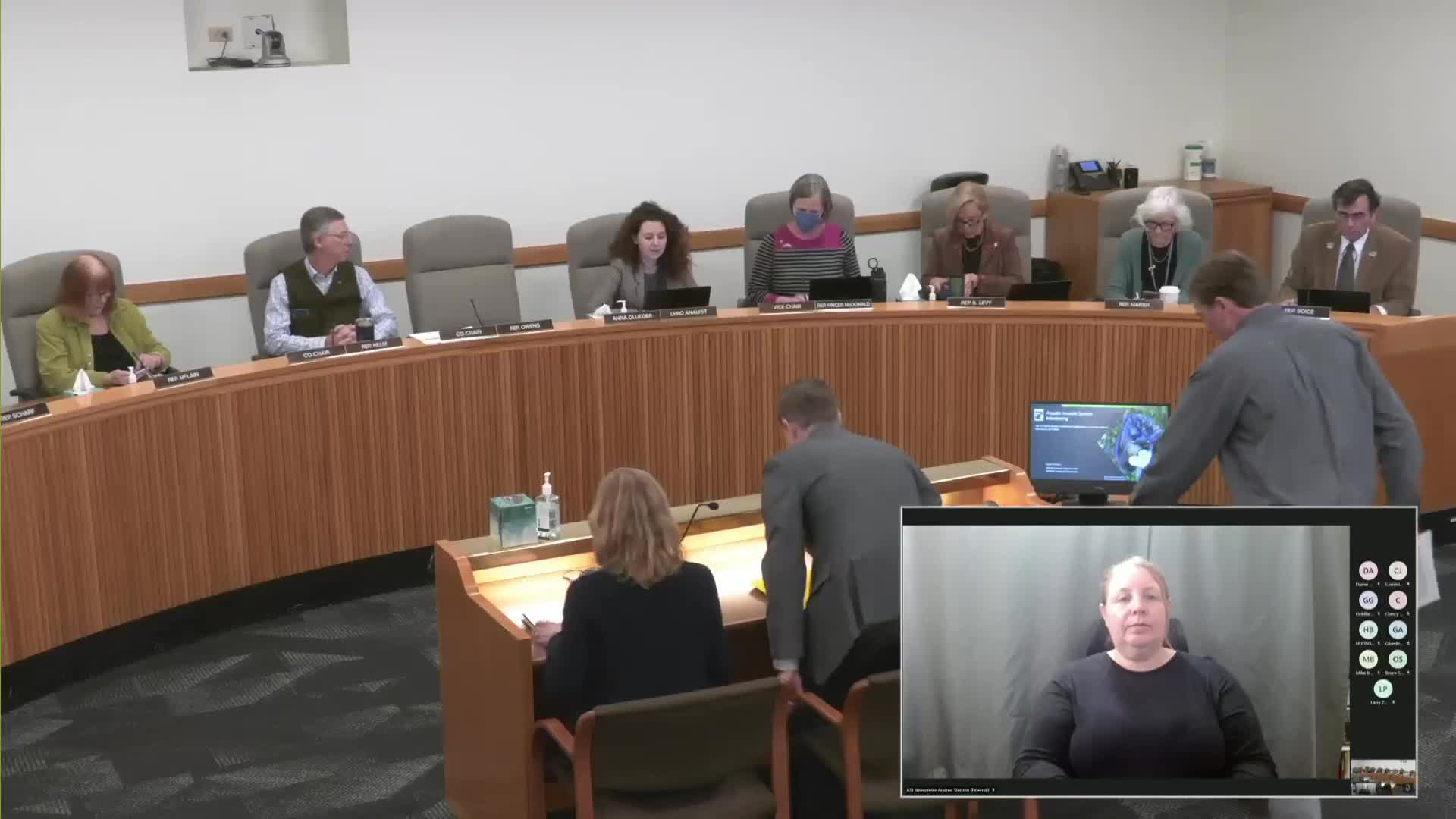
The House Committee on Agriculture, Land Use, Natural Resources, and Water heard a broad, mostly supportive public hearing on House Bill 21‑69, which would require the Department of Environmental Quality (DEQ) and the Oregon Water Resources Department (OWRD) to form an interagency water reuse development team to encourage and expand water reuse in Oregon.
Multiple speakers from municipal utilities, conservation groups, irrigation districts and state agencies urged lawmakers to pass HB 21‑69 and provide stable funding so DEQ can continue work begun under 2023 funding. "HB 2,169 will require state agencies to work together as a team to solve problems, improve coordination, and create a clear, consistent, responses to the public," Ryan Hoof, DEQ legislative and policy analyst, told the committee. Susie Smith of the Oregon Association of Clean Water Agencies said reuse can "be a cost effective strategy that maximizes benefits to the environment, farmers, industries, and communities."
Testimony described regulatory and resource barriers that have slowed reuse projects. DEQ witnesses said limited‑duration staffing authorized in 2023 has produced initial products — a revised recycled water web page and drafting of guidance — but those resources will sunset in June. "Implementing all these desired process improvements and providing ongoing technical assistance will be constrained under current service level program funding levels," Ryan Hoof said.
Clean Water Services and the City of Bend described local projects and business‑case drivers. Jared Kinnear, Recycled Water Program Manager at Clean Water Services, said the funding in HB 21‑69 is "essential in enabling DEQ to offer technical assistance and guidance for utilities and communities who may need creative solutions to solve their water quality challenges." Todd Miller, deputy director for Springfield Environmental Services, said unclear and uncertain permitting pathways have led some communities to abandon reuse projects despite federal grant awards.
Supporters asked the committee to fund the bill so DEQ and partner agencies can produce policy, guidance and implementation support that would reduce permitting complexity and uncertainty. Testimony referenced the National Pollutant Discharge Elimination System (NPDES) permitting structure and noted that reuse can help utilities meet temperature and other effluent requirements.
No formal amendments or votes on HB 21‑69 were recorded in the hearing transcript; the committee closed the public hearing and moved on to other bills.