Get Full Government Meeting Transcripts, Videos, & Alerts Forever!
Get email alerts on the Industrial Lands And Hb 2411 topic
No spam. Unsubscribe anytime.
Committee hears support, concerns for bill creating Industrial Site Loan Fund to prepare industrial land
Summary
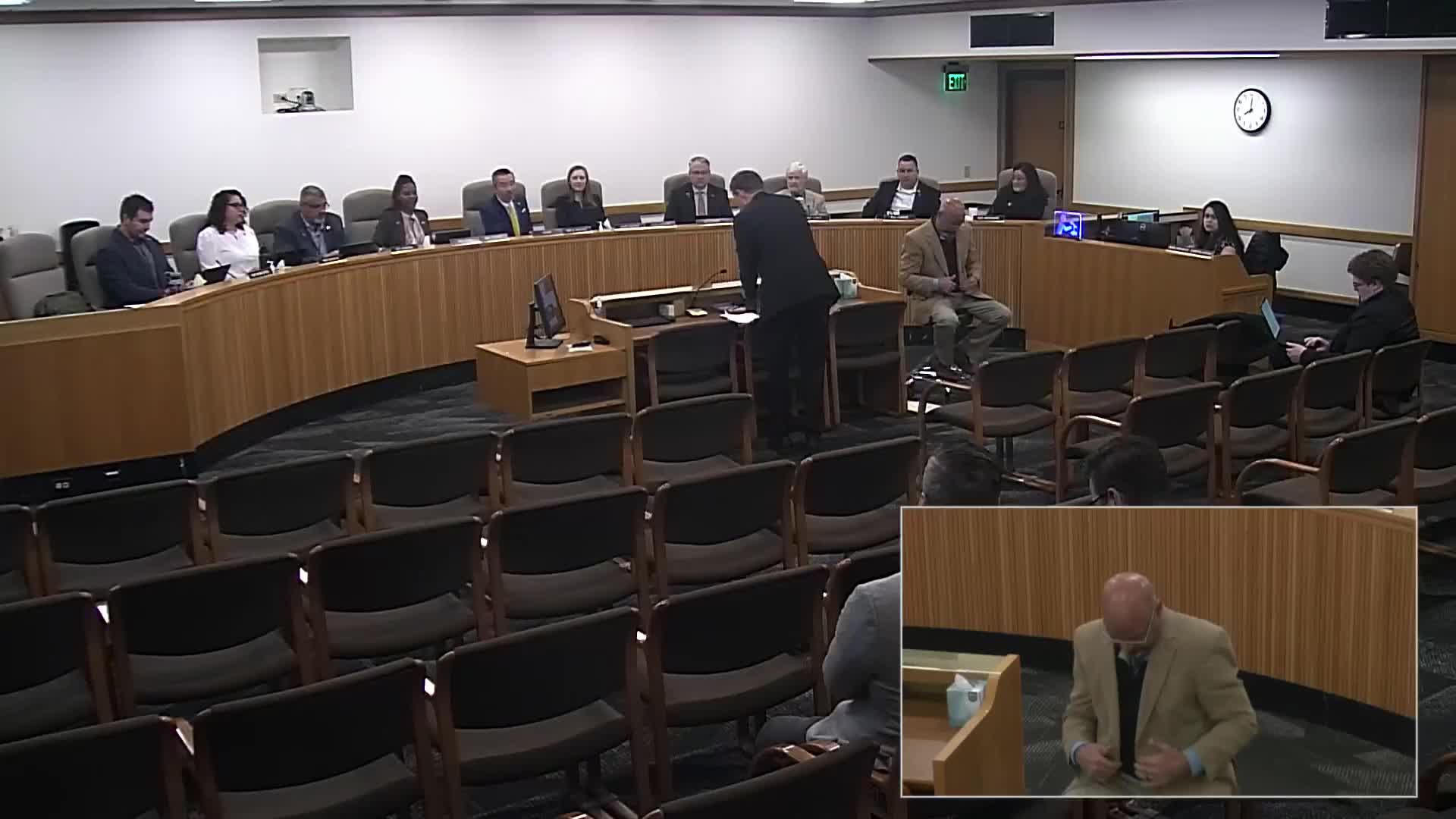
The House Committee on Economic Development, Small Business and Trade held an informational session and public hearing on Feb. 10 on House Bill 24‑11, which would create a repayable Industrial Site Loan Fund administered by Business Oregon with a proposed $40 million appropriation.
SALEM, Ore. — The House Committee on Economic Development, Small Business and Trade held an informational session and public hearing on Monday, Feb. 10, on House Bill 24‑11, which would create an Industrial Site Loan Fund (ISLF) administered by Business Oregon and would provide repayable financing to prepare industrial land for development.
Business Oregon staff described the fund as “patient capital” designed to pay upfront costs — including property acquisition, utility and transportation improvements, environmental remediation and wetlands mitigation — that frequently block industrial projects. Colin Sears, Global Trade and Investment Manager at Business Oregon, told the committee the program is modeled on the state’s semiconductor industrial lands program and would be a revolving loan fund rather than forgivable grants.
“The bill allows for interest‑bearing loans with flexible terms,” Sears said. He added the statute requires repayment, and that payments would begin no later than seven years after project completion.
Committee members and witnesses said a state loan program could unlock sites that cities and ports cannot afford to prepare on their own. Andrew Desmond, economic development policy director at the Oregon Business Council, called HB 24‑11 “a modest but important” step to address a statewide backlog of site readiness estimated by task forces and industry stakeholders at hundreds of millions of dollars.
“With a relatively small $40 million investment this biennium, the same dollars can be redeployed as loans are repaid,” Desmond said.
Supporters from across the state described a broad and recurring problem: much of Oregon’s land zoned for industrial use is not development‑ready because of infrastructure gaps, contamination, wetlands and other constraints. Jenna Jones of the League of Oregon Cities cited a 2023 statewide municipal survey showing only about 21 percent of identified industrial land was ready for development and estimated about 10,000 acres across responding jurisdictions required investment to be marketable.
Local officials gave concrete examples. Dan Diaz, economic and community development director for the City of Hillsboro, said Hillsboro has invested more than $100 million in site readiness over six years and that those investments produced roughly 1,300 jobs. Ed Fitch, mayor of Redmond, said the city identified 789 acres owned by the Department of State Lands that would need roughly $125 million in power, sewer, water and transportation improvements.
Private and nonprofit witnesses stressed the fund’s flexibility. Angela Biding of Twist Bioscience described a $100 million investment in a Wilsonville facility and said additional state readiness funding helps grow bioscience and advanced manufacturing jobs outside the semiconductor sector. Theresa Carr, director of business development properties at the Port of Portland, said the port — the largest public owner of industrial land in Oregon — supports the bill because upfront site costs are “both important and expensive.”
Some testimony urged that program rules include workforce and community safeguards. Rainey Santino Vittoro of the BlueGreen Alliance, speaking in a neutral capacity, urged the committee to embed workforce standards such as apprenticeship goals, family health and retirement benefits and hiring targets for veterans, women and BIPOC workers when possible.
Committee members also pressed staff on program design questions that Business Oregon said would be developed if the fund is authorized and funded. Representatives asked about selection criteria and transparency; Sears said the agency would propose a competitive application process with external reviewers and public reporting. Members asked whether loans would require project labor agreements (PLAs); Business Oregon said the draft program guidance had not been finalized but that currently PLAs generally apply only to state‑owned projects and the agency would consult the governor’s office and legislature on program guidelines.
Members raised rural concerns and wetlands constraints. One representative noted that much of rural Oregon contains wetlands that trigger mitigation costs and urged program attention to those realities. Business Oregon confirmed allowable uses listed in the bill text include wetlands mitigation and remediation activities.
Banking and finance groups testified neutral to the bill but supportive that state readiness funding could spur private lending. Kevin Christiansen of the Oregon Bankers Association said the fund could generate downstream lending opportunities by making sites financeable once infrastructure is in place.
The public hearing closed with no committee vote. The bill text, as read at the hearing, allocates $40,000,000 to the fund and authorizes Business Oregon to provide loans and other financial assistance for eligible industrial land development and planning costs. The bill also outlines application minimums and agreement requirements. The committee did not take a vote at the hearing; program rules, loan terms and administrative details were discussed as items to be finalized in subsequent rulemaking or program design if the Legislature appropriates funds.
Ending —
Committee staff and Business Oregon said they would provide follow‑up information requested during the hearing, including prior applicants and denials under the semiconductor industrial lands program, administrative cost estimates for running a new fund and clarity on PLA applicability. The committee did not take final action on HB 24‑11 at the Feb. 10 hearing.