Get Full Government Meeting Transcripts, Videos, & Alerts Forever!
Get email alerts on the Judicial Fitness Budget topic
No spam. Unsubscribe anytime.
Commission on Judicial Fitness asks for full-time director as complaints surge
Summary
At a Feb. 10 public hearing on House Bill 5013, the Commission on Judicial Fitness and Disability asked the House Public Safety Subcommittee to fund an increase from 0.5 to 1.0 FTE for its executive director and to maintain funding for unpredictable investigation costs amid rising complaint volumes.
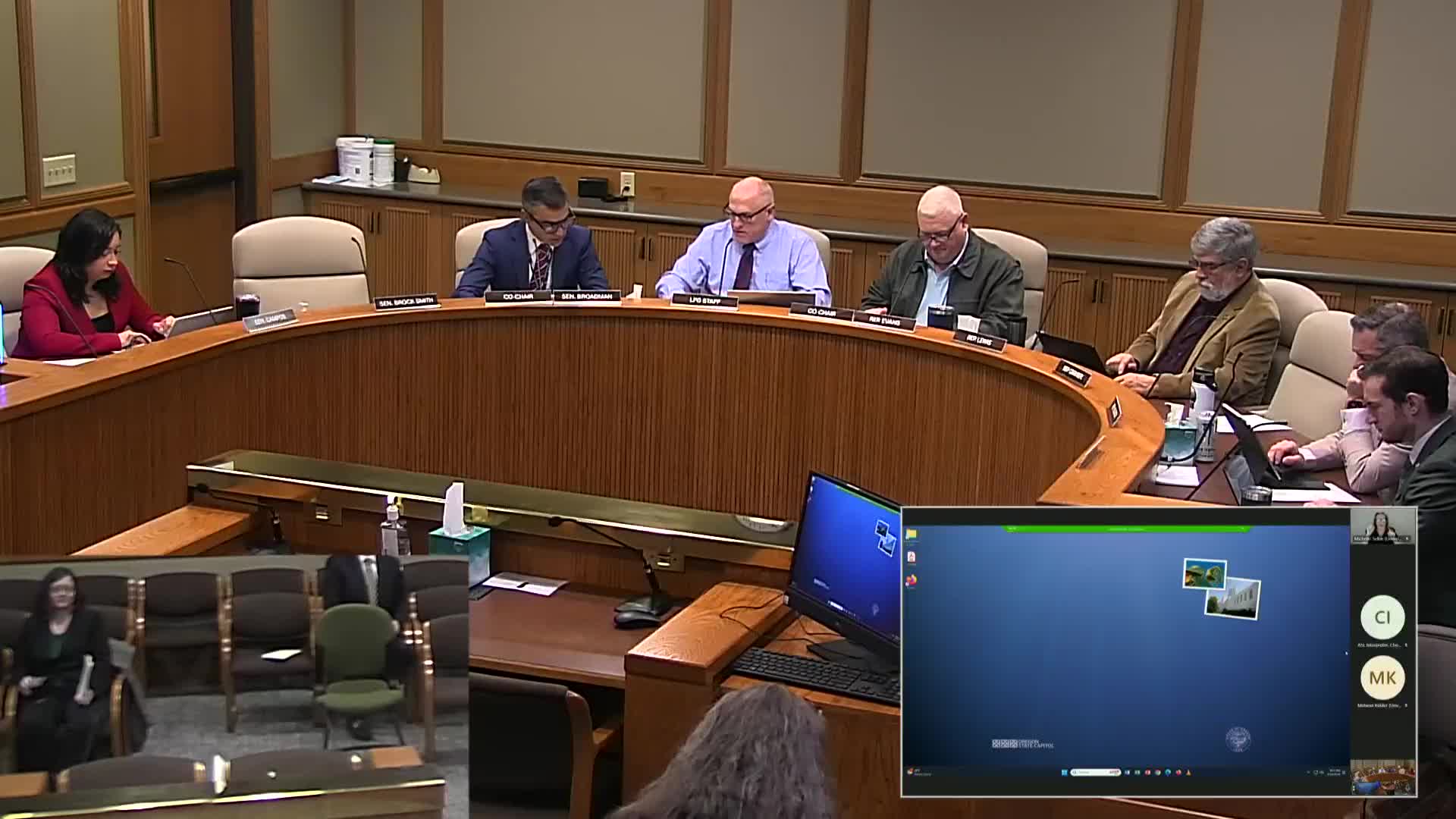
The Oregon House Public Safety Subcommittee opened a public hearing Feb. 10 on House Bill 5013, the budget request for the Commission on Judicial Fitness and Disability, and heard testimony that the agency needs a full-time executive director to handle a marked increase in complaints.
The commission, which investigates allegations of judicial misconduct and can recommend sanctions to the Oregon Supreme Court, said its executive director currently works 0.5 FTE and handles most complaint intake, initial screening, case review and management of outside investigators and prosecuting attorneys. "This increase to 1 full time position is vitally important for the commission to be able to continue functioning and fulfilling its constitutionally mandated mission," Executive Director Rachel Mortimer told the subcommittee.
The request comes as complaint volumes have risen in recent years, the commission said. Mortimer reported annual complaints of 240 in 2021 and 2022, 275 in 2023 and 367 in 2024, up from a range of roughly 104–163 per year from 1990–2018. Most complaints are from unrepresented parties and defendants; domestic relations matters were the single largest case category under investigation in the past year, Mortimer said. The commission also reported 12 cases under active investigation in 2024, including five carried over from prior years.
Judge Cheryl Albright, chair of the commission, outlined the panel's statutory role and process. The commission evaluates complaints under the Oregon Code of Judicial Conduct and, when warranted, can conduct hearings or reach stipulated agreements that are forwarded as recommendations to the Oregon Supreme Court, which issues any final discipline. "Unlike federal judges, Oregon judges may not be impeached, but they may be tried in a sort of prosecution," Albright said, citing Article VII of the Oregon Constitution and ORS 1.41–1.48 as the statutory foundation for the commission's authority.
Mortimer described the commission's budget structure as two parts: operations (paying for the 0.5 FTE and office costs) and extraordinary expenses (funds used for investigation and prosecution, including contract attorneys and court reporters). The Governor's budget lists current-service funding of $392,378 and 1.0 position and 1.0 FTE, but LFO staff explained that the Governor does not propose policy packages for judicial-branch agencies and generally funds judicial entities at current-service levels with standard adjustments.
Commission members and former chair Melanie Keebler, joining remotely, emphasized workload and the director's responsibilities beyond casework, including preparing meeting materials, communicating with complainants in a trauma-informed manner and coordinating contract investigators and prosecutors. "Rachel puts together all of the materials...and not only that, she talks to all of the individual complainants," Judge Albright said. Mayor Melanie Keebler said the agency is "treading water" on complaint volume and supported increasing the director's hours to allow proactive work to reduce future complaints.
The commission noted options for reductions if full funding is not available, such as eliminating the extraordinary-expenses appropriation (requiring ad hoc funding requests for investigations) or reducing professional services and IT support. The commission also reported receiving emergency funding in September 2024 to cover additional staff hours to clear a backlog earlier in the year.
The subcommittee accepted public testimony during the hearing and the chair closed the hearing on HB 5013 at the end of the session, noting the panel would continue to accept electronic written testimony for 48 hours after the meeting's scheduled start time. No formal vote on the bill or the appropriation was taken during the Feb. 10 hearing.
The hearing record and LFO budget review remain available through OLIS for further review by the subcommittee and the public.