Get Full Government Meeting Transcripts, Videos, & Alerts Forever!
Get email alerts on the Solid Waste topic
No spam. Unsubscribe anytime.
Broadwater County staff report strong solid-waste revenues, discuss expanded business assessments and tipping-fee options
Summary
County staff told commissioners solid-waste revenues were at about 104% of budget at midyear and outlined proposed business-assessment changes, a Department of Revenue pilot to flag unassessed properties, options to charge private haulers tipping fees, and temporary outreach-site closures due to staffing shortages.
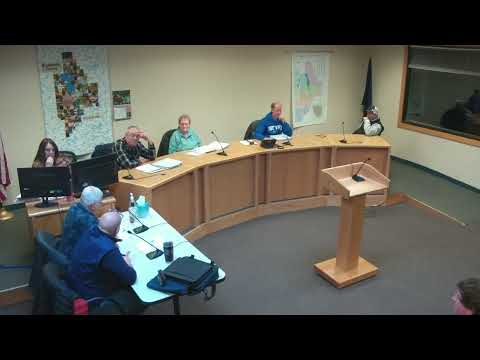
Broadwater County officials on March 11 discussed a second-quarter solid-waste budget report showing revenues above expectations and considered several operational changes aimed at capturing unpaid assessments and reducing county costs.
The county's chief administrative officer and budget director, Bill Jirachi, said, “As of the second quarter, we, were at a hundred and 4 percent of our revenue budget,” and noted that several service-charge lines — including disposal and container rental — were running above budget. Jirachi also highlighted a $184,000 machinery-and-equipment charge tied to a hook truck that should have been recorded in the capital-improvement portion of the budget, not the O&M worksheet.
Why it matters: Commissioners and staff said capturing unpaid assessments and clarifying who pays for hauling and tipping will affect whether current payers continue to shoulder extra costs, and could change how private haulers and outreach sites are managed.
Budget and capital items County staff said operational spending is running below projections: the O&M line reads roughly 41% spent at midyear, and the combined personnel and O&M total showed about 36% spent as of the second quarter. Jirachi said the $184,000 hook-truck expense appeared on the O&M worksheet because it had been paid from reserves and should be shown in the capital budget. He described the hook truck purchase as financed with an intercap loan; staff reported the first payment (interest) was about $10,000 and regular payments are “around 10,000” with the next full payment due in August.
Business assessments and exemptions Public works director TJ Gravely summarized proposed changes to business assessments that the county will forward to the commission in March. Gravely said staff modeled some rules on neighboring counties and asked the board for guidance on several categories. He described an example approach used for schools (one assessment per 35 students) and said he proposed “putting 10 assessments on the hospital,” citing the hospital’s cafeteria, shared 300‑gallon containers, and about 70 employees as the rationale. Gravely also said the county plans to exempt rural fire departments and veterans who are 100% disabled if they provide documentation; those residents would need to apply at the county office.
Department of Revenue pilot to flag properties Gravely and other staff described a pilot program with the Montana Department of Revenue that will let the county and two other counties submit geocodes or coordinates for properties to be reviewed for taxable status. Gravely said the pilot “will flag on their end and I think we're gonna catch a lot more people that way.” County staff urged residents to use the reporting link once publicized so newly built or unassessed dwellings can be added to the rolls.
Tri County private pickup, tipping fees and interlocal agreement Staff reported Broadwater recently ended its service relationship with Tri County and began hauling most waste to Lewis and Clark County. Several commissioners and staff said private haulers that pick up in Broadwater then dump at the county facility leave the county to pay tipping fees and handling costs. One county official said about 40 accounts remain unpaid, representing roughly $11,000 in unrecovered charges. Gravely said an interlocal agreement with Lewis and Clark County has been signed and filed with the Secretary of State.
Commissioners and staff discussed creating a disincentive or a convenience/tipping fee for private haulers that bring loads to the county facility; they said such a fee would have to be approved by the commission and likely would require public hearings and legal review. As one participant suggested, charging a per‑ton fee that covers county costs would “pay our driver, pays for the depreciation wear and tear on the truck,” and discourage outside haulers from offloading unmanaged waste.
Outreach-site staffing and temporary closures Public works staff warned of outreach-site staffing shortages as some longtime site attendants retire or become unavailable. The county has posted large signs that sites “could be temporarily closed without notice” and has reduced some outreach schedules. Staff said Dry Gulch is open two days a week and has seen very low use in winter; they recommended discussing possible consolidation of Toston and Raidersburg outreach sites and revisiting site days or personnel assignments during the next budget cycle. The county reported one site-attendant pay rate as “13.75” in the discussion; staff said they cannot increase hourly rates substantially without raising the operational budget.
Discussion vs. decisions Most items were discussion and direction to staff. Staff will refine the business‑assessment recommendations and return them to the board; Gravely said the proposal will be on the county commission’s agenda in March and on the board’s March 11 agenda for a decision. Commissioners asked staff to research legal options for charging private haulers and to bring any proposed convenience or tipping-fee changes back to the commission for review.
Votes at a glance - Approval of minutes: motion passed (verbal vote; tally not specified in the transcript). - Election of officers: nominations for chair (“Kif”) and vice chair (Eric Stalls) were each seconded and approved by voice vote (tallies not specified in the transcript).
Next steps and meeting schedule Staff said they will revise the budget report layout so capital purchases are shown in the CIP section for the next quarterly report, finalize business-assessment language for commission review, and continue the Department of Revenue pilot. The board set the next meeting for March 11 at 6 p.m.
Sources and attributions Statements and quotations in this report come from Broadwater County staff and commissioners during the public meeting, including Bill Jirachi (Chief County Administrative Officer and Budget Director), TJ Gravely (Public Works Director), Misty Muzzolo (Assistant Public Works Director), Cathy Brecky (citizen comment), and Commissioner Rick Meyer. Quotations are presented verbatim as spoken in the meeting transcript.