Get Full Government Meeting Transcripts, Videos, & Alerts Forever!
Get email alerts on the Public Safety Taxation topic
No spam. Unsubscribe anytime.
Broadwater County sheriff proposes five-year mill levy renewal at reduced rate to sustain deputies, school resource officer and equipment
Summary
Sheriff Nick Rauser told residents the county's five-year mill levy, first approved in June 2020 at 39.93 mills, would be submitted for renewal at a lower rate (proposed 31.95 mills) to maintain staffing, equipment and reserves; no formal vote occurred at the meeting.
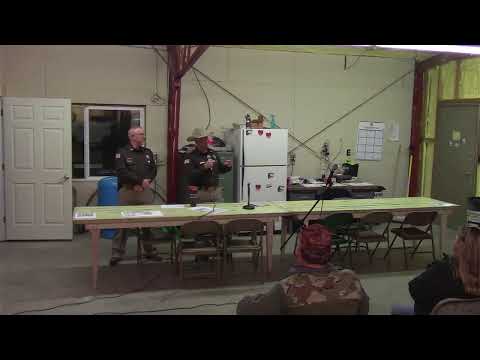
Sheriff Nick Rauser of Broadwater County told a town-hall meeting that he plans to seek renewal of the county's five-year mill levy at a lower rate to maintain current law-enforcement services and equipment.
Rauser said the current levy, approved in June 2020 at 39.93 mills, has funded new positions, wage increases and equipment, and that the proposed renewal would reduce the rate to 31.95 mills while preserving the sheriff's office staffing and programs. "This was voted in 5 years ago. Any property owner in Broadwater County has been paying this for the last 5 years... I am actually going to lower the mills 20%," Rauser said.
The levy supports patrol deputies, a school resource officer, detention staff, dispatchers, a detective and a reserve program that Rauser said has improved retention and response coverage. Rauser said two deputy positions were initially seeded with a federal "cost grant" (a multi-year federal grant program discussed at the meeting) and subsequently absorbed into the county budget; those positions are now fully funded. He also highlighted the office's investments in vehicles, vests and other operational costs and said some federal grant funds remain difficult to draw down because of administrative hurdles.
Rauser outlined staffing and workload figures: the office has 10 deputies (eight assigned to patrol), one school resource officer who is in schools daily, a detective (Michelle Frost) working roughly full time on major crimes, six dispatchers, eight detention officers and one part-time transport employee. He said case counts rose from 482 at the end of 2022 to 609 at the end of 2024 — roughly 60–61 case assignments per deputy per year.
On costs, Rauser provided several figures discussed at the meeting: the prior levy produced about $1,103,761 in revenue; the proposed lower levy would bring a projected total near $883,828. He said a $600,000 house would pay about $258.80 per year under the proposed rate (about $21 per month), and estimated the full annual cost to employ one deputy — including wages and operational support — at roughly $100,000. He also described equipment costs: patrol vehicles incur heavy maintenance and replacement expenses, ballistic vests cost about $1,800 and academy training for a new deputy can reach several thousand dollars.
Residents raised concerns about minimum coverage and single points of failure on shifts when deputies are injured or otherwise unavailable. One attendee said, "I'd much rather have 2 or 3 more deputies than 2 or 3 more, guys at the dump wanting to look at my truck," expressing a preference for added patrol capacity. Rauser and other speakers discussed mutual aid and backup: the office uses reserve deputies to cover shifts, coordinates with Gallatin County and the Montana Highway Patrol when available, and can temporarily assign the detective to patrol duties when necessary.
Rauser also discussed equipment and facilities supported by the levy and partner funding: the office uses vehicle turn-ins to support search-and-rescue and other county functions, purchased a body scanner for the jail with partner funds, and has leased storage space for evidence vehicles. He noted the office is insured through the Montana Association of Counties and that an incident a year earlier — a patrol car crash in which an officer survived — was part of the office's justification for vehicle replacements.
Rauser emphasized that the levy being proposed for renewal is not a new tax; "it's already been paid" by property owners for the past five years, he said, and the plan is to continue funding for five more years at the reduced rate. He invited residents to complete a brief online survey (QR code provided at the meeting) and said the sheriff's office plans additional public meetings before the levy appears on a ballot. No formal motion or county commission vote was recorded during the meeting; Rauser presented the proposal and answered resident questions.
End notes: Rauser urged public engagement and said the sheriff's office would publish budget breakdowns and answer follow-up questions. He said more meetings are planned and reiterated openness to community feedback via email, phone or the posted survey.