Get Full Government Meeting Transcripts, Videos, & Alerts Forever!
Get email alerts on the Superintendent Goals And Budget topic
No spam. Unsubscribe anytime.
Superintendent reports mid‑year progress on curriculum, safety and communications; committee debates adding ELL director and middle‑school math interventionist
Summary
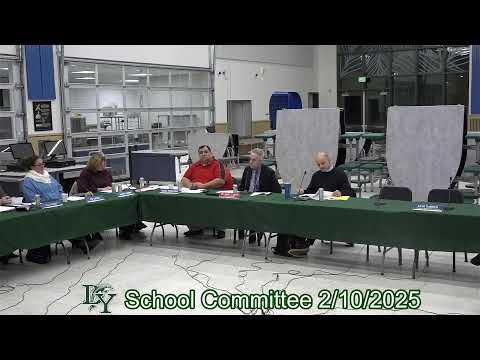
Dr. Smith, superintendent of the Dennis‑Yarmouth Regional School District, told the school committee on Feb. 10 that he is roughly halfway through his first year on five district goals — organizational systems, K‑12 math implementation, early literacy, communications and safety — and described steps the district has taken or begun to take on each.
Dr. Smith, superintendent of the Dennis‑Yarmouth Regional School District, told the school committee on Feb. 10 that he is roughly halfway through his first year on five district goals — organizational effectiveness, K‑12 math implementation, early literacy, public relations and school safety — and described steps the district has taken or begun to take on each.
The update included purchases and systems work to support long‑term planning, data the superintendent said show early gains where the district focused K‑5 math supports, and plans to shift the district’s early‑reading materials toward approaches aligned with the science of reading. Smith also outlined safety work led by Officer Pascarosa and a new hire in communications the district has placed in a newly created community relations role.
Smith said the district has bought EZCIP to build a long‑term capital plan, convened an intermunicipal budget work group with town finance chairs to start budget work earlier, and created consistent procedures for budget and curriculum adoption processes. He said K‑5 math supports produced measurable results: where the district targeted K‑5 math implementation, it showed a roughly 5‑percentage‑point gap closure relative to the state, and similar gains for students with IEPs and English learners in the grades where supports were concentrated. "No effective reading program can ignore phonics instruction and phonemic awareness instruction," Smith said, describing the district's literacy review and a planned 18‑month shift away from its prior "three‑cueing" approach toward materials the district leaders say better reflect current research.
On school safety, Smith said he has transitioned operational leadership of the district safety team to Officer Pascarosa, the district’s SRO, while retaining superintendent authority for agreements and district‑wide rollout. The district plans to implement the I Love You Guys standard response protocol (SRP) and to integrate it with the district’s Raptor reunification/visitor management system; Smith said the district is also working on memoranda of understanding with local partner sites for off‑site evacuation and reunification.
The committee spent the second half of the superintendent’s presentation on budget implications tied to personnel. Smith presented two staffing items under consideration for inclusion in the school budget: a middle‑school math interventionist and a district ELL director. He estimated a starting placeholder of about $75,000 for a math interventionist but noted a likely market cost closer to $90,000 depending on certification and experience; for the ELL director he identified a figure discussed in committee of about $130,000. Smith said the district currently has one ELL coordinator and described moving that coordinator under the assistant superintendent for pupil services; he also reported roughly 897 students whose first language is not English and about 525 students with IEPs in the district.
Committee members asked questions about whether central office and school leadership capacity are adequate to carry out the superintendent’s plans and whether interim steps exist between the current coordinator role and a full director position. "Are you getting the support that you need from central office, from building admin, from staff?" Committee member Jenny asked. Smith answered that he has begun regular meetings and walkthroughs with principals and that he plans mid‑cycle reviews with central office staff after February vacation.
On the math interventionist, Smith recommended against adding the position to the budget now because the middle‑school schedule currently makes a typical intervention model into a form of tracking that research shows is disadvantageous; he said the interventionist hire would be effective only if accompanied by schedule changes that permit flexible intervention. "Intervention should manage about 15% of your student population," Smith said, arguing that where large percentages of students require support the problem requires a different strategy than individual intervention slots.
On ELL staffing, Smith told the committee the district’s ELL program requires oversight similar in complexity to special education and that an experienced director would require licensure and supervisory skills. He said the coordinator role now sits under the assistant superintendent for pupil services and that an ELL director would supervise roughly 20 staff across the district. Committee members debated budget timing and priorities; some members expressed support for funding the interventionist if the committee decides it is necessary, while others urged conserving the priority list Smith had presented and exploring funding or schedule alternatives.
Formal business at the end of the meeting included the committee’s approval of the consent agenda — which accepted a donation from Alina Reardon to the high school graphic and design program (items the superintendent listed as a kiosk valued at about $4,000, three chairs at about $400 and a gift tower at about $1,000) — and a vote to adjourn. No final committee vote on adding the math interventionist or the ELL director to the budget was recorded at the meeting; Smith said the committee is scheduled to vote its final budget at a later meeting and that the committee has a window to deliberate further.
Next steps Smith outlined include continuing the literacy material review and adoption process, rolling out the SRP technology and training schedule with SROs and staff, completing the capital‑planning setup in EZCIP, and returning to the committee with more detailed budget options and any scheduling models that would allow effective middle‑school intervention without harmful tracking.
Votes at a glance: the consent agenda (including the donated kiosk/chairs/gift tower) was approved by voice vote; the meeting was then adjourned by voice vote.