Get Full Government Meeting Transcripts, Videos, & Alerts Forever!
Get email alerts on the Childcare topic
No spam. Unsubscribe anytime.
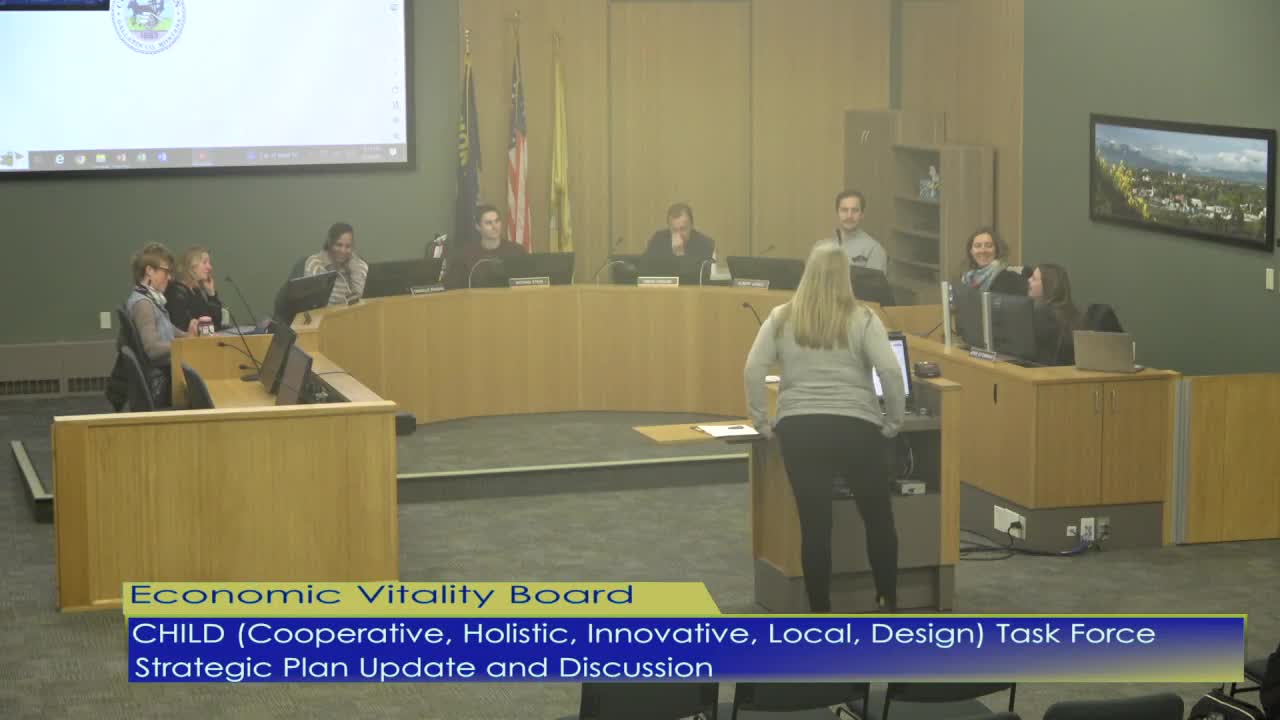
Gallatin County task force outlines plan to expand childcare access, cites real‑time slot database as next priority
Summary
Bozeman City and Gallatin County officials and community partners on Feb. 5 heard a strategic plan from the Greater Gallatin Child Task Force aimed at making childcare more accessible and affordable, and at stabilizing the childcare workforce.
Bozeman City and Gallatin County officials and community partners on Feb. 5 heard a strategic plan from the Greater Gallatin Child Task Force aimed at making childcare more accessible and affordable, and at stabilizing the childcare workforce.
The task force, presented by Tori Sporiles, director of early learning at Greater Gallatin United Way, is recommending a coordinated approach that includes expanding provider support, better real‑time data on openings, employer engagement, and policy changes such as subsidy expansion. Sporiles told the Economic Vitality Board the group’s top near‑term priority is a wait‑list prioritization and real‑time slot database to show when licensed providers have openings.
Why it matters: the task force framed childcare as an economic issue that limits employers’ ability to hire and retain staff. Sporiles said “childcare is the workforce behind the workforce,” and cited local and national data showing lost productivity and workforce exits linked to childcare gaps. The task force says better data on slot availability and targeted supports for providers could reduce the number of workers leaving jobs because of childcare constraints.
What the plan covers: the task force issued a strategic plan after outreach including visioning sessions, community input events and a survey that drew about 460 responses. The plan sets five priority areas: increase task force capacity, improve real‑time data on child‑care availability, support providers (recruitment and retention), engage employers on family‑friendly practices and employer‑supported options, and pursue policy and subsidy changes at the state level.
Data and on‑the‑ground realities: Sporiles said census measures undercount how families actually access care and that informal family, friend and neighbor care and newly unlicensed home programs (programs caring for six children or fewer) complicate capacity estimates. She said several licensed providers in Gallatin County currently report openings and that workforce shortages are causing some classrooms to remain closed even where space exists.
Proposed tools: the task force wants to build a wait‑list prioritization platform modeled on a system used in Missoula. Providers would list credentials, hours and open slots in real time; families and employers could search and prioritize placements. The proposal includes an employer membership option to help businesses secure slots for employees, but the board raised equity concerns about any pay‑for‑priority feature and asked the task force to examine protections so low‑income families and students are not disadvantaged.
Provider supports and policy work: the task force is pursuing grants to hire at least one navigator/coordinator through Greater Gallatin United Way to implement the plan. It is also tracking state legislative work, including proposals to expand Best Beginnings Scholarship eligibility (previously expanded in 2023 from 150% to 185% of the federal poverty level) and a proposed increase in compensation support for childcare staff. Sporiles said the state’s new licensing and provider support contracts (including a provider services contract now run by Shine Early Learning/Spark Montana) have shaken the local support network and created both gaps and opportunities for coordination.
Local impacts and examples: presenters cited an estimated national economic loss of about $57 billion annually from childcare‑related absenteeism and turnover, and local workforce metrics showing declines in workforce participation for women with young children (about an 11% decrease in Bozeman and 12% in Big Sky since 2021, per the task force’s materials). The group also noted MSU Child Development Center’s long wait list (nearly 400 families as listed on MSU’s website in 2022) as evidence of unmet demand on the university campus.
Next steps and city involvement: the task force is preparing to launch a shorter “universal” community survey and pursue grant funding for the wait‑list database and a staff hire. Sporiles and task force members asked for ongoing support from the city and county; board members identified potential municipal roles such as continuing to reduce fees and streamlining inspections, working with developers and homeowners associations to enable home‑based care, and collaborating on data and outreach.
Votes at a glance: the board approved the minutes for Dec. 4, 2024. Motion to approve by Mallory Peterson, seconded by Craig Ogilvy; recorded votes: Mallory Peterson — yes; Craig Ogilvy — yes; Mona Schwartz — yes; Al Jones — yes; Nathan Stein — yes; Chair Danielle Rogers — yes. Outcome: approved.
The task force plans further engagement with employers, legislators and Montana State University, and will return with the results of the short survey and grant applications as work continues on the database and provider supports.