Get Full Government Meeting Transcripts, Videos, & Alerts Forever!
Get email alerts on the Grants topic
No spam. Unsubscribe anytime.
Contract Review Committee finalizes FY26 grant recommendations, pledges letters to applicants denied funding
Summary
The Contract Review Committee approved preliminary FY26 grant recommendations, confirmed awards totaling $133,006.30 for substance-misuse requests, left roughly $44,000 unallocated due to funding restrictions, and voted to send formal letters to applicants who received no awards urging collaboration for future opioid-settlement funding.
The Contract Review Committee voted Friday to finalize preliminary fiscal year 2026 grant recommendations and to send formal letters to applicants that received no awards, committee members said.
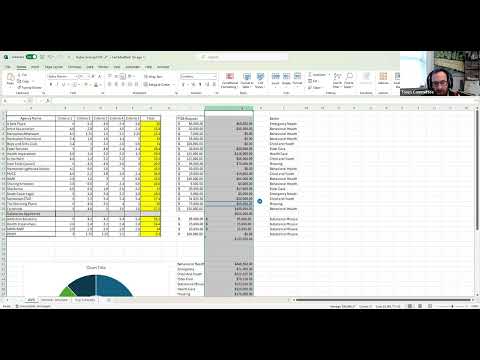
Committee members said the panel recommended $133,006.30 in awards for substance-misuse applications, leaving about $44,000 of the originally available funds unspent because the town’s grant rules prevented reallocating certain money across categories. “We have awards for a hundred and $33,006.30, which leaves approximately $44,000 of the money that we had on the table,” Veronica, a member of the Contract Review Committee, said during the meeting.
Why it matters: The committee’s decisions determine how locally held settlement and earmarked funds will be spent on prevention and direct services across the island. Several small or new nonprofit applicants were assigned zero awards this round; committee members discussed outreach and next steps to avoid discouraging future applicants.
Members and staff said some applicants were ineligible or received no funding for specific reasons: the Boys and Girls Club request was identified as a capital expense and outside the CRC’s grant mission; one applicant, PRISM, lacked a documented 501(c)(3) certificate at the time of review; and three prevention-focused groups (variously named in discussion as Atheneum, Dreamland, and the White House School/Lighthouse) received no awards because the committee prioritized direct-service requests in this funding cycle.
“Nobody really, the big ones didn’t get everything they asked for because we just don’t have the money,” Linda Williams, a committee member, said. Several members stressed they did not want to reopen the allocations and risk reducing awards to other organizations that had already been funded.
Committee members discussed whether modest internal reallocations could increase the largest single award to NAMI, which had requested $120,000 but was recommended for about $51,000. Joanna Roach suggested a possible adjustment involving Health Imperatives, but other members opposed reducing Health Imperatives’ award because that agency also receives funds in the substance-misuse category and is expected to face increased demand.
Because the unspent roughly $44,000 could not be moved into a different grant category under current restrictions, the committee focused on next-step outreach. Members agreed to write and send three different letters: a standardized explanatory letter to the three organizations that received zero awards urging collaboration on future applications; a separate letter explaining PRISM’s ineligibility pending proper nonprofit documentation; and a separate letter to the Boys and Girls Club explaining why the request was deemed a capital expense and therefore ineligible.
Jericho Veil and Alexandria Richards, town staff on the call, described options for future funding. Staff said federal- and state-related settlement funds for opioid-related programs will have specific requirements and may be disbursed in tranches; the committee discussed encouraging the three unfunded organizations to consider a joint application aimed at opioid-settlement funding in FY26. “If the three of them submitted a partnership application to the substance-abuse money, we could have awarded it to them,” Veronica said, urging outreach and collaboration.
Votes at a glance
- Motion to create three letters (one joint letter to the three organizations receiving 0 awards; one letter to PRISM regarding 501(c)(3) documentation; one letter to Boys and Girls Club explaining capital-ineligibility): moved by Linda Williams, seconded by Joanna Roach; vote: Linda Williams — aye; Joanna Roach — aye; John Beloche — aye; Sue Mintonen — aye; Veronica — aye. Outcome: approved.
- Motion to approve the FY26 recommendations report with staff and editorial edits (to be finalized administratively): motion carried; vote: Joanna Roach — aye; John Beloche — aye; Sue Mintonen — aye; Linda Williams — aye; Veronica — aye. Outcome: approved.
What the committee directed next
Committee members instructed staff to send preliminary, not-final, notifications to applicants explaining that the CRC’s recommendations are tentative until after the town’s Finance Committee review and town meeting. Members emphasized that any communication should make clear the committee’s support for applicants’ missions and encourage reapplication or collaboration, rather than present the zero award as a final denial. Jericho and staff will draft the letters and circulate them to the committee before sending.
Background and context
Committee members said they used the Community Foundation’s categories to organize award types (housing, food, direct services, prevention, etc.) and relied on a needs-assessment framework that will be further developed before future cycles. Members also noted the CRC may handle opioid-settlement funds differently from cannabis-settlement grants: staff recommended a single larger award to maximize impact rather than splitting opioid funds into many small grants, but the committee said it will make a formal decision once grant terms are finalized and received in writing.
The committee chair closed the meeting after approving the report edits and the letter motion, and members said the CRC will reconvene to manage the opioid-settlement grant process and to resume quarterly reporting later in the fiscal cycle.