Get Full Government Meeting Transcripts, Videos, & Alerts Forever!
Get email alerts on the School Technology Budget topic
No spam. Unsubscribe anytime.
Mendon-Upton schools outline $75,000 smart-board lease, cybersecurity and staffing needs in technology budget briefing
Summary
District technology leaders presented a budget plan that proposes a $75,000 lease for interactive touch displays, continued E-rate savings, pursuit of cybersecurity grants and a request for an additional technician and $200,000 for iPad replacements.
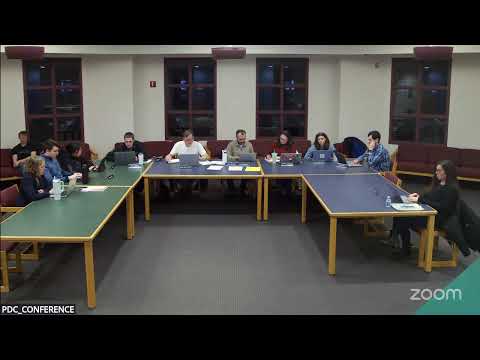
Ryan Robue, director of learning innovation for the Mendon-Upton Regional School District, and Joe Lake, director of technology, presented the district’s technology innovation budget proposal at the Feb. 10 school committee meeting at Dimock PDC.
The presentation outlined short-term upkeep, infrastructure upgrades and longer-term investments intended to standardize classroom displays, reduce digital-tool redundancy and strengthen cybersecurity planning. Robue said the district plans to pilot mobile interactive touch displays and “use i-Ready personalized instruction” more consistently to align digital tools to district priorities.
“The idea is to consolidate around deeper-learning curriculum materials instead of having four or five different technologies,” Robue said.
Lake reviewed recent work that reduced repair costs: the district refreshed teacher MacBooks and remarketed older devices, bringing in about $20,000 so far. He recounted a network upgrade over the winter break to replace aging fiber and said the district increased its internet circuit from 5 gigabits to 10 gigabits and planned router replacements during February vacation.
The presentation listed several specific budget drivers for fiscal 2026: a proposed $75,000 lease to replace about 100 classroom interactive units across district buildings, $200,000 to replace a fleet of sixth- through twelfth-grade iPads, and an unresolved request to add a full-time technician position to reduce repair turnaround time. Lake estimated a single interactive touch display at roughly $3,000, with carts or mounting options adding $1,500–$2,000, producing an estimated per-room cost near $5,000.
Lake also described grant and federal funding that offset costs: E-rate category 1 funding reduced internet costs (he said the program typically covers about 40% of internet expense), and a recently approved municipal cybersecurity grant will fund multifactor authentication and incident-response planning, including tabletop exercises and an independent consultant. He said the district signed a contract with Walling Computer to assist with that work.
Robue and Lake described efforts to slim down low-use digital tools, an estimated $24,000 in savings from consolidating subscriptions, and attention to student data privacy: new tools must pass the district vetting process and an existing tech consortium lawyer reviewed one vendor’s student-data agreement for district use.
Board members questioned the durability, safety and placement of mobile displays and whether the district could phase projects. Joe Lake said the vendor’s carts are designed to avoid toppling and some units raise and lower to accommodate kindergarten students.
Several district staff and members discussed alternatives, including interactive projector retrofit options and all-in-one touch displays. Robue said the $75,000 lease figure is a placeholder and that final quotes were pending.
The presentation closed with staffing and facility needs the team called higher priority over time: a potential digital integration specialist role, continued infrastructure repairs in older buildings (Nipmuc and Memorial were named), and ongoing planning for the iPad lease coming due.
The committee did not take a formal vote on the budget request at the meeting; presenters said the figures were for discussion and to guide later budget decisions.