Get Full Government Meeting Transcripts, Videos, & Alerts Forever!
Get email alerts on the Homestead Exemption topic
No spam. Unsubscribe anytime.
Madison County holds public hearing on HB 581 floating homestead exemption
Summary
Madison County officials and residents debated whether to opt out of House Bill 581, a state law that would freeze assessed homestead values and shift tax burden; presenters described likely revenue losses and uncertainties about state rules, deadlines and offsets such as a local sales tax.
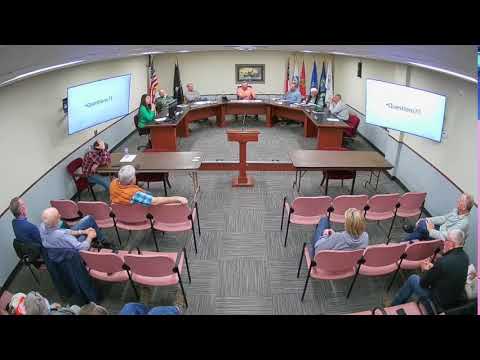
Madison County held a special public hearing Tuesday evening on House Bill 581, the statewide “floating homestead” exemption, during which county staff outlined what the law would do, how the county could opt out and the likely effects on county revenue and taxpayers.
The hearing featured a presentation by Gary Capalier, identified by the meeting chair as the presenter on the topic, followed by questions and public comment from residents and responses from county commissioners. The county repeatedly warned that the law as written leaves several implementation details to the state and that opting in would be effectively permanent for the county unless local officials create a separate, local version.
The issue matters because HB 581 would cap increases in assessed values for homestead properties — effectively “freezing” most homestead assessment increases to the consumer price index (CPI) or other state-determined limits — while other property types (commercial, industrial, non‑homestead residential) would remain liable for market-value increases. County staff and residents said that would shift revenue from homesteaded parcels to other taxpayers, and that local taxing authorities would need to raise millage rates to recoup revenue.
Capalier said HB 581 is “in addition to all the current global exemptions” and would not replace existing local exemptions (for example, senior exemptions already on the books). He told the hearing the bill removes the estimated tax bill from the annual assessment notice and instead adds an estimated millage rollback rate on the notice, because millage rates are not set when assessment notices go out. He also described several other changes in the law: removal of an automatic one‑year sales “hold” tied to sales price differences, removal of an automatic three‑year hold for appeals unless the Board of Equalization lowers the assessor’s value, and a codification that the Board of Assessors must reappraise property every three years and may appeal state sales ratios.
County staff presented sample fiscal calculations using past years and a 3% CPI assumption (the Department of Revenue recommended counties use prior-year figures where possible). Using that approach, staff said the average homestead revenue loss per parcel in the 2022 example was about $142, producing an estimated total loss of roughly $935,000 for that year; to recoup that level of revenue the county would need to raise roughly 0.9 mills in the first year, rising in later years under the staff projections to the numbers shown on the county slides. Capalier stressed those figures are projections using historic data and a CPI assumption and that actual outcomes will depend on future CPI and property market behavior.
Speakers at the hearing repeatedly raised two recurring concerns: (1) uniformity and equity between neighbors (for example, identical houses could be taxed at very different assessed values if one owner’s value is locked while another’s increases after sale), and (2) the permanence and loss of local control if the county “opts in.” Capalier said counties and municipalities were automatically in HB 581 when the law passed and must take formal opt‑out steps if they do not want it to apply locally. He also said that some counties are already adopting local floating homestead exemptions that vary from the state approach and that a local option could be fashioned to mirror many features of HB 581 while remaining under local control.
Several residents urged the Board to opt out. David Carey (identified for the record with an address during the hearing) told the board he supports opting out. Other residents asked whether the county could develop a local senior exemption (for example, 70 and older) before committing to an opt‑out; county officials said discussions were already under way and that a longer state deadline (several participants said they had heard the legislature might extend the March 1 opt‑out deadline to May 31) would allow more time to craft and coordinate local relief measures with the school board.
Commissioner Chandler (identified in the meeting as a member of the board) and Commissioner Adams stressed the county’s limited flexibility: the county already faces many state mandates and fixed costs and showed attendees a breakdown of mandated expenses during the presentation. The commissioners said those mandates constrain how much the county can cut or reassign spending and that property taxes remain a large portion of local revenue. Commissioner Chandler emphasized that public oversight of the county budget is the principal lever residents have to influence priorities.
County staff and several speakers also discussed two related state bills mentioned at the hearing: Senate Bill 346 (referred to in the presentation as the law that previously created a sales “hold” after a purchase) and House Bill 808 (which increased the personal property exemption from $7,500 to $20,000). Capalier said the personal property change produces an additional revenue loss for taxing authorities and that combined changes could strain local budgets.
On the question of offsets, Capalier and residents discussed a state provision for a local sales tax option (referred to in the hearing transcript as “FLOSS” or variations of that name) that the legislature tied to HB 581 as a potential revenue offset. Presenters and residents said the state’s messaging on that offset has been inconsistent; Capalier warned the county should not rely on projected sales tax revenue to fully cover the long‑term revenue shift under the homestead exemption.
The hearing closed with county officials encouraging residents to review local exemptions already available (including senior and disabled‑veteran exemptions), to contact state legislators with questions or concerns, and to attend the next meetings: the county will close the public hearing at a future meeting and then proceed to a regular business meeting where commissioners expect to vote on whether to opt out. County staff said they will publish the presentation and offered to email slides to residents on request.
The public record at the hearing included multiple requests from residents for clearer, written commitments (for example, a locally designed senior exemption) before the county makes a final opt‑in/opt‑out decision. County officials said they are pursuing those options but that some require action by other taxing authorities (notably the local school board) or by state legislators to implement.
Next steps: the county’s public hearing record will remain open through the posted process; commissioners indicated they expect to consider a formal opt‑out vote at a scheduled business meeting after the hearing period closes and after any applicable state deadline is confirmed.