Get Full Government Meeting Transcripts, Videos, & Alerts Forever!
Get email alerts on the Special Education topic
No spam. Unsubscribe anytime.
Volusia County Schools outline ESE compliance gains, Education Modified rollout and plans to expand service continuum
Summary
Volusia County School District staff updated the school board on Exceptional Student Education (ESE) compliance work under a Department of Justice settlement, the district's rollout of the Education Modified platform and proposed changes to ESE service models intended to increase access and reduce student travel.
Volusia County School Board members heard a progress report on Exceptional Student Education on the workshop agenda in February 2025, including updates on implementation of the Education Modified platform, quarterly compliance audits and planned changes to the district's continuum of ESE services.
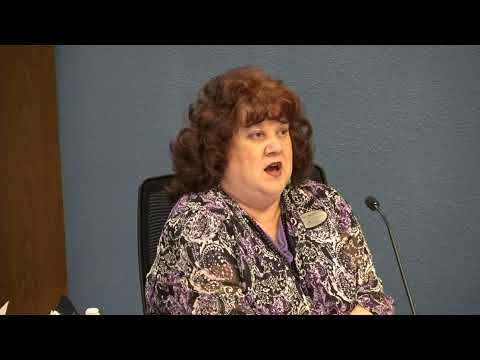
The report, delivered by Jacqui Copeland, executive director for Exceptional Student Education, and supported by Superintendent Dr. Carmen Balgobin, said the district is continuing to implement measures required by a Department of Justice settlement that followed an ADA complaint filed in February 2018 and that remains in effect through August 2026. Copeland told the board the district has focused on limiting suspensions of students with disabilities, reducing law-enforcement involvement, improving documentation and increasing staff training.
The presentation said the district piloted the Education Modified technology platform in 2023'24 and rolled it out more widely in 2024'25 to help teachers acknowledge IEPs, track accommodations and log paraprofessional support. Copeland said the district has seen substantial usage of the platform: "at this current school year, we've had almost 3,000,000 submissions," and the accommodation-tracking form had about 1,500,000 submissions. She said the platform 'has helped schools improve documentation and that the Florida Department of Education has acknowledged the system's improved clarity.
Nut graf: The update lays out how district staff say they are meeting federal requirements and improving recordkeeping while proposing service-model changes intended to keep more specialized instruction inside Volusia County and reduce student travel.
District staff described a quarterly, school-level ESE audit that randomly selects two students per school and compares school documentation to the students' IEPs. Schools receive an ESE report card scored 1 to 10; Copeland said district staff meet with each principal after audits to review results and provide support. "Our use of Education Modified has helped schools to improve their scores with the ability to track and pull student data electronically," Copeland said.
The presentation laid out the district's continuum of ESE placements and proposed additions to the continuum. Staff described levels from regular class (students spending roughly 80 percent or more of time with nondisabled peers) to separate class placements (students spending less than 40 percent of time with nondisabled peers). Proposed enhancements include a behavior support teacher, an ESE support class for students two or more years below grade level in specific subjects, an ESE separate-class model aligned to state language for cognitive deficits, and an intensive ASD/behavior class for students with severe intensive behavioral needs. Staff said the enhancements will be implemented in phases over several years and will be developed jointly with teachers, administrators and parents.
Board members pressed staff on several operational points. Board member Donna Brosmer asked for clarification on behavior supports and where intensive programs are located; staff said the district's iABLE program, described as an intensive academic behavioral learning environment, is housed at Highbanks and Riverview alternative schools. Brosmer also asked whether behavior or academics takes priority when they conflict; Copeland said behavior regulation is a priority because learning cannot occur if a student is not regulated, and she described behavior intervention plans and crisis plans as tools the district uses.
Superintendent Dr. Carmen Balgobin praised the ESE team and noted that both Florida DOE and DOJ representatives had observed improvements. Kathy Galati, who addressed deferment options for students with IEPs, said students with an IEP may defer receipt of their diploma so they can continue to receive Volusia County services after marching with their class; Galati described vocational supports, employment advising and Project SEARCH placements at Halifax Hospital as options the district offers.
Several board members urged careful pacing of changes and attention to staff capacity. Vice Chair Ruben Colon said he preferred a deliberate rollout: "I'd rather move slower and do it completely than to roll it out 'and big bang, and you don't really have enough folks to support that," he said. Other board members described overcrowding at some elementary campuses where ESE program placement has required conversion of general-education space and urged district staff to consider geography when placing programs.
Ending: Copeland told the board the district will continue professional learning, expand parent engagement, maintain quarterly compliance monitoring and collaborate with the ESE advisory committee, which meets monthly. Staff said the continuum changes will be phased in over the next couple of years and returned to the board for further detail as implementation plans are developed.