Get Full Government Meeting Transcripts, Videos, & Alerts Forever!
Get email alerts on the Shared Parenting topic
No spam. Unsubscribe anytime.
Debate grows over rebuttable shared‑parenting presumption in custody bill
Summary
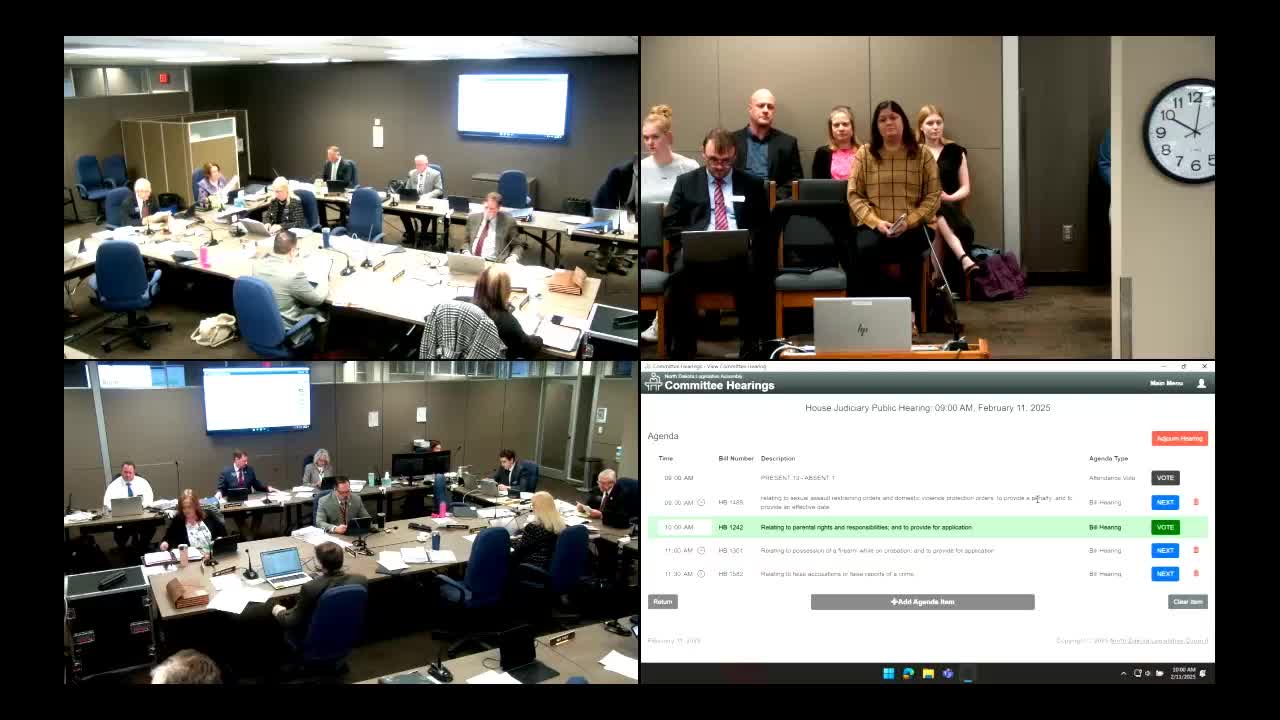
Representative Kathy Freilich introduced House Bill 1242 and told the committee the measure adds definitions for shared decision‑making and shared residential responsibility and “the presumption that shared decision making responsibility and shared residential responsibility is in the best interest of the child.”
Representative Kathy Freilich introduced House Bill 1242 and told the committee the measure adds definitions for shared decision‑making and shared residential responsibility and “the presumption that shared decision making responsibility and shared residential responsibility is in the best interest of the child.”
Under the bill, courts would start from a legal presumption that shared decision‑making and shared residential schedules are in the child’s best interest unless rebutted by a preponderance of evidence that the presumption would harm the child, endanger the child’s physical or emotional health, or is not feasible because of parental circumstances. Freilich said the presumption is rebuttable and that domestic violence, abuse of a child and other listed circumstances would void the presumption.
Proponents, including fathers and advocacy groups who testified, said the change would reduce parental alienation and litigation and increase stability for children. Todd Peterson and Craig Ritchie described personal experience and professional observations in support of the presumption and argued that shared‑time arrangements reduce risks associated with single‑parent households.
Opponents raised multiple concerns. Hallie Peterson, who identified herself as coming from a divorced home, described sustained emotional and alleged abusive conduct by a parent and said the bill’s presumption would have forced her to spend more time in an environment she described as unsafe. She and other opponents urged the committee not to replace the current best‑interest framework with a near‑automatic presumption.
Seth O’Neil of the North Dakota Domestic and Sexual Violence Coalition testified in opposition, saying the bill narrows the court’s ability to consider the full set of best‑interest factors. O’Neil noted the bill’s definition of domestic violence would apply only when serious bodily harm is shown, which he said could leave out cases of emotional or non‑fatal abuse; he urged maintaining broad judicial discretion and recommended language clarifying guardian ad litem access for minors who cannot petition on their own.
Committee members asked whether the child’s preference and default judgments are addressed in the bill; committee discussion noted that current law permits the court to consider a child’s maturity and views on a case‑by‑case basis but that HB1242 would narrow the showings that permit deviation from equal shared responsibilities. Several witnesses suggested targeted amendments, including clearer guardian ad litem procedures for minors and clarification about how default judgments and non‑participating parents would be handled.
Ending: The committee closed the hearing on HB1242 without a vote; members said they would take the diverse testimony under advisement, and several witnesses and lawmakers indicated they would work on specific amendments to address minors’ access to relief and the treatment of past convictions or default judgments.