Get email alerts on the Energy Code I2066 Emergency Petition topic
No spam. Unsubscribe anytime.
State Building Code Council rejects emergency rulemaking request tied to Initiative 2066
Summary
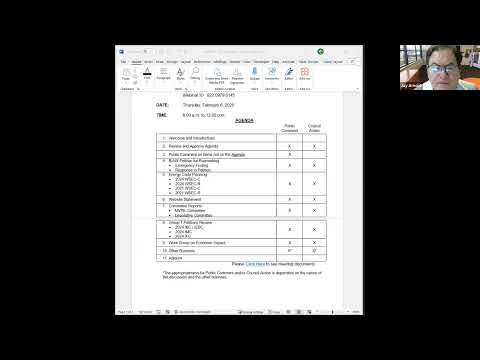
The State Building Code Council on Thursday voted 10-2 against finding an emergency that would have allowed emergency rulemaking in response to a petition from the Building Industry Association of Washington tied to Initiative 2066.
The State Building Code Council on Thursday voted 10-2 against finding an emergency that would have cleared the way for emergency rulemaking in response to a petition from the Building Industry Association of Washington (BIAW) related to Initiative 2066.
The petition asked the council to adopt emergency language to guide local code officials on how to apply the initiative’s limits on energy‑code treatment of natural gas while the council proceeds through its regular rulemaking to reconcile I‑2066 with existing energy and state law. Council staff and the petitioner said a decision was needed quickly: the petition response deadline to the code office was Feb. 15.
Supporters of the petition, led in public comment by Patrick Hanks of the Building Industry Association of Washington, said the emergency language was intended only as a temporary fix to avoid permit uncertainty while the council finished deliberations on permanent code changes. “This is not a permanent solution, and it’s not our first solution, but it’s complementary to what the council is doing right now,” Hanks told the council. He urged a short‑term measure to give builders and local officials clearer guidance while the formal rulemaking proceeded.
Opponents and several council members said the petition did not meet the statutory standard for emergency rulemaking, would create more uncertainty for code officials, and risked legal conflict with other state law. Council member Kjell Anderson said the proposed language “seems like it provides less clarity” for local officials and questioned whether an emergency remedy was legally available. Assistant Attorney General Derek Mirbatall clarified procedural questions about the emergency threshold and voting rule, saying the two‑thirds vote required is calculated from members present and that the council should focus first on whether the petition’s concise statement established the required emergency basis. Public interest groups including Earthjustice, Climate Solutions and the Sierra Club urged the council to deny the petition and to await court rulings on I‑2066 and associated litigation before changing rules.
During deliberations council members balanced three legal pathways for responding to I‑2066: (1) the normal triennial code cycle and external petitions, (2) emergency rulemaking under the Administrative Procedure Act (which needs a two‑thirds vote of members present), and (3) off‑cycle or legislatively directed amendments under RCW 19.27.032. Several members said the initiative’s language creates legal ambiguity that is better handled through the ordinary rulemaking and technical review process than by emergency changes.
The formal motion on the table — to find that an emergency exists and move forward with emergency statewide rulemaking in response to the BIAW petition — was made by Council Member Damon Doyle. After discussion and public comment, the council took a roll‑call vote and the motion failed by a 10‑to‑2 margin (two votes in favor, ten opposed). Council members who voted in favor were Damon Doyle and Tom Handy. Those voting no included Jay Arnold, Joe Anderson, Justin Bourgo, Angela Haupt, Roger Haringa, Time Enser, Ben Nomura, Pete Rickey, Katie Sheehan and Dan Young.
Separately during the meeting the council took a separate set of planning actions tied to the same statutory issues. The council voted to open a public submittal window focused on potential 2021 energy‑code amendments that parties say relate to I‑2066; staff will file the formal pre‑rulemaking notice (CR‑101) and the window for proposals was scheduled to open Feb. 10 and close April 7. The council also directed that proposals flagged as I‑2066‑relevant be reviewed by energy technical advisory groups, coordinated through the council’s standing committees, and subjected to a formal economic impact review before any CR‑102 (proposed rule) is filed.
Why this matters: the question affects how local jurisdictions review and approve building permits for remodeling and new construction in the near term. Initiative 2066 (I‑2066) restricts energy‑code provisions that penalize or discourage natural gas, and it became law after the 2021 Washington State Energy Code was adopted. That created tensions between existing code language, federal energy standards, and the new initiative. Local building officials, developers and public‑interest groups told the council the lack of statewide interim guidance was producing uncertainty; the council’s vote leaves the 2021 code in effect while the technical and legal reconciliation proceeds.
What comes next: council staff and the energy technical advisory groups will review the proposals and prepare cost‑benefit and small‑business impact analyses to support any formal rulemaking. The council directed standing committees to coordinate correlation across affected codes and to return recommendations to the full council in the coming months.
Votes at a glance
- Motion: “Find that an emergency exists and initiate emergency statewide rulemaking in response to the petition from the Building Industry Association of Washington regarding implementation of Initiative 2066.” Mover: Damon Doyle. Second: not specified in the public record. Outcome: failed. - Roll call (selected): Jay Arnold — no; Joe Anderson — no; Justin Bourgo — no; Damon Doyle — yes; Tom Handy — yes; Angela Haupt — no; Roger Haringa — no; Time Enser — no; Ben Nomura — no; Pete Rickey — no; Katie Sheehan — no; Dan Young — no. Tally: yes 2, no 10.
Council members and staff said they will keep public comment opportunities open as the technical review continues. Stakeholders on both sides of the debate said they plan to remain engaged through the tags, committee deliberations and any formal rule filings.
Ending note: the council’s refusal to find an emergency means the 2021 energy code remains the document local officials are expected to enforce while the council gathers technical detail and prepares any future proposed rules; proponents and opponents said they will press their positions in the rulemaking that follows.
AI generated
The text on this page is AI generated. Summaries, highlights, analysis, and video transcripts are all produced from the original source material.
AI can make mistakes, so if you spot one, and we will fix it for everyone.
Note: the source content is unaltered by us. Any content source we link to, be it a video, an audio recording, or a document, is presented exactly as its publisher released it. That publisher is usually a government body, sometimes an individual official or another organisation.