Get Full Government Meeting Transcripts, Videos, & Alerts Forever!
Get email alerts on the Economic Development Tax Incentives topic
No spam. Unsubscribe anytime.
Residents press Charleston County on tax incentives for Elbit Systems; council members push back on accusations
Summary
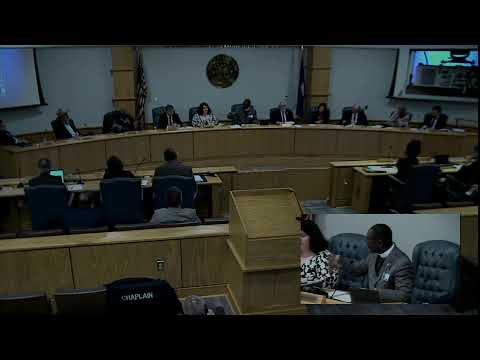
Multiple speakers at the Feb. 11 Charleston County Council meeting urged review or reversal of tax incentives awarded to Elbit Systems’ North Charleston facility, citing human‑rights and transparency concerns; council members said the county is not complicit in atrocities and called for civility.
Several residents and activists used the Feb. 11 Charleston County Council public‑comment period to press the council to review tax incentives awarded to Elbit Systems’ North Charleston facility and to demand more transparency about local agreements with corporations.
The comments, delivered to Charleston County Council, alleged the company’s work supports weapons used in Gaza and criticized the county for providing public incentives without clear accountability. “The decision to open the Elbit Systems facility in Charleston was made and closed to the public meetings,” said Seth Lowry, a resident who identified himself during public comment. “A company that manufactures weapons to commit mass genocide is here in Charleston, and you did not ask your constituent's permission.”
Why it matters: Speakers connected local economic incentives to national and international human‑rights concerns, arguing that county‑level tax breaks require stronger reporting and public review. The debate also underscored local tensions between pro‑Palestine demonstrators and other community members who said criticism had crossed into antisemitism.
Speakers who addressed the council included Philip Lowry, who criticized “file out agreements” and corporate tax breaks; Elizabeth Roth, who cited a Good Jobs First report that she said documented state‑level losses to public schools and singled out county incentive agreements; Brandon Fish, who described antisemitic comments directed at local Jewish organizations after protests; and Jace Puczynski and Mavi Lewis, who offered contrasting views on whether pro‑Palestine activism was antisemitic and raised the moral implications of local incentives. Roth told the council that the Good Jobs First report, “The Cost of Corporate Tax Breaks on South Carolina Schools,” showed Charleston County Schools lost $207,000,000 over six years and criticized the lack of disclosure about award size, promised jobs, and reporting requirements.
Several speakers referenced a Charleston County set‑aside grant of $700,000 tied to the Elbit Systems facility; commenters said the grant was approved by the county, and called for detailed reporting on outcomes tied to that incentive.
Council members responded during council‑member comments. Charleston County Councilman Darby said the council should not be characterized as supporting violence: “there's no way in the world that we are in coalition with any organization that want to bomb children,” he said, adding that he would not “sit here quiet, allowing them to attach that to this council.” Council member Worman said it is “very possible to be pro Palestine and not necessarily anti Semitic” while also acknowledging that “it’s also possible for that to not be the case.” Council member Kabrowski defended Israel’s security needs and called for recognition of atrocities against hostages.
No formal policy change or vote on Elbit Systems incentives was recorded in the meeting minutes or on the Feb. 11 agenda. Council members flagged the issue as contentious and discussed the need for dialogue and accurate public information, but no motion to reopen or rescind incentive agreements was made on the record.
Ending: The county received multiple public comments urging greater transparency and stronger reporting requirements for corporate incentive agreements. Council members expressed differing views and defended the council from accusations of endorsing violence. No formal county action on the Elbit incentives was taken during the Feb. 11 meeting.