Get Full Government Meeting Transcripts, Videos, & Alerts Forever!
Get email alerts on the Game And Fish Land Acquisition topic
No spam. Unsubscribe anytime.
Lawmakers question Game and Fish land purchases, seek details on leases, taxes and public access
Summary
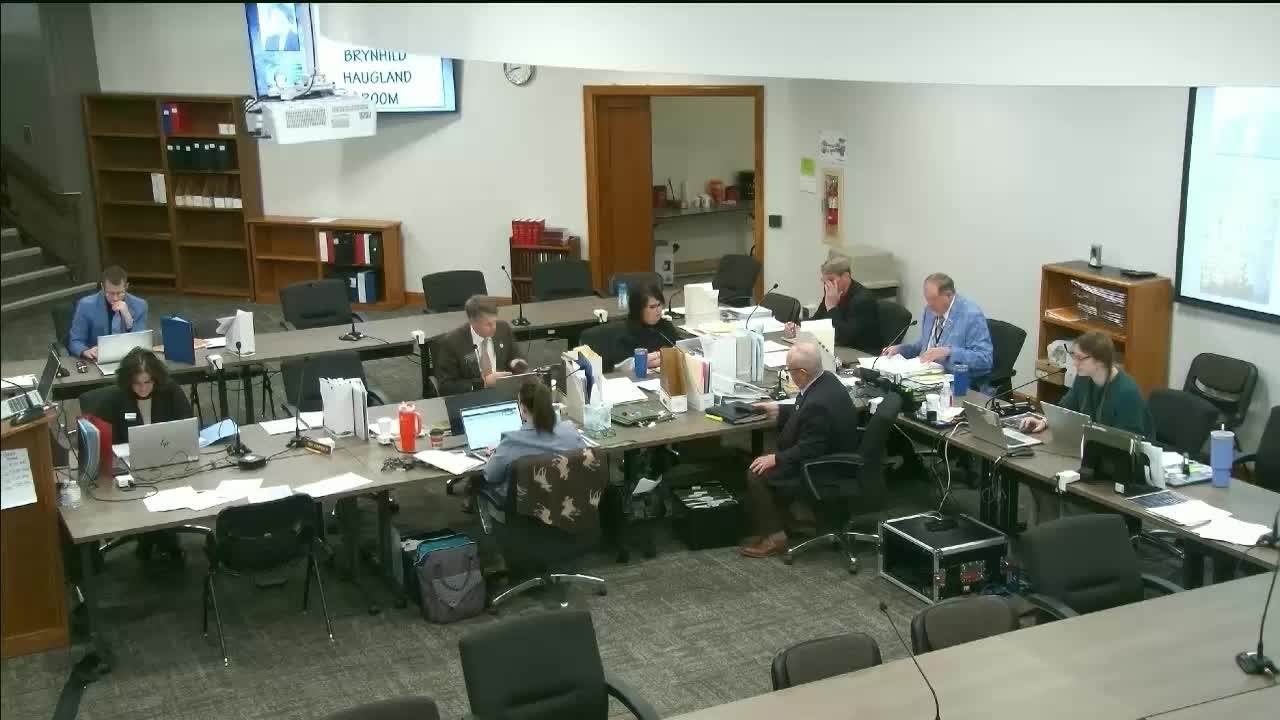
The House Appropriations Government Operations Division reviewed North Dakota Game and Fish Department land acquisitions, asking for details on which parcels would be open for hunting, lease terms, tax impacts and appraisal limits.
The Government Operations section of the House Appropriations Committee discussed the North Dakota Game and Fish Department’s land-acquisition list, which committee members said totals roughly 2,000 acres and includes parcels in multiple legislative districts.
The matter drew questions about public access, local taxes and how acquisitions are prioritized. “When the Game and Fish Department purchases land … one of our missions obviously is to open it up for access to the public. And so yes, all of our property that we own is open for public access,” Jeb Williams, director of the North Dakota Game and Fish Department, told the committee.
Committee members said some parcels under consideration are saline, enrolled in federal Conservation Reserve Program (CRP), or flood-prone and therefore not highly productive cropland. Representative Brandenburg described an Adams County parcel enrolled in CRP for decades and said it “probably fits in that box” for wildlife habitat rather than agricultural production. Williams said the department prioritizes purchases that round out existing wildlife-management or public-land areas and that many landowners approach the department to sell.
Why it matters: purchases change who controls hunting access and who pays property taxes. Williams told the committee the department assumes 100% of property taxes on land it acquires, and that the department and its partners pay “about a million dollars in property taxes” for the properties it owns and leases. Committee members said that information is relevant to county officials and neighbors who receive notice when a purchase is contemplated.
Key details and process: Williams said the department maintains roughly 220,000 acres in its wildlife-management system, about half of which are leased from the U.S. Army Corps of Engineers and the Bureau of Reclamation. Corps leases are typically 25 years, he said, and the department “assumes that full management responsibility” for those properties at no lease cost to the state. For purchases, the department conducts appraisals and “we can’t pay above the appraised value,” Williams said. The department also notifies landowners within a mile of any property it proposes to acquire and consults county commissioners.
Committee members pressed for clarity about where land-acquisition funding appears in the department’s budget. Committee staff explained that a portion of land acquisition is included in the department’s base capital assets line item and that other funding for habitat and access (referenced on the long worksheet as a separate $5,000,000 item for plots) is in a different line. Representative Fisher and others noted the department has historically budgeted about $800,000 as a recurring, practical cap on land purchases from the state’s side.
Local concerns: Representative Kempenick raised complaints from a neighbor, identified as Morgan Berg, who received notice about an Adams County parcel and objected to hunting pressure and management on the land. Williams acknowledged those concerns and said if the department were to purchase that tract it could pursue habitat improvements and management changes intended to retain more birds on the property despite hunting pressure.
Other management practices: Williams and staff explained the department commonly contracts grazing or haying with nearby agricultural producers as part of wildlife-management-area stewardship. Bill Haas, assistant division chief for wildlife, was identified as the department staff member who handles land acquisitions.
What the committee did next: After roughly an hour of questions and discussion the committee moved on to other budget items; no formal roll-call vote on a purchase was recorded in the segment of the transcript covering this discussion.
Ending: Committee members said they would continue to monitor specific parcel notifications and county feedback as acquisitions proceed.