Get Full Government Meeting Transcripts, Videos, & Alerts Forever!
Get email alerts on the Government Efficiency topic
No spam. Unsubscribe anytime.
Rep. Nathan Toman proposes legislative–executive task force to identify duplicative programs, seek savings
Summary
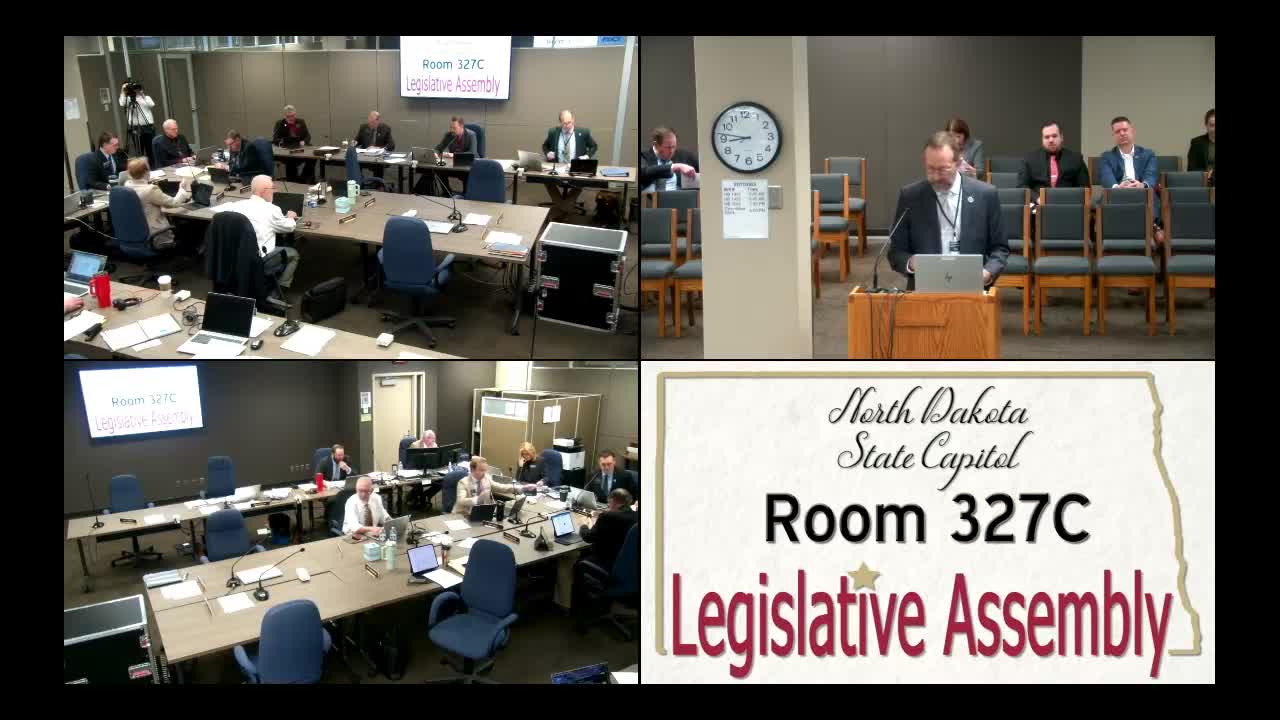
The House Industry, Business and Labor Committee opened a hearing on House Bill 1442 on the proposal to create a joint legislative–executive task force to identify duplicative or inefficient state programs and recommend consolidation, sunsetting or performance audits.
The House Industry, Business and Labor Committee opened a hearing on House Bill 1442 on the proposal to create a joint legislative–executive task force to identify duplicative or inefficient state programs and recommend consolidation, sunsetting or performance audits.
Representative Nathan Toman, R–District 34, told the committee the panel would “look at all of the legislative initiatives and agencies to determine if there's duplicative or inefficient operations and to sunset unused, unneeded, programs and to combine duplicative programs and find efficiencies,” and said the measure would provide the legislature and the executive branch better information about agency operations ahead of future budgets.
Why it matters: supporters and the bill sponsor said the task force would give lawmakers context they do not get from a single-year budget document and would help limit growth in spending by identifying opportunities to cut duplication and red tape before the next session.
Supporters at the hearing described how the panel would work and where the funding and staffing questions remain. Al Dorman of the governor’s office said the administration sees the measure as a partner to the governor’s own efficiency work: “This is an opportunity to dig into that, making sure we're being as efficient as possible and also making sure that our limited resources are going to the most important projects,” he said. Dorman said the governor’s office had earmarked the effort as a May project and planned to coordinate OMB and NDIT resources.
Representative Toman said the task force would be smaller than an earlier 22-member proposal; the bill as discussed includes legislative appointees, executive branch participants and an emergency clause intended to get the panel up and running quickly. Committee members pressed on appointment mechanics and membership balance: Representative Casper asked why appointments come from the chair of legislative management rather than the House and Senate majority leaders; Toman said he would accept changing the language to have the majority leaders appoint members.
The bill allows the task force to request performance audits from the state auditor or to contract third-party audits in specific cases. Representative Koppelman asked whether the state auditor could perform audits; Toman said he had consulted the auditor and the auditor was amenable to providing information but preferred to preserve an option for third‑party audits if circumstances warranted. Representative Schauer noted there is no fiscal note attached and warned contracting private performance auditors could be costly; Toman agreed staffing and contracting costs are unresolved and said Legislative Council (LC) staffing would be needed if the task force structure includes executive representation.
Committee members discussed operational details the bill currently contains: two‑year member terms (reappointment language was not explicit in the draft), a requirement that the task force meet at least monthly, and a reporting requirement that sends an annual report to legislative management (some members urged broader distribution to the full legislature). Toman said he had borrowed committee structure language from existing Century Code provisions and worked with the governor’s office on composition.
State Auditor Josh Galleon testified he supports the concept of increased performance review and noted his office currently conducts performance audits for state agencies; he said performance auditing of local governments would be a new workload for the auditor’s office and could require additional staff depending on scope. "If there are things that we can do to improve delivery of services reduce costs, I'm 100% in," he said, while noting staffing implications.
Committee members and witnesses also raised implementation questions: whether the task force could compel agency cooperation or interview employees, how the panel would handle political subdivisions that receive state subsidies, and how LC staffing and budgeting would be structured if third‑party work or expanded research support is required. Toman said the task force would gather information from agency heads or their representatives and would work with LC for research support.
The hearing record included suggestions from members to interview retired employees (Representative Schatz) and to consider private‑sector expertise either as a nonvoting member or a governor appointee. Several members cautioned the workload would be significant for a volunteer part‑time legislature and noted turf protection inside state government can complicate reform work.
No formal committee action was taken at the hearing. The bill remains subject to amendment and further committee work to clarify appointment mechanics, staffing and fiscal impacts.