Get Full Government Meeting Transcripts, Videos, & Alerts Forever!
Get email alerts on the Municipal Programs topic
No spam. Unsubscribe anytime.
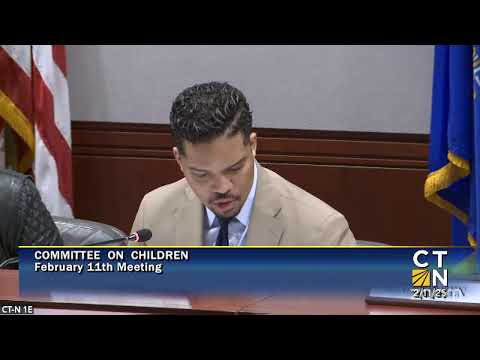
Committee raises bill to impose standards on municipal recreational programs not licensed as youth camps
Summary
The Committee on Children voted to raise an act that would align standards for municipal recreational programs not licensed by OEC with licensed youth camps, including advertising limits, background checks, a 1:12 staff-to-camper ratio and mandated reporter requirements.
Hartford — The Connecticut General Assembly Committee on Children voted Tuesday to raise legislation proposing changes to laws governing municipal recreational and educational children’s programs that are not licensed as youth camps by the Office of Early Childhood (OEC).
Committee members were told the bill would prohibit unlicensed municipal programs from using the word “camp” in advertising, require background checks for employees, establish a 1-to-12 ratio of staff to campers, and designate employees aged 21 or older as mandated reporters. Representative Dauphine asked for a roll-call vote after municipalities raised concerns with members.
The clerk conducted the roll call; recorded votes included: Representative Perez (yes); Senator Maher (yes); Representative Weylander (yes); Senator Cohen (yes); Representative Dauphine (no); Senator Martin (no); Representative Belton (yes); Representative Kitt (yes); Representative Lanou (yes); Senator Marks (yes); Representative Martinez (yes); Representative Mastro Francesco (no); Representative McGee (yes); Representative Pezzuto (no). The motion to raise the bill passed and the ayes carried.
Supporters said the effort seeks to bring uniform safety and staffing standards to municipal programs that currently fall outside OEC licensing. Critics warned municipal officials had expressed implementation concerns, prompting members to request further review and a recorded vote.
The bill will be available for further committee consideration and potential hearings where municipalities and other stakeholders can testify.