Get Full Government Meeting Transcripts, Videos, & Alerts Forever!
Get email alerts on the School Counselors topic
No spam. Unsubscribe anytime.
Committee hears bill to keep 1:300 counselor standard but add ‘reasonable effort’ flexibility
Summary
Lawmakers and school officials discussed House Bill 1449, which asks districts to make a ‘‘reasonable effort’’ to maintain a 1 counselor per 300-student ratio and to document compliance; counselors, administrators and school-board representatives described shortages in rural areas and proposed phrasing amendments but no vote was taken.
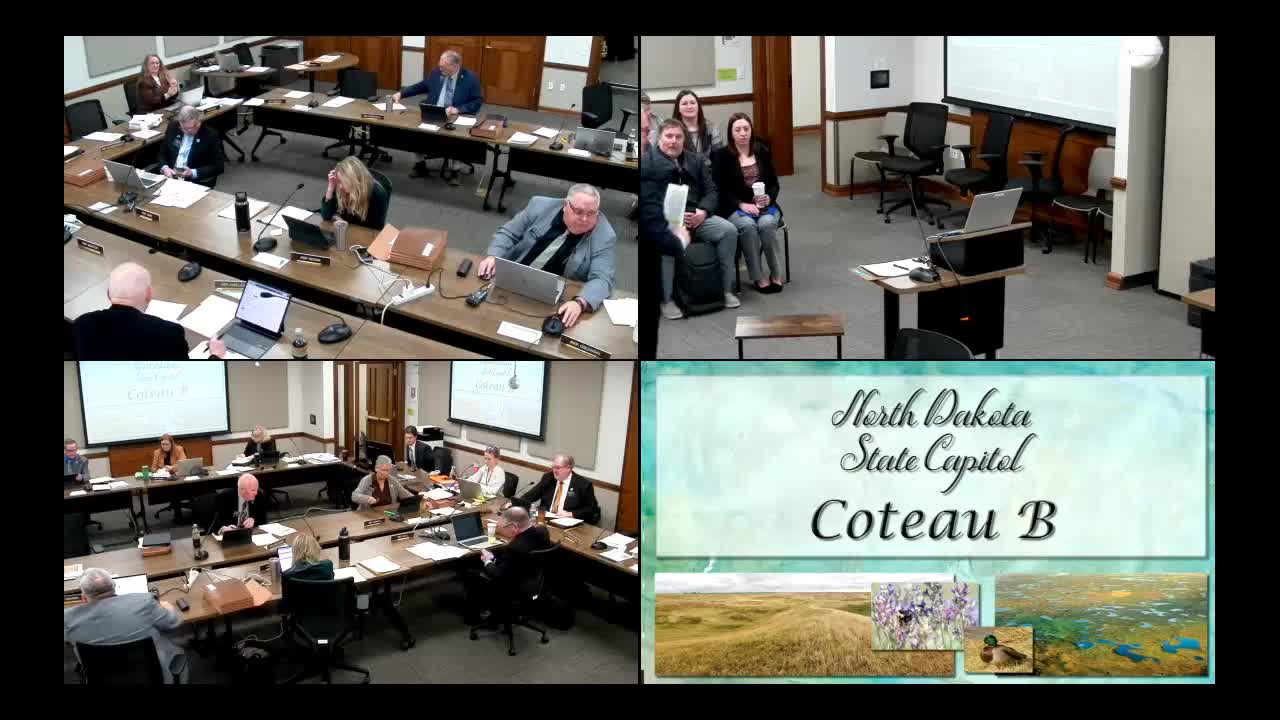
Chairman Heinert opened the House Education Committee hearing on House Bill 1449, which would keep North Dakota’s existing 1 counselor per 300-student target while adding language requiring districts to ‘‘make a reasonable effort’’ and to document that effort.
The measure matters, supporters said, because the state struggles to meet counselor staffing targets and districts face recruitment and budget constraints. Representative Jennifer Jonas, bill sponsor, told the committee the change aims to preserve the ratio while giving districts flexibility to respond to local staffing realities.
"Currently, North Dakota has a mandate for K‑12 school counseling counselors at 1 counselor to every 300 students," Jonas said, noting the state currently reports about one counselor for every 289 students and that 35 counties do not meet the American School Counselor Association (ASCA) recommendation of 1:250.
The bill text quoted to the committee would require a district to "make a reasonable effort to have available 1 full time equivalent school counselor for 300 students" for different grade bands. Kevin Hoberts, representing the North Dakota Council of Educational Leaders, said NDCL and counselors negotiated wording changes that shift some verbs to present tense and insert "reasonable effort" language to produce a workable compliance path.
"So with the ratio that we're making reasonable efforts, and we're gonna document schools are gonna document how they are making a reasonable effort to meet the compliance," Hoberts told the committee, adding that districts already receive compliance letters from the Department of Public Instruction when reported ratios do not match the statute.
Testimony came from multiple stakeholders. Amy DeCook, executive director of the North Dakota School Boards Association, said the association supports "some increased flexibility" because districts of all sizes have difficulty meeting the requirement at times. Dr. Chris Larson, superintendent in Milner, described hiring and retention problems in small districts and said flexibility would help.
Representatives and witnesses debated whether social workers, career advisors or other staff could perform some counselor duties. April Foth of the North Dakota School Counseling Association warned that counselors are trained as a triage-level provider and do not "provide therapy," and she urged keeping work that requires counseling credentials with credentialed counselors.
No committee vote or formal motion on HB 1449 was recorded during the hearing; witnesses and NDCL representatives said amended language was agreed in principle and would be filed as formal amendments later in the legislative process.
The committee closed the hearing on House Bill 1449 after receiving support and limited opposition testimony and moved to the next agenda item.
A hearing record shows testimony from district administrators, professional associations and practicing counselors; committee members asked for clarity on how documentation and the Department of Public Instruction’s compliance review would operate if the bill becomes law.
Looking ahead, supporters said they expect to file the agreed amendments and return to the committee for subsequent consideration.