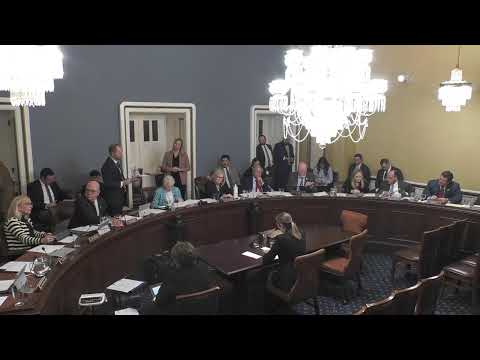
House Rules Committee adopts closed rule for HR 77; single‑subject amendment fails
Loading...
Summary
The House Rules Committee voted to report a closed rule for HR 77, the Midnight Rules Relief Act, sending the measure toward the floor after rejecting an amendment that would have barred omnibus disapproval resolutions that address unrelated subjects.
The House Rules Committee on an item related to HR 77, the Midnight Rules Relief Act, voted to report a closed rule sending the bill to the House floor and rejected an amendment that would have limited disapproval resolutions to a single subject.
The committee approved the closed rule by roll call, 9 yeas to 2 nays, after turning back an amendment proposed in opposition that failed 2 yeas to 9 nays. The closed rule waives points of order against consideration and provides one hour of general debate equally divided and one motion to recommit.
Representative Klein, appearing as a witness from the Committee on the Judiciary, said HR 77 would change how Congress addresses so‑called “midnight rules” issued near the end of a president’s term. "HR 77, the Midnight Rules Relief Act, is an important piece of legislation that will allow Congress to more effectively and efficiently oversee federal agency rulemaking," Klein said. He described the bill as a way for committees and the House to consider multiple agency rules together rather than pursuing separate disapproval resolutions for each rule.
Representative Raskin, identified in testimony as Ranking Member of the Judiciary Committee, warned that the bill would let a majority bundle many different regulations into a single jumbo resolution. "It would allow a majority to roll up lots of midnight regulations... and then vote them down in a single jumbo resolution," Raskin said, arguing that the approach forces members to accept or reject bundled items rather than vote on each on its merits.
Representative McGovern, the committee's ranking member, opposed the bill and moved an amendment offered by Representative Raskin that would have prohibited any resolution of disapproval from addressing two or more unrelated subjects. "This bill is nothing more than a blatant power grab by House Republicans designed to make it as easy as possible to gut protections for everyday people," McGovern said during debate. The committee rejected that amendment, 2 yeas to 9 nays.
Supporters of HR 77 described the measure as a practical fix to an administrative problem they said appears when agencies finalize many rules in the final year of a presidency. Committee members cited an administrationwide figure mentioned in testimony — 1,406 rules submitted during a specified 12‑month CRA look‑back window — as evidence of the volume the bill is designed to address. Critics countered that bundling unrelated rules would obscure individual votes and reduce accountability.
Representative Fishbach moved the closed rule to allow consideration of HR 77 with the procedural waivers described to the committee. After a second roll call the committee agreed to report the rule to the House floor, 9 yeas to 2 nays. The motion to report will permit floor consideration under the terms outlined by the committee.
The witnesses were excused and the chair adjourned the committee. The rule text reported by the committee waives points of order, considers the bill as read, and preserves one motion to recommit; the committee named Representative Fishbach to manage the rule for the majority and Representative McGovern to manage it for the minority.