Get Full Government Meeting Transcripts, Videos, & Alerts Forever!
Get email alerts on the Long Term Care Insurance topic
No spam. Unsubscribe anytime.
Connecticut witnesses broad testimony on long-term care insurance as lawmakers consider SB 1269
Summary
State lawmakers heard hours of testimony pressing for stronger consumer protections and new remedies as long-term care insurers seek large premium increases. Advocates urged adoption of bills that would allow buybacks, cap increases and require refunds of premiums; insurers warned caps could threaten solvency.
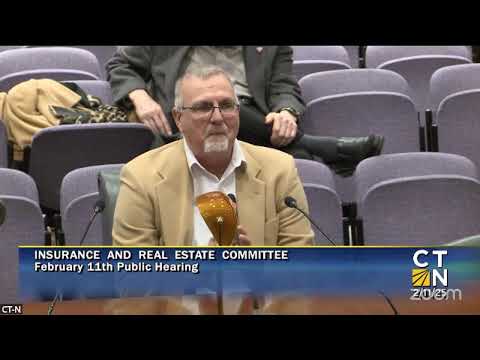
State lawmakers and dozens of testifiers spent the Insurance and Real Estate Committee hearing pressing for changes to Connecticut’s long-term care insurance rules as the committee considered Senate Bill 1269 and related proposals.
The hearing featured policyholders who said steep, recent premium increases have forced seniors to consider dropping coverage they purchased decades ago, and advocates who urged lawmakers to adopt proposals they said would return money to policyholders or limit future hikes. Industry representatives warned that binding caps on rate changes would jeopardize insurers’ ability to pay future claims.
Why it matters: Connecticut has about 70,000 long-term care policyholders who, witnesses told the committee, face double- and triple-digit premium increases for policies sold decades ago. If many policyholders drop coverage, advocates said, the state could face higher Medicaid costs for long-term care.
“My name is David Schwartzer. I’m from Newington, Connecticut, and I’m here today in opposition of SB 12 69 as it’s currently written,” said David Schwartzer, a policyholder who addressed the committee. “Respectfully, this bill does not bring relief to the 70,000 and perhaps even more Connecticut residents, mostly seniors, who are being forced to choose between buying food, paying their rent or mortgage, or paying for their long term care insurance.”
State Representative Gary Turco, who urged the committee to consider related House proposals, told members SB 1269 is “a good start,” but said it should be strengthened with additional consumer protections.
Several testifiers urged the committee to adopt language from House Bill 52‑80 and House Bill 53‑28. They proposed a range of remedies, including: - A statutory option for policy buybacks or refunds of premiums paid by policyholders; - Tighter limits on annual or aggregate premium increases, including proposals tying increases to measures such as the consumer price index; and - Tax relief for policyholders who accept buyouts so proceeds are not treated as ordinary income.
Several policyholders described buyout offers from carriers that they said were insufficient. “They offered me a $71,000 buyout, but my husband only a $23,500 buyout,” said Jan Kritzman, who testified about a Transamerica offer. “If I took the buyout, I am without long term care. … $50,000 isn’t going to pay for 3 and a half months for one of us in a nursing home.”
Representatives of industry groups urged caution. Brooke Foley, speaking for the American Council of Life Insurers, the Insurance Association of Connecticut and AHIP, said Connecticut law already requires insurer filings to be actuarially justified and noted existing procedural protections such as phase‑in requirements for very large increases. “Severe restrictions on rate adjustments could threaten the ability of insurers to fulfill their commitments to policyholders and cause even more carriers to be unable to provide this coverage,” Foley said.
Actuarial testimony and insurer comments to the committee stressed that long‑term care products sold decades ago were priced on limited data and that demographic and medical advances have increased claim duration and costs. Jan Graber, an ACLI actuary on the panel, explained that unanticipated changes in longevity and morbidity have expanded potential benefit durations substantially since early pricing assumptions.
Lawmakers probed both sides: Senator Lesser described the policies as a “faulty product” that left consumers in an impossible position, and asked witnesses whether buybacks or refunds already exist in other lines of insurance. Several policyholders and advocates replied that buybacks occur in property/casualty markets and in isolated long‑term care instances, but they said the offers have proven uneven and, in some cases, discriminatory.
Representative Matt Blumenthal, who has filed HB 53‑28, told the committee he will submit written materials including court pleadings in a related class action that, he said, show some carriers acknowledged “shock lapse” strategies — expecting rate hikes to drive some policyholders to drop coverage, which in turn reduces insurer liabilities.
Committee members and witnesses repeatedly framed the issue as multi‑dimensional: consumer protection, actuarial soundness, state fiscal risk (if policyholders revert to Medicaid), and insurance market viability. Senator Wong noted the committee has convened working groups in recent years and encouraged collaboration among lawmakers, advocates and regulators.
Where things stand: No formal vote was recorded during the hearing. Lawmakers said they would continue to develop and refine proposals; multiple speakers asked the legislature to consider combining elements from competing bills to produce broader relief.
The committee heard more than a dozen individual detailed accounts from policyholders and advocates, and also received industry opposition testimony that urged preserving the department’s authority to review filings and a national NAIC working group’s multistate work as a reason to proceed cautiously.
The committee closed the long‑term care portion of the hearing with members promising further meetings and written submissions from witnesses, including additional data and draft language for possible statutory changes.