Get Full Government Meeting Transcripts, Videos, & Alerts Forever!
Get email alerts on the Medical Malpractice Caps topic
No spam. Unsubscribe anytime.
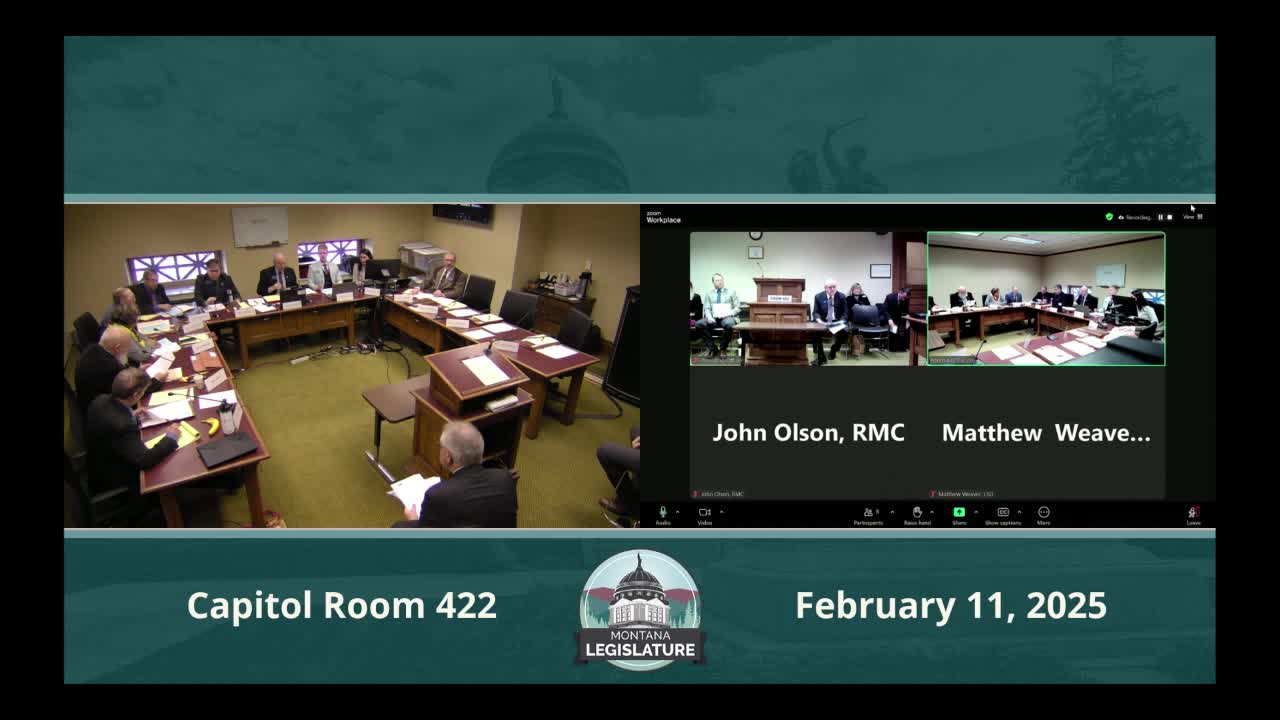
Committee hears testimony on House Bill 195 to raise non‑economic damages cap in medical malpractice cases
Summary
Helena ' Lawmakers heard competing testimony on House Bill 195 on Thursday as proponents urged raising Montana's cap on non-economic damages in medical malpractice suits and opponents warned the change would limit compensation for some injured patients.
Helena ' Lawmakers heard competing testimony on House Bill 195 on Thursday as proponents urged raising Montana's cap on non-economic damages in medical malpractice suits and opponents warned the change would limit compensation for some injured patients.
Representative Bill Mercer, the bill sponsor, opened the hearing by describing the proposal as an update to the existing statute: "House Bill 195 has been a little bit damaged as caps in the context of medical malpractice liability," he said, and asked the committee for a "due pass" on the measure.
The bill would raise Montana's $250,000 statutory cap on non-economic damages (the portion of an award for pain and suffering and other non-quantifiable losses) in steps and apply an annual adjuster, proponents said. "Non economic damages are things like emotional distress," attorney Sean Goichia told the committee, adding that the bill does not touch economic damages such as medical bills and lost wages.
Supporters included physicians, hospital executives and business groups. Kristen Anderson, a family and preventive medicine physician representing the Montana Medical Association, said HB 195 "works to protect our practice" and argued a modernized cap would soften projected premium increases and provide predictability for providers. Cody Lanebeehn, chief executive officer of Central Montana Medical Center in Lewistown, told the panel his hospital pays "over $500,000 a year in medical malpractice premiums" and said liability costs affect recruitment and service availability in rural communities.
Charles Robinson, representing the Montana Chamber of Commerce, and Webb Brown speaking for local business interests also urged passage, saying the cap helps keep liability costs manageable and supports continued local access to care.
Opponents countered that the cap disproportionately limits recoveries for people whose damages are largely non‑economic, such as stay-at-home parents and retired people. An attorney testifying in opposition summarized that "This bill is not being brought for the benefit of patients who have been injured by medical malpractice," arguing that the state's modern health care market and hospital consolidation mean the rationale for a uniform cap deserves closer review. An opponent noted a district court ruling in Great Falls had found the existing cap unconstitutional under the Montana Constitution (Article II, Section 16), and raised the possibility of future legal and political challenges.
Committee members asked about the scale of claims and the link between caps and provider supply. Proponents cited studies showing physician increases in other states after malpractice reforms; opponents cited research questioning whether caps reduce overall malpractice costs or affect provider location decisions. Witnesses agreed malpractice litigation is time-consuming and expensive: defense costs and expert witness fees can run into the hundreds of thousands of dollars and cases may take years to resolve.
No formal committee vote was recorded at the hearing. Representative Mercer closed by urging the committee to give the bill favorable consideration.
The measure will proceed through the Legislature only if the committee reports it out; lawmakers did not adopt final action during the hearing.
Ending note: Committee members asked staff to prepare background information on premium comparisons, self-insurance options and the Montana Medical Legal Panel filing numbers cited during testimony; the hearing record shows those issues were discussed but no directive or amendment language was adopted on the floor.