Get Full Government Meeting Transcripts, Videos, & Alerts Forever!
Get email alerts on the Military Pension Exemption topic
No spam. Unsubscribe anytime.
Committee hears bill expanding military retirement income exemption to attract retirees to Montana
Summary
Sen. John Fuller said his bill would change eligibility dates and remove a five‑year residency limit so more military retirees could qualify for a subtraction from state income tax; proponents said it would incentivize retirees to settle and create economic activity, while DOR staff clarified residency mechanics.
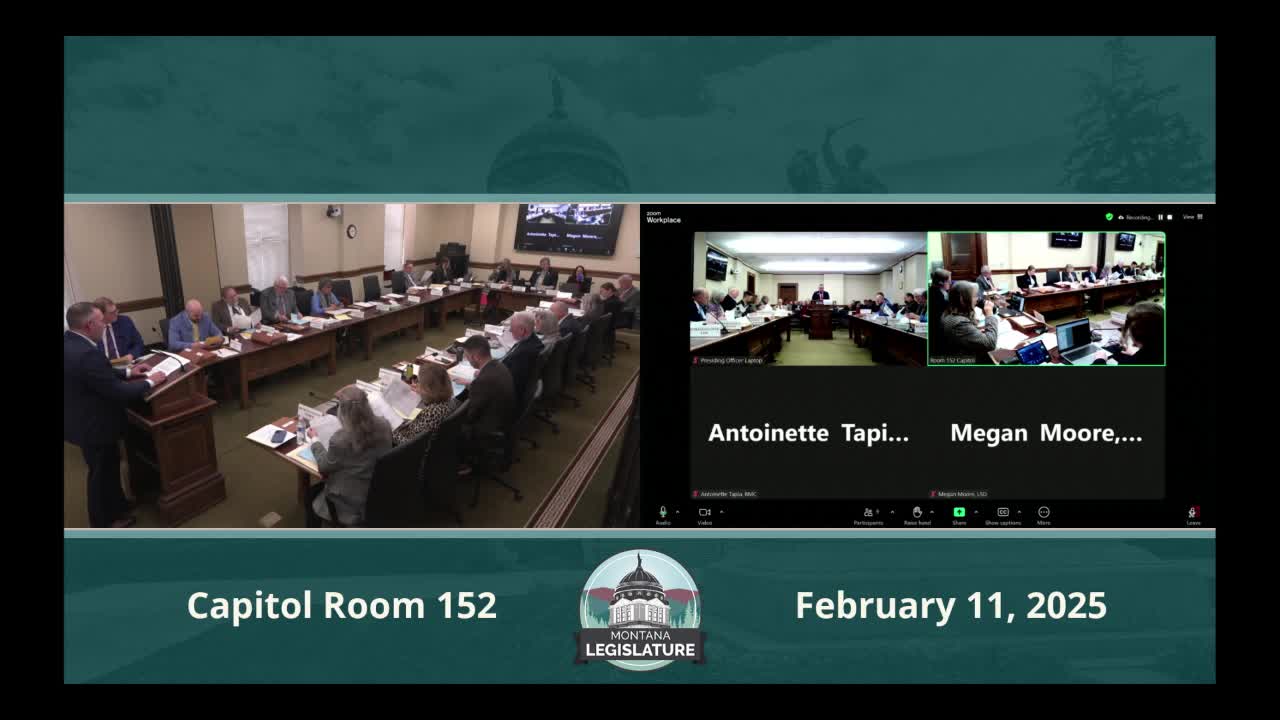
Sen. John Fuller opened a House Taxation Committee hearing on Senate Bill 93, describing the measure as amendments to Montana Code Annotated provisions governing the military retirement income exemption. The sponsor said the bill changes a residency cutoff and removes a five‑consecutive‑year limitation to expand eligibility for the subtraction.
Fuller told the committee the bill alters residency rules — moving the relevant date to Sept. 11, 2001 — and eliminates a five‑consecutive‑year requirement in the existing language. He and proponents said the change is intended to recruit and retain military retirees and to stimulate local economies because retirees commonly work, start businesses, and pay property taxes in their retirement communities.
Supporters included representatives of the American Legion and business groups. Mike Talia (American Legion) and Duane Cunningham (American Legion) said a modest state subtraction for military retirement income is a competitive tool used by many states to attract retirees who contribute to the workforce and local economies. Dan Brooks of the Billings Chamber noted economic and workforce benefits if retirees locate in Montana.
Department of Revenue staff (Erin McNay and Rachel Milne) answered technical questions about administration and explained the residency tests the statute uses: one path requires a person to be a resident before receiving retirement payments, and the other relates to residents who moved to the state after they began receiving pension payments. Committee members asked whether the change would benefit Montanans who left for service and later return to retire; DOR staff explained the relocation/residency date mechanics during questioning.
During closing remarks Sen. Fuller cited Article II, Section 35 of the Montana Constitution — which he quoted to note that the legislature may give “special consideration” to servicemembers and veterans — and urged the committee to approve the expansion.
The committee heard no opposition in the room; no committee vote occurred during the session on SB 93. The hearing record includes multiple clarifying exchanges about the difference between active‑duty retirees and other retirement categories and the intended recruitment and workforce impacts of the proposal.