Get Full Government Meeting Transcripts, Videos, & Alerts Forever!
Get email alerts on the Public Pool topic
No spam. Unsubscribe anytime.
Sierra Vista staff: Cove pool needs ~$800,000 in repairs and likely annual subsidy if reopened
Summary
City staff and a contractor told the City Council in a special work session that Aquatic Design Group identified roughly $799,800 in code and maintenance upgrades needed to reopen the Cove pool; staff estimated operating losses ranging roughly $25,000–$115,000 a year and said the item will be on the council agenda for a vote Thursday.
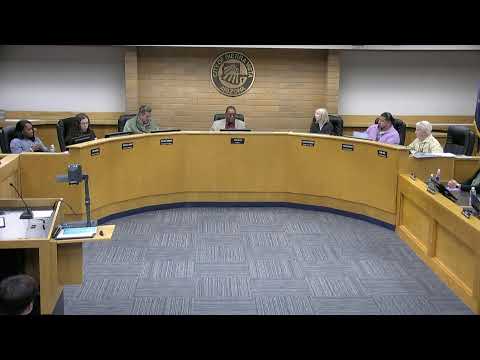
City staff and a consultant told the Sierra Vista City Council at a special work session that bringing the Cove pool at the former Phil Sol country club to municipal code would require major repairs and likely an ongoing subsidy if the city reopens it to the public.
Laura Wilson, director of Parks and Recreation, said the city acquired the property “in as is condition” and that the pool is a gated, heated outdoor pool with a small hot tub. “The main pool is 2,500 square feet that allows for a maximum of 125 people within that space,” Wilson said. She also said the former country-club operation did not keep records useful to the city and did not meet public‑pool staffing and equipment requirements.
The council heard an engineering and code assessment from Aquatic Design Group. Parks and Recreation staff summarized the contractor’s findings: key “must do” code corrections center on replacing noncommercial pumps, filters and chemical‑feed systems and fixing accessibility shortfalls, while maintenance and electrical work were identified as near‑term replacement needs. John, a Parks and Recreation staff member who presented the assessment, told the council, “Total costs for all the code and maintenance concerns that came back from Aquatic Design Group was around $799 800,000, in order to get the pool up to, you know, a municipal operating status.” The consultant also noted the bathhouse lacks fixtures required under Arizona administrative code for a 125‑bather maximum and estimated a separate bathhouse assessment at about $30,000.
On operations, staff said the city would need to hire five part‑time lifeguards and three part‑time customer‑service staff to operate a seven‑day schedule; part‑time employees are limited by hours rules the city cited when modeling costs. Staff modeled a four‑month summer operating season (May–August) for the estimate. Finance staff presented an operating estimate of “just over $59,000” to run the pool for those four months and explained that annual utility and maintenance costs would continue even if the pool were closed. Staff said the daily breakeven at the $6 adult admission price would require roughly 59 paid visits per day; using different attendance and age mixes produced a wide estimated annual operating shortfall, which staff summarized as roughly $25,000 at a best‑case attendance mix up to about $115,000 at less favorable mixes.
Council members and residents pressed the city on the estimate methodology and vendor pricing. Council members asked whether Aquatic Design Group had adjusted its estimates for Southern Arizona; staff said the consultant, Michelle Gable of Aquatic Design Group, performed market calls and used regional pricing where possible but that some mobilization costs are comparable to Southern California pricing because of the region’s limited local pool contractors. Procurement staff explained that consultant estimates are typical budgetary tools and that formal bids would be sought only if the council directed work and funding.
Public commenters and members of the Parks and Recreation Commission urged differing priorities. Wesley Hewitt, chair of the Parks and Recreation Commission, noted the city’s broader parks maintenance program and budget pressures, listing existing facilities and the city’s medium‑term maintenance allocation: “We currently track 17 playgrounds, 16 sport 15 sports fields, 6 tennis courts, 8 pickleball courts, a track, a gym, and an aquatic center,” Hewitt said, and he warned about diverting limited capital to the Cove. Several residents said they value the Cove as a community gathering place and questioned transparency around earlier negotiations with the private operator Paradigm.
City staff and procurement officials said the original Paradigm contract was publicly presented and that Paradigm’s proposal excluded taking responsibility for the pool. Kenny Downing, the city’s chief procurement officer, said he presented the Paradigm contract and that it contained a line item excluding the pool: “I stood in front of you and presented you the Paradigm contract before it was signed. And I listed every line item that was in that Paradigm contract, and 1 of the line items was that Paradigm would not take the pool.”
No council decision was taken at the special work session. Staff noted the matter will appear on the city council agenda for a formal vote Thursday; the resolution before the council incorporates a Parks and Recreation Commission recommendation to close the pool. The council and staff directed questions about next steps — whether to seek formal vendor bids, to do a one‑year pilot, or to accept the consultant estimates — to the Thursday agenda and future budget discussions.
Residents asked the city to consider preserving trees and shade at the site if the pool is closed. The Parks and Recreation Commission chair and multiple council members also urged staff to continue refining cost details and to pursue formal bids only if the council identifies funding and makes a policy decision to move forward.
The city provided the Aquatic Design Group assessment and the staff financial estimates to the council packet; council discussion and the formal vote were scheduled for the next regular meeting.