Get Full Government Meeting Transcripts, Videos, & Alerts Forever!
Get email alerts on the Economic Development topic
No spam. Unsubscribe anytime.
Industrial Development Authority outlines bond financing, local investments and programs
Summary
Dimitri Simonton, president of the Industrial Development Authority of Sierra Vista, updated council on recent bond-financed activity, community investments and program priorities including workforce and small-business support.
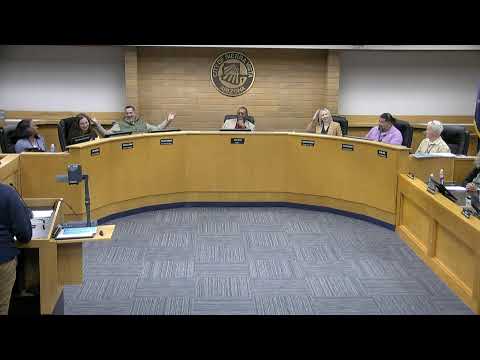
Dimitri Simonton, president of the Industrial Development Authority (IDA) of the City of Sierra Vista, presented a multi-topic update on the IDA's work, financing tools and local investments.
Simonton said the IDA is a political subdivision of the State of Arizona that does not levy taxes and generates revenue by issuing bonds, including tax-exempt and private-activity instruments. He described the IDA's recent focus on education-related revenue bonds, community-health financing, revolving-loan funds, and building capacity for industry 4.0 and the industrial Internet of Things.
He said the IDA has brought bond deals totaling near $1 billion over its history, has established a $250,000 endowment to sustain operations, and has provided low-interest loans (he cited Charakawa Community Health Centers as a borrower) and direct community investments such as school-supply donations and support for local festivals and nonprofits. The IDA president said the organization has funded a coworking workspace (the Cochise Economic Garden), launched the Future Vistas fellowship and is exploring entrepreneurial housing, a revolving loan fund for small businesses, partnerships with Phoenix-area economic organizations, and regional "economic garden" sites in Huachuca City, Benson, Wilcox and Naco.
Simonton emphasized the IDA's competitive niche as a rural IDA that can move quickly and keep bond issuance costs low. He repeatedly noted that the funds he described are generated from bond activity and are not city general-fund tax revenues. Council members praised the IDA's volunteer leadership and local investments and invited IDA staff to continue engagement with youth and economic development efforts.
No formal council action was recorded on this presentation.