Get Full Government Meeting Transcripts, Videos, & Alerts Forever!
Get email alerts on the Immigration Enforcement topic
No spam. Unsubscribe anytime.
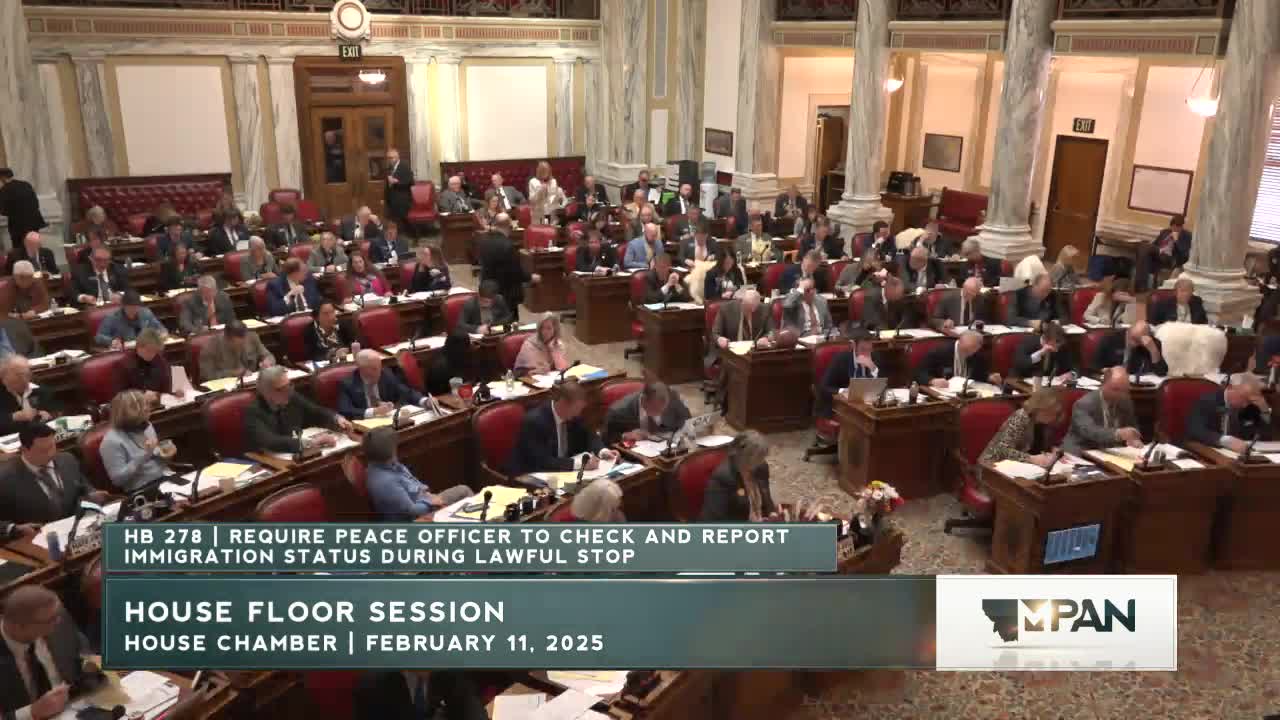
House committee approves bill allowing peace officers to check immigration status during stops
Summary
House Bill 278, amended to change a required duty to an authorization, passed committee 59-41. Supporters said it helps law enforcement address trafficking; opponents warned of burdens on officers and risks to tribal members.
Representative Nicholl introduced House Bill 278, which the committee amended in committee to change a required duty to an authorization. The bill authorizes — rather than requires — a peace officer to attempt to determine a person's immigration status during a lawful stop when reasonable suspicion exists.
"In the bill, you'll see where we made some amendments," Nicholl said, noting the word "require" was changed to "allow" to gain broader support. He said the change addressed opposition and that the amended bill "now meets essentially everyone's needs." Nicholl said highway patrol officers recommended the fix because the duty prevented some officers from checking status after a court case limited practices in the past.
Opponents including Representative Fyant and Representative Baum said the requirement would be a time-consuming addition to stops, could unduly burden officers, and raise particular problems for Indigenous people who may be misidentified. Representative Baum noted there is not always a reliable database available for status checks and warned the bill could invite legal challenges to otherwise lawful stops.
Supporters argued the amendment made the provision reasonable and said the highway patrol and others supported it as a tool to address human trafficking and related crimes. Representative Nicholl said highway patrol and other peace officers specifically suggested the language and that trafficking frequently occurs on highways.
The committee recorded 59 votes in favor and 41 opposed; House Bill 278 passed second reading as recorded in the transcript and will proceed in the legislative process.