Get Full Government Meeting Transcripts, Videos, & Alerts Forever!
Get email alerts on the Decommissioning Bonding Wind Solar topic
No spam. Unsubscribe anytime.
Senate Energy hears bill to clarify wind and solar decommissioning bond rules
Summary
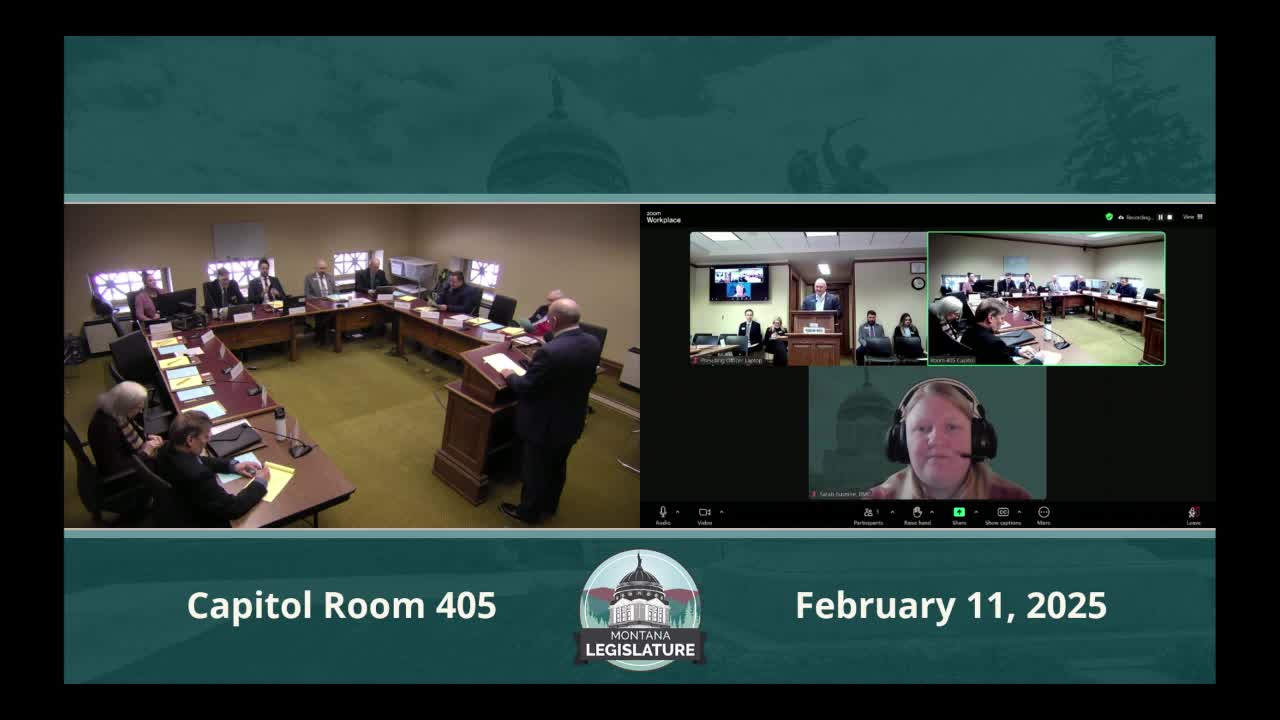
Representative Neil Durham, the House sponsor, opened a Senate Energy Committee hearing on House Bill 31, saying the measure "enact[s] clarifying certain bonding requirements for wind and solar generation facility," and asking the committee to pass the bill.
Representative Neil Durham, the House sponsor, opened a Senate Energy Committee hearing on House Bill 31, saying the measure "enact[s] clarifying certain bonding requirements for wind and solar generation facility," and asking the committee to pass the bill.
The bill, carried in the Senate at the request of the Department of Environmental Quality, would clarify two points in Montana’s existing wind and solar bonding and decommissioning law, officials told the committee. Sonya Nowakowski, director of the Department of Environmental Quality, said the bill resolves an ambiguity about when a facility is exempt from posting a DEQ bond and establishes that facility owners may request a change in bond amounts once every five years after the initial bond submittal.
"The first clarifies that the exemption from submitting a bond ... applies only for the portion of a wind or solar facility that has posted a decommissioning bond with a separate state, federal, tribal, or local government entity," Nowakowski said. She added the bill also "sets a timeline allowing a facility owner to submit an updated decommissioning plan and to request a change in the bond amount ... every 5 years following the submittal of the initial bond."
Ben Brower, Energy Bureau Chief at DEQ, pointed committee members to the bill text and line references where the changes appear and summarized the intended effect: "clarity, consistency, and certainty, in how DEQ implements the wind and solar bonding and decommissioning statute."
Proponents included McKenna Sellers of the Montana Renewable Energy Association, who said the association "supported this bill on the House side" and again in the Senate because the clarifications about jurisdictions and which agency holds bonds "make a lot of sense."
Ryan Weiss, deputy administrator for state trust lands at the Department of Natural Resources and Conservation, appeared as an informational witness to answer questions about facilities on state trust land.
Senators asked technical and oversight questions. Committee members sought clarification about what "decommissioning" requires: DEQ staff said the statute requires owners of wind facilities of 25 megawatts or larger and solar facilities of 2 megawatts or larger to submit a decommissioning plan and to post a decommissioning bond. Brower explained the bond provides financial assurance so DEQ can pay for decommissioning if a facility owner cannot; statute requires the bond to be posted 15 years after initial commercial operation. Required decommissioning steps include removal of facilities except certain substation equipment; turbine foundations generally must be removed at least 36 inches below grade unless a landowner agreement or DEQ requires deeper removal. DEQ staff also said administrative rules require review of the bond amount every five years, and reappraisals may account for inflation and the current salvage value of equipment.
Committee discussion touched on whether DEQ is the responsible agency for enforcement and whether the statutory language leaves room for additional bonding requirements. Nowakowski said DEQ is the agency responsible for wind and solar decommissioning and bonding; Ryan Weiss said DNRC was available to answer questions about state trust lands specifically.
The committee closed the hearing after the sponsor’s closing remarks; no committee vote was recorded during the hearing. Representative Durham closed by reiterating the bill’s intent to ensure the bond ‘‘has, in fact, been posted’’ and asked the committee to pass the bill. The chair then closed the hearing on House Bill 31.