Get Full Government Meeting Transcripts, Videos, & Alerts Forever!
Get email alerts on the Cell Cultured Meat topic
No spam. Unsubscribe anytime.
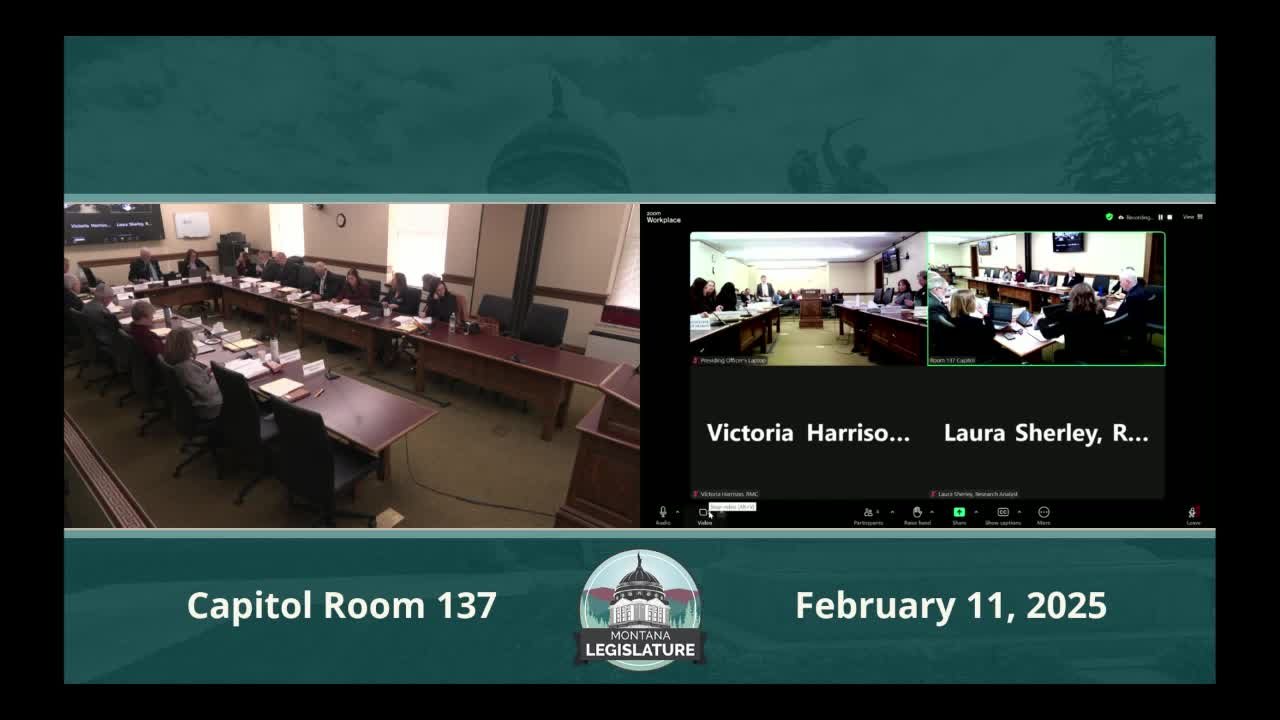
Montana House Ag committee hears bill to ban sale of cell-cultured (lab-grown) meat; no vote taken
Summary
The Montana House Agriculture Committee heard testimony on House Bill 401, which would prohibit manufacture, sale, possession and distribution of cell‑cultured edible products. Supporters said the measure protects ranchers and public health; state agencies raised enforcement and fiscal questions. The hearing closed without a committee vote.
The Montana House Agriculture Committee on Thursday heard testimony on House Bill 401, introduced by Representative Mitchell, an act that would prohibit the manufacture, sale, possession or offering for sale of cell‑cultured edible products (commonly called lab‑grown meat). The committee closed the hearing without taking a final vote.
Supporters told the committee the bill aims to protect Montana’s ranching and farming economy and guard against uncertain long‑term health effects of cell‑cultured meat. Representative Mitchell, the bill sponsor, told the committee the bill "would follow in line with other states and countries who have banned lab grown meat due to the unknown health effects and to protect traditional food traditions, farmers and ranchers, and ultimately public health." He said the proposal is limited to cell‑cultured meat and does not target plant‑based products.
Proponents included farm and ranch organizations and property owner groups. Karli Johnson of the Montana Farm Bureau Federation said regulatory confusion "can create not only a public health issue, but also can create devastating economic impacts for our folks here in Montana. So with that, we urge your support." Representatives of the Northern Plains Resource Council and the Montana Agricultural Business Association also urged passage, saying the bill would help preserve market share and reduce consumer confusion.
State agency witnesses offered informational testimony and flagged implementation questions. Mike Honeycutt, Executive Officer for the Montana Department of Livestock, said the bill revises the department’s definition of cell‑cultured meat "to harmonize it with the other definitions that exist in the Department of Public Health and Human Services and their various food safety codes." He added that, as drafted, enforcement authority would be delegated to the Department of Labor and Industry.
A department official said the draft statute leaves open how enforcement would work in practice. "Verifying a food product is a new line of work for us," said Commissioner Swanson, who described uncertainty over whether inspectors would need to test packaging, remove products from shelves, or maintain testing laboratories. She said the weights‑and‑measures division currently verifies quantity and is not set up to confirm the composition of a food product.
Committee members pressed on two recurring issues: whether cell‑cultured products are already sold in Montana and the bill’s fiscal impact. Representative Thain asked whether such products are currently distributed in the state; Representative Mitchell answered, "from my understanding, no." Committee members and agency witnesses said no fiscal note had yet been prepared and that enforcement costs — and which agency would bear them — were unresolved.
The bill text includes criminal penalties. Representative Volvander asked about consequences for sale or production; Mitchell pointed to a provision on the top of page two that would make a violation a misdemeanor and, as drafted, included a possible sentence of up to 60 days in jail. Mitchell said he was "fine with scratching out the imprisonment part and just keeping misdemeanor." He also told the committee he was willing to consider amendments to adjust the enforcing agency.
Legal precedent and likely litigation were raised during testimony. An attorney testifying in support, Eric Sommerfeld, referenced litigation in Florida and an earlier California legal issue, saying he expected constitutional challenge claims to fail based on prior rulings. Committee members cautioned that final determinations would be for the courts.
Representative Mitchell closed by asking the committee to "do pass." The chair then closed the hearing; no committee vote on the measure was recorded at the session.
Ending: If the committee proceeds, members may take up amendments to enforcement, penalties and fiscal impacts before any final action or a floor vote in the full House.