Get Full Government Meeting Transcripts, Videos, & Alerts Forever!
Get email alerts on the Public Safety topic
No spam. Unsubscribe anytime.
Committee debates loosening AED regulations, delays action for legal clarification
Summary
The committee heard testimony on Senate Bill 86, which would remove some state registration and training requirements for automatic external defibrillators and instead rely on manufacturer maintenance and 911 notification; committee members asked for legal follow-up and postponed action.
Senate Bill 86 drew supporters who said reducing regulatory requirements for automatic external defibrillators (AEDs) could increase deployment, while committee members sought confirmation that the Department of Public Health and Human Services would retain enforcement authority over device maintenance.
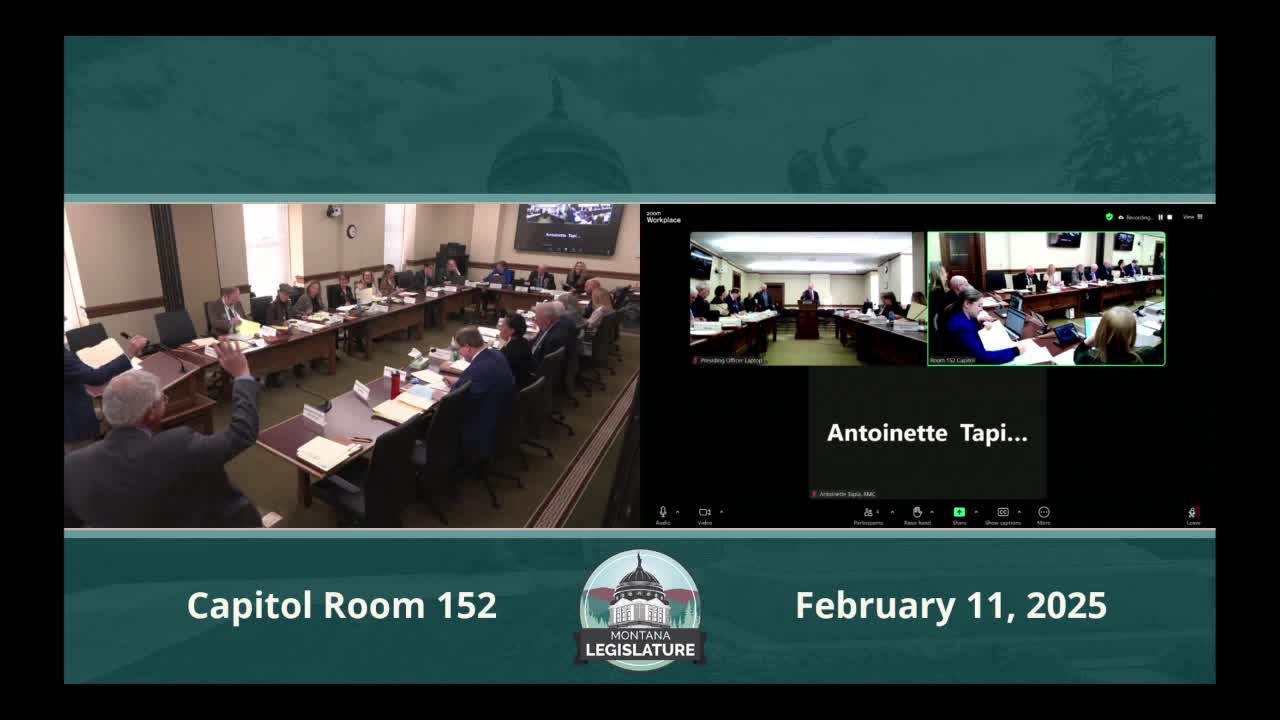
Sponsor Sen. Greg Hertz, R-Polson, told the House Health and Human Services Committee SB 86 pares back an outdated code that dates to 1999 and mostly removes prescriptive training and registration requirements. "This code has been around since 1999. It's a little outdated," Hertz said, and the bill keeps only notification and basic reporting elements so first responders know an AED exists at a location.
Terry Mullins, section supervisor for the EMS and trauma system section at DPHHS, said the bill would remove the department’s regulatory requirement to approve training and registration but would preserve the department’s ability to require maintenance to manufacturers' specifications, require notification of the local 911 dispatch center and require callers to call 911 when an AED is used. "The department will maintain its ability to enforce the regulations around maintaining the AED and testing the AED in order to meet the manufacturer's specifications," Mullins said; Mullins agreed to provide follow-up legal documentation to the committee.
Carter Marsh of Montana Professional Firefighters, a practicing paramedic, urged support and told the committee that early defibrillation and high-quality chest compressions save lives. Representative Rivas voiced concern that the bill repeals the department's rulemaking authority and asked whether DPHHS would still be able to ensure AEDs are maintained; Mullins agreed to follow up with legal confirmation.
Representative Kelly and other members asked technical questions about whether the bill covers individual owners or only entities; Mullins said the bill applies broadly to those who purchase and use AEDs and that staff would clarify intended scope. Vice Chair Archer asked whether the revised language on maintenance and recordkeeping would address earlier concerns; Mullins confirmed the department intends to retain enforcement over maintenance and recordkeeping requirements.
After testimony and questions the committee decided to hold off on executive action for SB 86 to allow staff to provide additional legal and drafting information.