Get Full Government Meeting Transcripts, Videos, & Alerts Forever!
Get email alerts on the School Funding Inflation topic
No spam. Unsubscribe anytime.
Bill would let Legislature authorize inflation adjustments above 3% cap for school funding
Summary
Senate Bill 258 would clarify that the Legislature may provide inflationary adjustments beyond the current 3% cap used in school funding calculations. Proponents said the change would allow more responsive school funding; Office of Public Instruction staff said the provision would not force local boards to take specific action.
Senate Bill 258 would clarify that the Legislature may, by law, provide inflationary adjustments for school funding beyond the 3% cap used in current calculations and provide a method to calculate an inflation factor for potential adjustments.
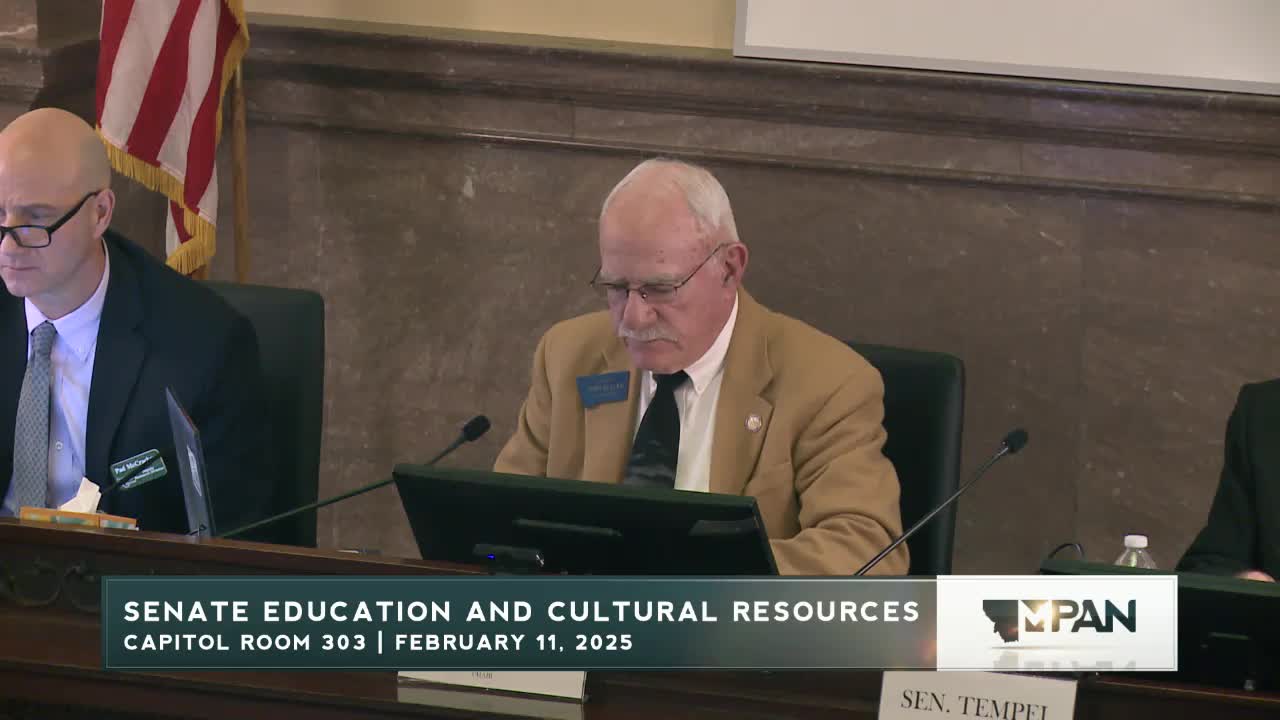
Senator Laura Smith (SD 40) told the Senate Education Committee that the bill “recognizes the legislature’s power” to provide inflationary adjustments in excess of 3 percent, and that the restriction has constrained some districts’ budgets. She cited the Helena School District’s roughly $6.5 million reduction as an example of the kinds of local impacts proponents said the bill aims to address.
Doug Reisig, executive director of the Montana Quality Education Coalition, told the committee the measure “clarifies the legislative authority” and would provide a systematic method to calculate inflationary adjustments so funding could better match rising costs. Kim Popham, director of public policy and research for the Montana Federation of Public Employees, testified the bill would help reduce the “inflationary gap” and urged a due pass.
Director Flynn of the Office of Public Instruction said the bill’s language would leave the 3% figure as the OPI’s recommendation to the Legislature but would make clear the Legislature itself is empowered to increase the inflationary adjustment if lawmakers so decide. Flynn said that, if the Legislature chooses to raise the adjustment above 3%, local school boards could potentially receive more state funding, but the bill does not change local boards’ budget authority.
No opponents testified in the hearing. Committee members asked technical questions about how the change would affect local school boards; Flynn reiterated that the bill clarifies legislative authority and could result in increased funding if the Legislature appropriates beyond the 3% cap.
Ending: The bill was presented with proponent support from education advocates and unions; no committee vote was recorded on the transcript during the hearing.