Get Full Government Meeting Transcripts, Videos, & Alerts Forever!
Get email alerts on the Educational Interpreters Msdb topic
No spam. Unsubscribe anytime.
Bill would expand pay, training and transport options for educational interpreters and Montana School for the Deaf and Blind
Summary
House Bill 151 would expand eligibility for Montana educator-pay and loan-assistance programs to cover certified educational interpreters, create a teacher-residency pathway and allow the Montana School for the Deaf and Blind to use school buses that meet Office of Public Instruction standards for student transport.
House Bill 151 would expand eligibility for Montana educator-pay and loan-assistance programs to include certified educational interpreters, authorize a teacher-residency pathway and allow the Montana School for the Deaf and Blind (MSDB) to use school buses that meet Office of Public Instruction standards for student transport.
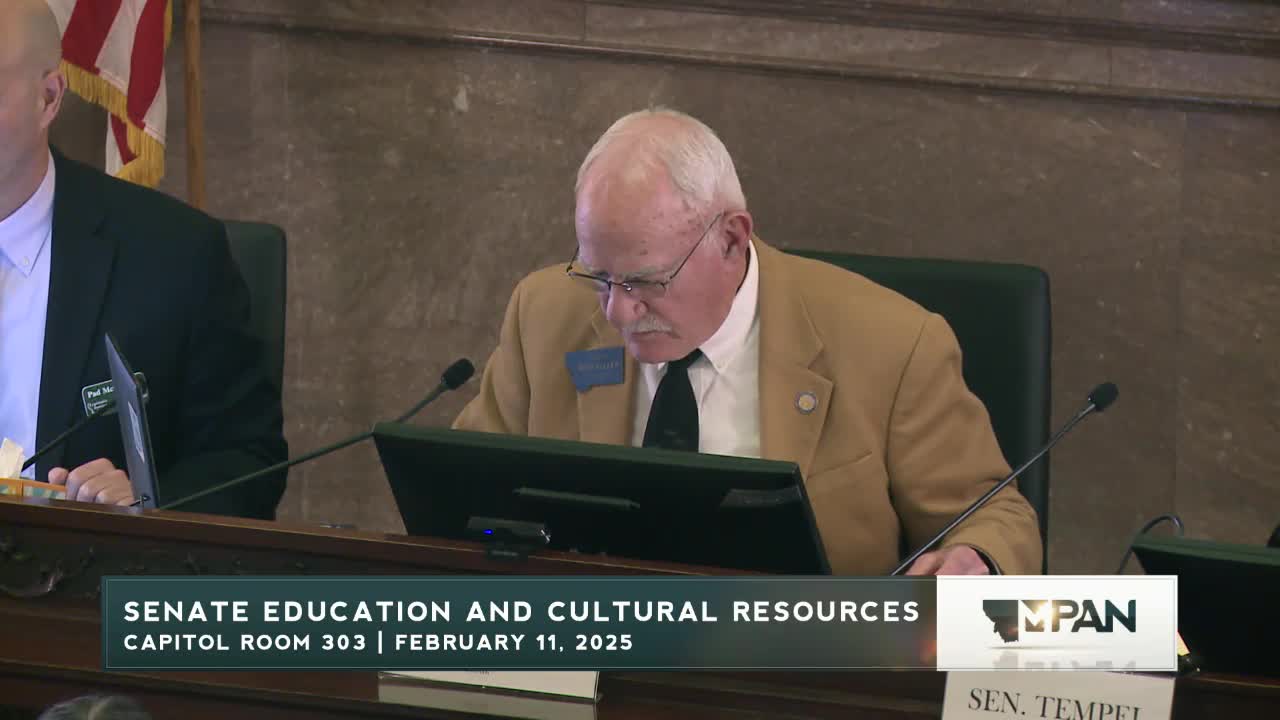
The bill sponsor, Representative Connie Keogh, R-92, told the Senate Education Committee on Oct. 12 that the measure was developed through the Education Budget Interim Committee to address a shortage of teachers of the deaf, teachers of the visually impaired and educational interpreters across Montana. “In particular, there is a very critical shortage of educational interpreters,” Keogh said, adding that the committee found roughly “8 positions for educational interpreters currently advertised across the state.”
The bill makes several statutory changes across six sections of law, Keogh said. Among other provisions, House Bill 151 would: add educational interpreters to the list of professionals eligible for the existing quality-educator payment; make educational interpreters eligible for the quality educator loan-assistance program under the same rules as other qualified educators; create a teacher-residency model for teachers of the deaf and visually impaired; and restore the Montana School for the Deaf and Blind’s ability to transport students by school bus rather than requiring a Public Service Commission–certified carrier.
Paul Firthmeier, superintendent of the Montana School for the Deaf and Blind, described the bill as addressing immediate transportation and workforce barriers. “A simple fix is to take Public Service Commission out, just add the word school buses that meet the OPI standard, and now we can transport our students,” Firthmeier said. He told the committee his school likely lost the enrollment of “5 to 6 students” who could not be offered transportation under the current statutory language.
Firthmeier and other proponents emphasized certification and quality requirements for interpreters. The bill references the Educational Interpreter Performance Assessment (EIPA); under current rules cited during testimony, interpreters used in classrooms must score at least 3.5 out of 5 on the EIPA to be considered eligible for educational-interpreter roles and for the quality-educator payment. Firthmeier said some interpreters listed by the Department of Public Health and Human Services are ID-certified but not EIPA-certified and therefore would not qualify for the payment without the change.
Rob Watson of the Coalition of Advocates for Montana’s Public Schools and the Montana Federation of Public Employees’ public-policy representative both expressed support, saying the bill would help recruitment and retention and improve educational access for students who are deaf and hard of hearing. A parent, Heidi Houck, testified that her fourth-grade child relies heavily on an educational interpreter to “fully understand what the teacher is saying,” and she urged committee members to support the bill.
Representative Keogh and proponents urged the committee to consider an amendment making the bill effective immediately because of the staffing shortage. Keogh also noted the bill had “passed unanimously out of the House” prior to the Senate hearing.
Discussion vs. decision: committee members asked informational questions about timelines to achieve EIPA certification and how MSDB handles ASL communication for staff and during transport. Firthmeier said MSDB encourages ASL learning among staff and employs an ASL mentor; for bus transport the school typically assigns staff who know ASL to accompany students.
No committee vote was recorded during the hearing. The sponsor requested the committee consider the draft amendment during executive action. The hearing was closed without a formal committee action recorded on the transcript.
Ending: Proponents framed the bill as a practical, targeted bundle of fixes intended to expand recruitment, recognition and transportation options for students who are deaf or hard of hearing. If enacted, the measure would change multiple statutory sections to add educational interpreters to payment and loan programs and restore MSDB’s ability to operate school-bus transport under OPI standards.