Get Full Government Meeting Transcripts, Videos, & Alerts Forever!
Get email alerts on the Alfalfa Seed Regulation topic
No spam. Unsubscribe anytime.
Committee reviews bill to move alfalfa seed oversight to Department of Agriculture, sparking grower opposition
Summary
Senate Agriculture committee heard House Bill 171, which would dissolve the Alfalfa Seed Committee, transfer its duties to the Montana Department of Agriculture and require periodic public meetings; growers and committee members raised concerns about process, oversight and a $168,000 assessment fund.
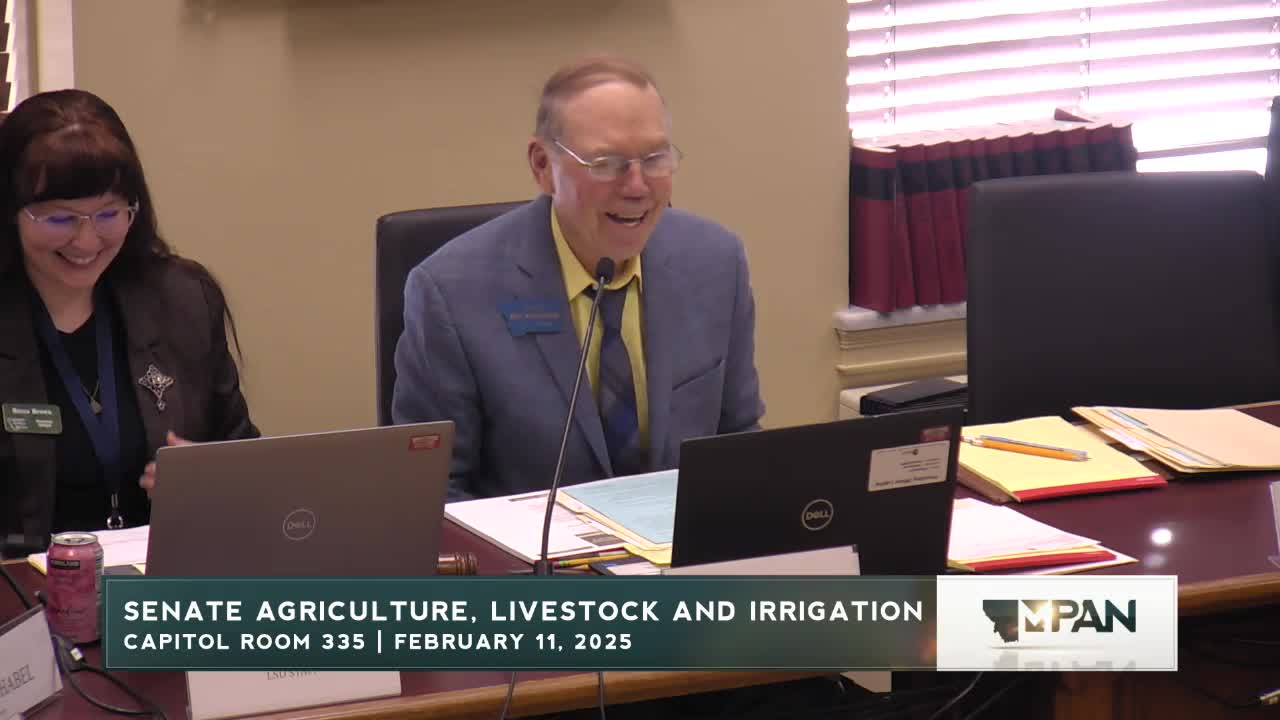
Representative Tillman, sponsor of House Bill 171, told the Senate Agriculture, Livestock and Irrigation Committee that the bill would transfer regulation of the alfalfa seed industry to the Montana Department of Agriculture, eliminate the separate Alfalfa Seed Committee and require the department to hold public meetings every other year regarding the alfalfa seed assessment.
The bill’s sponsor said the changes are intended to “cut the red tape” and allow the department to provide ongoing oversight instead of relying on a committee that typically met only once a year. That, the sponsor said, would allow the department to manage rulemaking and protection of seed industry standards more continuously.
Why it matters: The alfalfa seed program collects assessment dollars from producers and funds industry services, including bee testing and USDA data collection. Growers told the committee they learned the bill was moving faster than they expected and said the change could reduce their role in spending their assessment dollars.
Ernest Johnson, an alfalfa seed grower from Chinook who testified in opposition, said growers were blindsided by the bill and objected to the process. "I'm completely opposed to this bill," Johnson said, adding that the assessment fund holds "a hundred $68,000 and some change" derived from alfalfa seed checkoff dollars.
Zach Coccoli, deputy director at the Montana Department of Agriculture, described the practical reasons for the change: he said inspections and quarantine authorities once handled by the committee have become less active as industry dynamics shifted, testing has consolidated with out‑of‑state labs, and the volume of inspection requests has declined. Coccoli said the proposed bill preserves the assessment account and will require department consultation with the Montana Alfalfa Seed Association about spending priorities.
Several senators pressed for more clarity about whether a reconstituted, smaller committee could be created by amendment and whether the department would continue to consult directly with growers. Legal counsel confirmed the bill’s title language — "an act generally revising the alfalfa seed industry act" — is broad enough for the committee to offer amendments that would reestablish a board or define spending authority.
Department leadership said they will continue to seek grower input. In the hearing, a departmental official said, "I will stand by that. And as long as I am the director... I will go to them for the information," and the sponsor noted an amendment was available that would preserve grower input on spending decisions.
No final committee vote was recorded at the hearing; members discussed the possibility of amendments that would preserve a grower role while moving day‑to‑day administration to the department.
Ending: The hearing closed after extended questioning and comment from growers. Committee members asked staff for draft amendment language and additional documentation about the account balance and transition steps.